
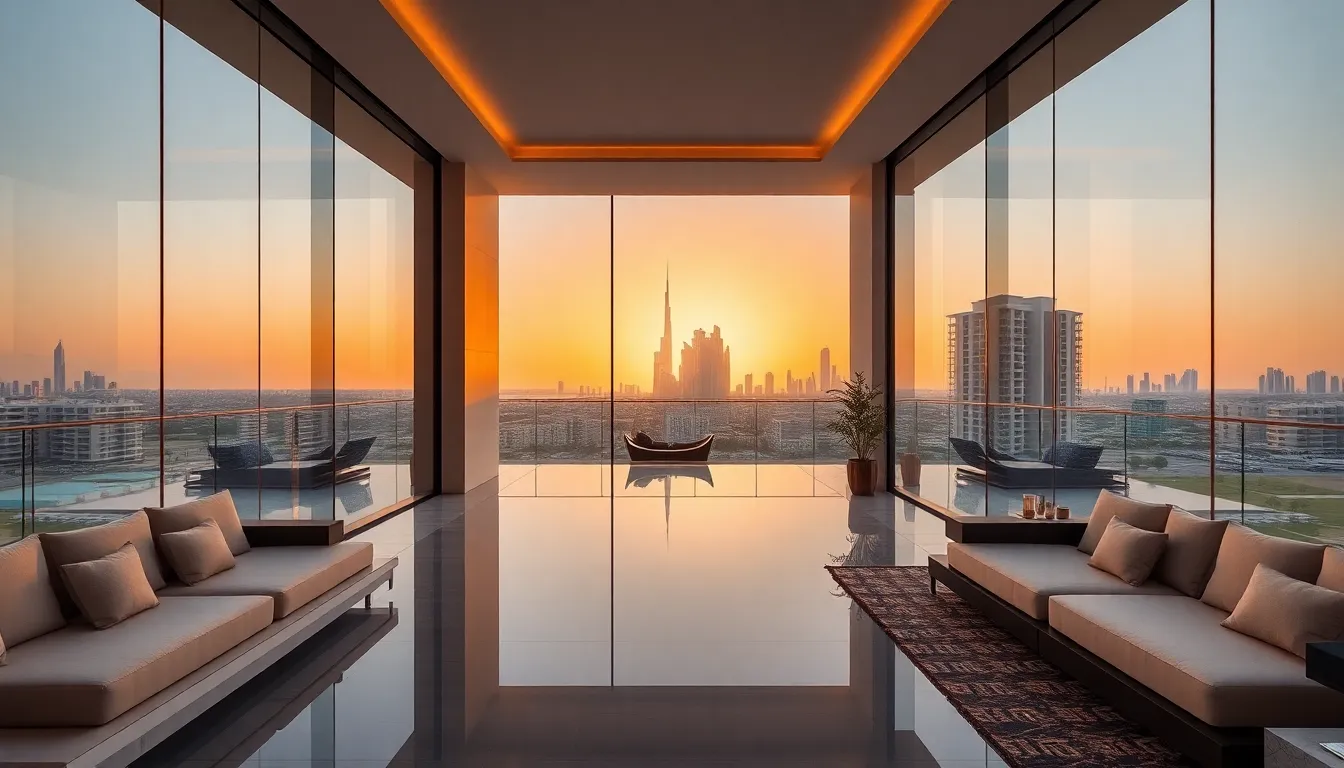
Will Tenants Love Your Dubai Hills Estate Investment?
Never buy a property without walking it during a tenant’s move-out. I learned that the hard way. In fifteen years of advisories, handovers, and angry phone calls, I’ve seen the gap between what investors dream and what tenants actually live through—and nowhere is that gap more alive than in buy property in Dubai Hills Estate decisions. Let me walk you through it, not from a sales brochure, but from sweaty snagging walks and 7 p.m. calls about a leaky AC.
I remember a three-bedroom townhouse handover from late 2025 that still makes me wince. The investor had bought off-plan, dazzled by the renderings and the “golf course view” promise. He never set foot on-site until I dragged him there for a snagging inspection. We walked in, and the first thing that hit me wasn’t the view—it was the sharp, chemical smell of cheap paint clinging to every wall. The developer had rushed the finishing, and the place felt more showroom than home. I ran my palm along the living room wall and felt a subtle ridge—a drywall seam already cracking, months before anyone had even slept there. In the kitchen, I nudged a cabinet door, and it groaned on a misaligned hinge. My investor saw potential; I saw a tenant’s first WhatsApp complaint.
That’s the heart of it. Investors fall for the “Dubai Hills” brand—the greenery, the mall, the central location—but they forget that tenants operate on a different checklist entirely. I’ve watched too many buy with their own taste, only to end up with a unit that sits empty because a family needed a bus stop, not a golf simulator. So let’s dig into what actually matters when you buy property in Dubai Hills Estate for rental returns, not just for pride of ownership.
What do tenants actually want in Dubai Hills Estate?
Tenants in Dubai Hills are not a monolith, but a pattern has emerged over the last few years. When I sit down with renters—whether they’re young professionals or families relocating from Europe—three phrases keep coming up: “schools,” “parking,” and “quiet.” They rarely mention the golf course unless they play. A family with two kids doesn’t care about the back nine; they care whether GEMS Wellington Academy is a twenty‑minute walk or a two‑minute drive on a hot June morning.
I once showed a lovely three‑bed in the Mulberry phase to a couple with a five‑year‑old. The wife loved the kitchen. The husband admired the balcony. But when I pointed out that the nearest school gate was a shaded stroll away, they signed the lease before they even saw the pool. That’s the tenant reality: convenience beats aesthetics every time. So when you’re browsing listings, ignore the Instagram shots of the infinity pool. Pull up a map instead. Check where the school bus picks up. Ask me if that “community park” is a sandpit or a real playground. That’s the stuff that keeps tenants renewing.
How do handover defects kill your rental prospects?
Remember that townhouse with the cracking drywall? A month after that snagging walk, the investor handed me the keys and said, “Find a tenant.” I found three. All three walked away because of minor defects that screamed negligence: a bathroom exhaust fan that sounded like a diesel engine, a balcony door that didn’t seal, a thermostat that read three degrees cooler than the room actually felt. Tenants have a sixth sense for build quality. They’ll open every cupboard, flush every toilet, and run every tap. When they find faults, they either demand an immediate fix—which delays move‑in by weeks—or they pull out entirely, convinced the whole building is poorly maintained.
I now insist on a snagging walkthrough before any investor signs off on a handover. I’ve seen tiling gaps so wide you could slide a credit card in, window frames that whistle in a shamal wind, and AC ducts installed backward. These aren’t cosmetic; they’re comfort‑killers. A tenant will forgive dated furniture, but they won’t forgive a bedroom that never cools down in August. If you’re buying off‑plan, do not trust the developer’s snagging list. Hire your own team. The extra few thousand dirhams upfront is nothing compared to a vacant unit for six months while you argue over warranty fixes.
Is the community infrastructure really tenant‑ready?
Dubai Hills Estate markets itself as a self‑contained city within a city. In many ways, it delivers. Spinneys, the mosque, the hospital—they’re all there. But “ready” is a moving target. When I first started showing units here a decade ago, the eastern sectors were a construction soundscape. Even now, some phases are still surrounded by earthworks, and tenants notice. I had a tenant break a lease after three months because the promised “linear park” outside his window was just a strip of sand with a concrete bench. He’d moved in for the greenery, not the dust.
Walk the streets at different times. I do this obsessively. On a weekday afternoon, the community might feel like a resort; on a Saturday evening, the parking near the park can be chaotic, and the noise from the retail promenade carries further than you’d think. Tenant satisfaction hinges on the daily grind—not the master plan. If the nearest supermarket is a ten‑minute drive instead of a walk, a single professional won’t mind, but a mother with a toddler will. These nuances separate the units that rent instantly from the ones that linger on portals for months.
How do service charges eat into rental appeal?
I won’t talk numbers, but service charges in some Dubai Hills buildings have been a rude awakening. Investors see a sleek high‑rise with a concierge and a gym and think “premium rents.” Tenants see a high‑end finish but also a landlord who then passes on the premium through the rent itself—even if the rent doesn’t cover the service fees. The math can get ugly. I’ve had investors who ended up subsidizing their tenant’s lifestyle because the service charges were so steep that the market rent couldn’t keep up. That’s a silent yield‑killer.
More than that, tenants resent paying for amenities they never use. I surveyed a building last year where the rooftop pool was closed for maintenance three months out of twelve. The same tenants were still charged the full community fees through their rent. When renewal time came, they walked. A tenant’s memory is long. If they feel nickel‑and‑dimed, they’ll leave even if the location is perfect. Before you commit, examine the service charge breakdown. Ask how often those gym machines are serviced. How many times has the pool been shut? That kind of ground‑level intel matters more than any brochure chart.
What type of buyer succeeds here?
I’ll be blunt: the buyer who treats Dubai Hills as a passive income machine can get burned. The one who wins is the buyer who thinks like a tenant. That means not just buying the cheapest available unit, but buying the most livable one. In my experience, ground‑floor apartments with a garden patch rent to families better than a penthouse with a better view. Townhouses near the school zone never sit vacant. And units with a maid’s room? Gold dust for Gulf families.
I’ve watched investors chase the wrong metric—square footage over layout, “Golf view” over direction, a fancy kitchen over storage. Tenants in 2026 are pragmatic. They work from home partially; they want a nook for a desk, not a marble feature wall. They want built‑in wardrobes that actually fit a suitcase. When you buy property in Dubai Hills Estate, walk in and ask, “Could I live here tomorrow with a suitcase?” If the answer is yes, you’re on the right track.
| Community Factor | Dubai Hills Estate | Arabian Ranches | Jumeirah Village Circle (JVC) |
|---|---|---|---|
| Typical Tenant | Families with school‑age children, professionals seeking green space | Older families, long‑term expats, those who prioritize suburban calm | Young singles, sharers, budget‑conscious families |
| School Access | GEMS Wellington, Kings’ School within community; some phases within walking distance | JESS Ranches is central but car‑dependent; limited pre‑schools | No on‑site schools; rely on neighboring Al Barsha / Motor City |
| Construction & Handover Timelines | Mix of ready and ongoing off‑plan; handover delays of 6‑12 months not unheard of | Mostly completed phases; new launches in later phases have standard delays | Rapidly built, higher density; some handovers rushed, leading to snagging issues |
| Community Vibe | Upmarket but evolving; mix of quiet streets and busier retail zones | Country‑club atmosphere, manicured lawns, older demographic | Energetic, transient, crowded on weekends; feels more urban |
| Amenities Match to Tenant Needs | Golf course, parks, hospital, mall—but some still under development | Equestrian center, golf, community pools; leisure‑focused but less retail variety | Numerous cafes, shops, and convenience stores but limited green space |
What about the off‑plan gamble?
Off‑plan properties in Dubai Hills can be irresistible. Lower entry point, payment plans, the dream of a pristine unit. But the gap between a developer’s mock‑up and the final delivery is where I’ve seen investor expectations crash. I walked a client through an off‑plan handover last summer. The apartment had the same floor plan we’d signed for, but the ceiling felt three inches lower because the developer had added bulkheads for concealed AC ducting. It made the living area feel cramped. My client grumbled; his first tenant complained within a week. The developer’s response? “It’s within tolerance.” Tolerance doesn’t keep tenants.
If you go off‑plan, understand that “handover ready” is a legal phrase, not a comfort indicator. You’ll need a snagging period. You’ll face delays. And during that lag, the market might shift—more supply in your phase could soften rents. I’m not against off‑plan; I’ve just seen too many investors buy it with a spreadsheet instead of a flashlight and a keen eye. Always reach out for a property walkthrough before you commit to a floor plan that looks perfect on paper. I’ll walk it with you, even in a hard hat, and point out where the shadows fall.
How much does the “green view” actually matter to tenants?
I’ve had investors pay a premium for a golf course view, then watch their tenant keep the curtains drawn to block the afternoon sun. A view is a bonus, not a foundation. Families with toddlers don’t want an unshaded balcony that overlooks a sprinkler‑fed fairway; they want a ground‑floor backyard where a kid can kick a ball. The professional couple might enjoy a skyline view at night, but during the day, they’re at work. I’m not saying ignore views—just don’t let them blind you to practicalities. A unit facing the internal park with some shade is worth more to a tenant than a panoramic view of the 18th hole.
And noise surprises people. That golf course? The maintenance crews start early. The sprinklers have a rhythm. I’ve had tenants on the first floor complain about the early‑morning hum of mowers. It’s not a dealbreaker, but it’s a reality that glossy brochures skip. When you’re considering a view unit, visit at 7 a.m. on a Friday. Listen. Smell the air. That’s the real experience your tenant will live with.
| Investor Expectation | Tenant Reality |
|---|---|
| “It’s a brand‑new unit—tenants will love that fresh smell.” | Fresh paint often masks cheap materials; tenants complain about VOC smells and request deep cleaning. |
| “The developer’s snagging report said everything is fine.” | Developer snagging is minimal; tenants find loose door handles, uneven flooring, and AC issues within days. |
| “A bigger balcony adds value.” | Tenants rarely use an unshaded balcony in summer; they’d prefer an extra storage closet or a bigger kitchen. |
| “Near the community entrance means easy access.” | Proximity to the gate means morning traffic noise and headlights at night; mid‑community units are quieter. |
| “A maid’s room is a niche amenity.” | For many families, a maid’s room is essential; units without one lose a significant tenant pool. |
This table alone has saved a half‑dozen of my clients from a bad buy. Align your expectations with the person writing you rent cheques, and you’ll sleep better at night.
What about the handover logistics?
Handover day in Dubai Hills is a ceremony of hope. I’ve stood in too many snagging halls, watching investors sign off on units they’d barely inspected. I always bring a thermal camera, a level, and a socket tester. Yes, I look like a contractor. But I’ve found reversed electrical phases, leaking sinks behind kitchen islands, and windows that didn’t lock. One time, during a penthouse handover, I asked the developer rep to run the shower. The water pressure was so weak it couldn’t rinse soap. The rep shrugged. My investor nearly cried—he’d already booked a tenant for the following week.
Do not rush the handover. Push for a pre‑handover inspection. Document every defect with geotagged photos. Even better, bring along someone who’s lived in a Dubai Hills unit before. I sometimes call former tenants I know just to get their “what I wish I’d had” list. A simple thing like electrical outlets at balcony level for fairy lights—small touch, big tenant smile. These details compound.
How do you ensure you’re not buying yesterday’s demand?
Dubai Hills is still growing, and tenant tastes shift. Five years ago, a big kitchen was a selling point because more tenants had live‑in help. Now, with more dual‑income families, they want an open plan so they can watch the kids while cooking. I keep a folder on my phone with notes from every showing: what tenants asked for, what made them hesitate. Right now, the hottest inquiry is for dedicated home‑office space. Not a desk in the hallway—a real room with a door. If your property can offer that, you’re ahead.
Before you decide, I’d tell you to discover Dubai freehold communities firsthand. Walk through Dubai Hills one afternoon, then drive over to Town Square or Tilal Al Ghaf the same day. See the difference in the air, the footpaths, the children’s play areas. You’ll start to understand why tenants pick one over the other—and that understanding is worth more than any market report. Also, keep an eye on infrastructure. The new road links near Al Khail Road have cut my commute to Downtown from some phases to fifteen minutes at off‑peak. That alone has made certain clusters far more rentable than they were two years ago.
When I work with an investor, I don’t just hand them a listing and smile. I ask hard questions: Who do you think will live here? What will their Friday night look like? Where will they put the stroller? It’s not theoretical. It’s the same questions a tenant asks themselves when they’re staring at a deposit contract. And if your answer starts with “the view” instead of “the storage,” we need to reevaluate.
Frequently Asked Questions
- Do Dubai Hills tenants care more about schools or transport links?
In my showings, schools dominate for families. A direct school bus or a walking‑distance gate can make a tenant ignore a bus‑stop gap. Professionals value easy highway access, but families consistently rank school proximity first. - Is there a risk of oversupply in Dubai Hills Estate?
New phases keep coming, and some areas feel denser each year. Yet tenant demand holds strong for well‑finished units near schools and parks. The risk is in buying a “commodity” unit—cookie‑cutter specs with no standout feature—that blends into a sea of listings. - How long do handover defects typically take to fix?
I’ve seen minor fixes done in two weeks, major ones drag for four months. It depends on the developer’s warranty team. Emaar usually resolves issues, but you must be persistent. Self‑help fixes can void warranties, so patience is key, but a vacant unit waiting for a faucet is a painful sight. - Which Dubai Hills phase is best for steady rental?
Acacia, Mulberry, and Sidra have a track record of family loyalty. The newer executive residences appeal to singles. But “best” depends on the unit’s orientation and internal condition more than the phase name. - Can I manage a Dubai Hills property myself from abroad?
I wouldn’t advise it unless you have a trusted local contact. Tenant emergencies—like an AC failure in July—need same‑day attention. Overseas owners often lose tenants because of slow responses. A good property manager pays for itself in avoided vacancy. - What’s one thing investors overlook that tenants always notice?
Lighting. A dim corridor feels cave‑like, especially in larger townhouses. Adding a few extra downlights before listing transforms a showing. Tenants don’t articulate it, but they react emotionally to bright, airy spaces. - Should I furnish my Dubai Hills unit or leave it empty?
Generally, unfurnished works best for long‑term families; semi‑furnished for professionals. Full‑furnish can attract short‑term tenants but also higher wear. Always check the community rules on holiday lets before furnishing for that market.
I’ve covered only the lived reality. When you’re ready to look at specific units, browse our Dubai real estate listings with a tenant’s eye. Don’t just filter by number of bedrooms—filter by proximity to what a real person needs every morning. I’ve built my reputation on those details, not on the gloss. For more insights on different areas and the buying process, see our other property guides. They’re full of unvarnished advice from the ground.
The gap between investor expectations and tenant reality isn’t a flaw in Dubai Hills Estate—it’s a truth of any market where people buy with their heart and rent with their head. My job is to bridge that gap, one wet‑floor inspection and one refused handover at a time. Trust me, the properties that rent fast and renew often aren’t the prettiest; they’re the most thoughtful. And thoughtfulness, unlike a snagging defect, you can’t fix after the fact.
By Himanshu Gupta, Senior Property Advisor at Siddhi Estates — 15 years in Dubai real estate, from off-plan launches to handover and resale.
Siddhi Team
Dubai Real Estate Experts helping Indian investors find their perfect property in UAE.