
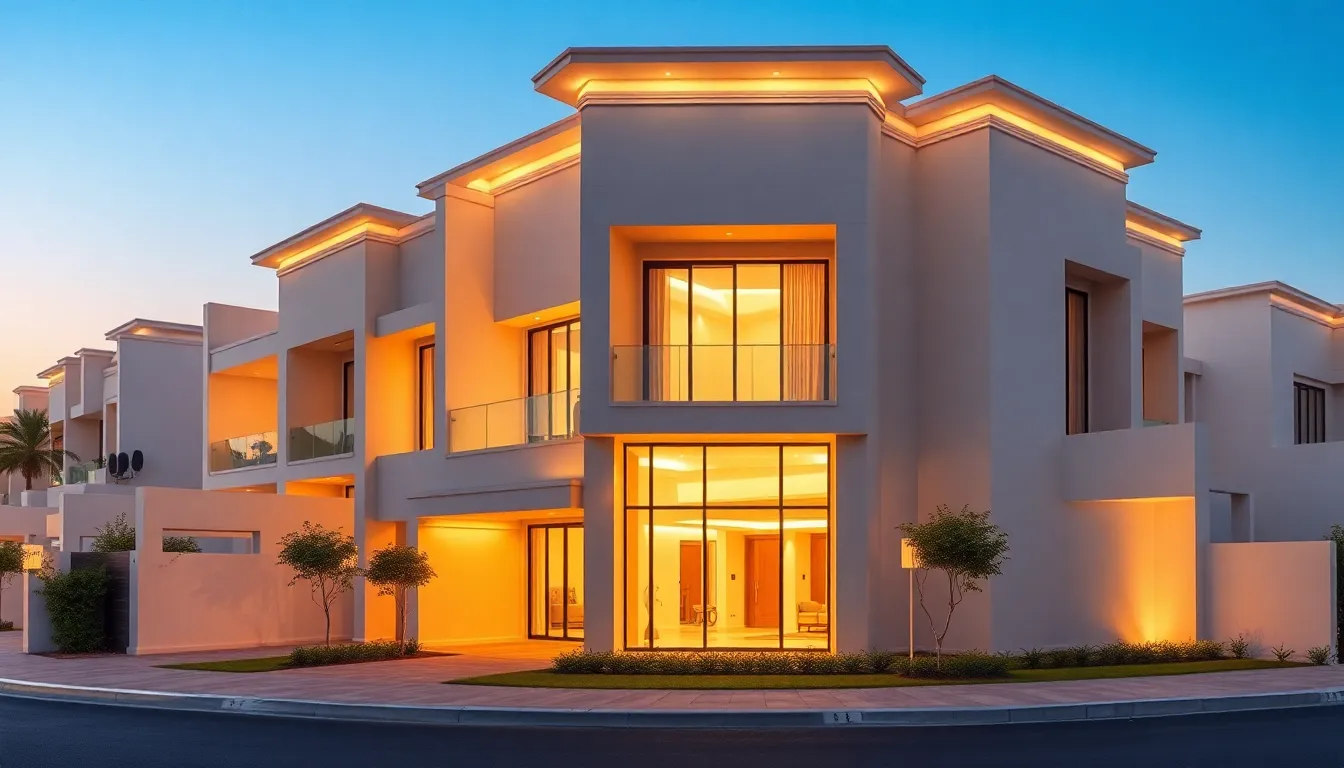
Why Do First-Time Buyers Pick the Wrong Dubai Townhouse?
Eight out of ten first-time buyers who walk into my office already have a spreadsheet. They’ve filtered by budget, square footage, and maybe proximity to a metro. And yet, within six months of moving in, half of them admit they’d move if they could. I’ve watched this happen through 15 years of handovers, snagging, and those awkward coffee chats six months later. The trend is clear: people think they’re buying a home, but they’re really buying a postcode—and they get the postcode wrong far more often than the budget.
Here’s why most misread the data. They look at a map and see a 20-minute drive to the office, not realising that at 7:45 am that same stretch takes 50. They see a community pool but don’t notice the nearest grocery is a 12-minute trudge in August. I remember one Tuesday at 6:45 a.m., stuck in the slow crawl just before the Safa Park exit on Sheikh Zayed Road. The sun wasn’t even fully up, casting long shadows across the concrete. To my left, a family in an SUV, kids in school uniforms, the father gripping the wheel, clearly making this drive every single day. That’s when it hit me—so many buyers choose a townhouse in Dubai without ever testing the morning commute that will define their weekdays.
I’ve sat with newlyweds, young families, and downsizers who all made the same mistake. They prioritised the property over the place. By the time they realise, they’ve spent six months driving a route that slowly drains their energy. And here’s the thing: the area isn’t just about location; it’s about the thousand tiny decisions you make every day because of that location. Let me break down what actually matters.
Why do so many first-time buyers get the area completely wrong?
Because they shop for a house, not a routine. I’ve lost count of how many clients sent me listings from a community because it was “up-and-coming” or “offered great value per square foot.” But when I asked what their Saturday looks like, they couldn’t answer. Do they want to walk to a café? Do they garden? Do they entertain guests who don’t drive? None of that fits on a spreadsheet column.
Buyers also fall for the “new is better” trap. A fresh off-plan townhouse in a master community glittered with renders is seductive. But I’ve seen families move to a community that’s only 30% built, with construction noise at 6 am and no supermarket for two years. Meanwhile, an older community might have mature trees, known traffic patterns, and a community that already functions. You can’t download that from a brochure.
Another blunder? Over-indexing on distance to Downtown or DIFC. Dubai isn’t a single-core city anymore; it’s polycentric. Your workplace might be in JLT, your child’s school in Nad Al Sheba, and your favourite restaurant on Al Wasl. At that point, “20 minutes from the Burj Khalifa” becomes irrelevant. I always tell buyers to map their personal triangle: home, work, school. That’s the geometry that governs your life.
What should I look for beyond the townhouse floor plan?
Next, look at the “third place” density. That’s the cafes, parks, gyms, and casual hangouts within a 10-minute walk. A townhouse with a lovely garden but nowhere to grab a coffee without driving feels isolated quickly, especially for a trailing spouse or teenage kids. Some of the most successful communities—think Arabian Ranches or Jumeirah Village Circle—have woven informal meeting points into the fabric. You don’t need a mall; you need a tree-shaded bench near a karak shop.
How do I match a community to my actual lifestyle?
Be honest about your non-negotiables. If you’re a family with young kids, the school catchment area isn’t a nice-to-have; it’s your daily logistics. A townhouse that’s a 25-minute drive from the nearest decent school means a solid hour of your day gone, five days a week. Multiply that by the school year, and you’re clocking hundreds of hours in a car. I’d rather a client compromise on a third bedroom than on a school run that bleeds their evenings dry.
For couples without kids, proximity to a vibrant dining scene or a quiet escape matters more. But here’s where I see tension: one partner wants a tranquil suburban feel, the other wants doorstep nightlife. You can’t have both. Townhouses in Dubai cluster in distinct lifestyle bands—the family-oriented suburbs, the edge-city communities, the urban-village hybrids. Al Furjan feels different from Town Square, which is worlds away from Mirdif. You need to look at buying property in Dubai not as a transaction but as a lifestyle audition.
I’ll tell you a story: a British couple came to me dead set on a specific modern complex near City Walk, convinced they wanted to be “in the thick of it.” After a weekend test drive—using an Airbnb in the area—they realised the constant construction and tourist traffic frayed their nerves. They ended up in a quieter, slightly greener spot, and now they thank me every time we meet. Because they figured out they’re actually morning-sunshine-and-a-garden-lounger people, not rooftop-pool socialites.
Which Dubai townhouse communities suit which buyer types?
| Community | Lifestyle Vibe | Commute to Business Bay (Peak) | Nearby Schools (Catchment) | Community Facilities | Buyer Profile |
|---|---|---|---|---|---|
| Arabian Ranches | Quiet family suburb, mature landscaping | 30–40 mins via Al Qudra | JESS Ranches, Raffles | 18-hole golf course, polo club, community centres | Western expat families, long-term tenants |
| Jumeirah Village Circle | Buzzy, diverse, compact urban village | 20–25 mins via Hessa St | Sunmarke, Arcadia, Nord Anglia | Multiple parks, Circle Mall, pop-up markets | Young professionals, families who want centrality |
| Town Square | Affordable family-centric, still developing | 25–35 mins via Al Barari | GEMS Metropole, Fairgreen | Large central park, retail hub, skating rink | Double-income families, first-time owners |
| Damac Hills 2 | Self-contained, leisure-heavy, outlying | 35–45 mins via Al Ain Rd | Jebel Ali School, South View | Waterpark, sports complex, petting zoo | Families prioritising facilities over commute |
| Tilal Al Ghaf | Premium lagoon-living, resort feel | 25–30 mins via Hessa St | Royal Grammar, Dwight School | Lagoon Al Ghaf, beach areas, retail avenue | Affluent families, second-home seekers |
Notice how the daily rhythm differs. A family in Damac Hills 2 might spend 90 minutes commuting but have a safari-worthy backyard. A JVC buyer sacrifices some quiet for being 15 minutes from everywhere they need. All these make sense—if they match your actual calendar.
What makes an area “worth it” in the long run?
Resale demand. I’m not talking about flipping; I’m talking about the ease of selling when your life shifts. And life always shifts. I’ve watched communities that were once darlings become ghost towns when a new, shinier master development opened nearby. The ones that hold value—and your sanity—tend to have three things: a functioning owners’ association, a mix of unit types (not just three-bed plus maid’s), and proximity to multiple employment nodes.
Infrastructure timeline matters more than you think. A townhouse might be brand new, but if the surrounding roads are in Phase 3 of a planned upgrade and you’re in Phase 1, you’ll be living with detours and diversions for three years. I’ve guided clients away from areas where the promised retail plaza was still a sand plot, because by the time it opens, their kids might be in secondary school. Real estate is a timing game; you want to move in when the community is ready to live, not just ready to hand over.
Here’s a truth I share with every first-time buyer: the best area is the one you can see yourself in on a bad day. Not a Friday brunch day. A regular Tuesday when the car won’t start and the groceries are running low. That’s when the local taxi access, the corner store, and the empathetic neighbour matter. I’ve had clients weep with relief in a community WhatsApp group because someone shared a handyman number at 9 pm. That’s invisible on Zillow, but it’s the real value of an area.
How do I evaluate the area before committing?
Rent first for a month if you can. Some buyers resist this, seeing it as “wasting” rent. But I’d rather waste a month’s rent than a decade of regret. Airbnb or a short-term lease in the target community gives you the unfiltered soundtrack: the call to prayer volume, the flight path, the early-morning gardener leaf blowers. You can’t gauge that on a 20-minute viewing.
Talk to residents. Walk the community park on a Friday afternoon and ask people if they’d buy again. I’ve done this myself. You’ll get honesty in five minutes that no sales brochure can match. A couple once told me their builder still hadn’t fixed snags after two years; another raved about how the community management handled a flood. Those narratives are pure gold.
Also, check the master plan’s phasing. Is the land next door slated for a school, a mosque, or a petrol station? The RERA register and the Dubai Land Department have information that reveals what’s coming. I’ve seen buyers shocked when a vacant lot they thought was a park turned into a four-lane road. Due diligence isn’t just about the unit; it’s about the 360-degree view for the next decade.
When you read more Dubai market insights, you’ll notice the same pattern: location is time, not just space. The further out you go, the more you trade minutes for square metres. Be sure you’re okay with that equation.
When is it smart to compromise on the area?
If your budget card is maxed and you’re choosing between a smaller townhouse in a prime spot versus a larger one in a fringe area, I often advise going smaller in the better location—within reason. Space can be reconfigured; location cannot. But there’s a nuance: if the prime area means a highly transient rental neighborhood where you’ll never know your neighbours, and community matters deeply to you, then the fringe might offer a better daily experience.
Also, compromise on area if you have a very stable work-from-home arrangement and the community gives you a lifestyle you’d travel for on weekends anyway. I’ve had creative professionals move to a distant townhouse because the silence and views fuelled their work. They drive into the city once a week for meetings and call it a fair trade. The key is doing the math on your personal “zone of tolerance” for isolation. Some people thrive; most don’t after two years.
I’ve also seen compromise work when buyers think beyond their current job. A young couple in their early 30s might buy in an emerging area near a planned metro extension, betting that in five years connectivity will transform. That can pay off—if you can stomach the interim. I always say: don’t bet on infrastructure promises unless iron is already in the ground.
Should I trust the developer’s completion timeline?
Also, consider the “community maturity curve.” A brand-new townhouse with zero immediate neighbours feels like a construction site. You need at least 30% occupancy before the place hums. If you buy off-plan in a phase that’s the first to hand over, expect to be pioneering. Some people love that—being the first to build a community—but others find it lonely. I remind buyers that a townhouse is a home, not an exhibit. You want life around you, not just a view of sand plots.
Before you check current Dubai investment options, make sure you’ve weighed how long you’re willing to wait for the area to catch up to the brochure.
Here’s another lens I use with clients: I call it the “Wednesday night test.” Imagine it’s a random Wednesday, 8 pm, and you need a litre of milk. How do you get it? If the answer is “drive 15 minutes,” the area might fail you 200 times a year. If it’s “walk three minutes to the community mini-mart,” that’s a win. These micro-errands are the friction that causes area fatigue. The best townhouse communities have embedded convenience stores within walking distance. It’s not glamorous, but it’s real.
How do I avoid the biggest first-time buyer mistake?
Stop looking at the property in isolation. Stand in the townhouse and visualise your Tuesday morning, your Thursday night, your Saturday afternoon. Who else is in the house? What are they doing? Where are they going? If the answers clash with the area’s offerings, keep looking. I’ve seen buyers fall in love with a show villa’s staircase and ignore that the nearest bus stop is a 25-minute walk. Emotion is not your enemy, but it needs a chaperone.
I also use a simple exercise: the “areas rejected” list. Instead of picking a top-three, I ask buyers to tell me which areas they absolutely wouldn’t live in, and why. That quickly surfaces their deep values. One client said no to any place where she couldn’t walk her dog off-leash safely; that deleted half the map. Another refused communities without a dedicated study space. Those boundaries are more revealing than any must-have list.
If you’re feeling overwhelmed, I’d say: pause the property portals and spend a weekend driving only through communities. No viewing appointments. Just observe. See the school buses, the joggers, the delivery motorbikes. That’s your future. Then think about the area as a long-term relationship—because that’s what it is. You’ll have good days and bad days, routines and surprises. The right area supports you quietly, the wrong area constantly reminds you it’s wrong.
I’ve been part of over a thousand transactions, and the ones that end happily usually involve a buyer who at some point said, “I see myself here even when I’m stressed.” That’s your sign. If you’d like to talk through your own shortlist, you can book a no-pressure consultation and we’ll map your real priorities against the hidden truths of each community.
FAQ: Townhouses for Sale in Dubai – Common Queries
Is it better to buy a townhouse in a new master community or an established one?
Established communities offer immediate liveability—mature trees, known traffic patterns, and functioning community groups. New master communities promise modern designs and long-term appreciation but require patience for amenities to open. Your choice should match your timeline for settling in.
How important is the school catchment area when choosing a townhouse?
It’s critical for families. A bad school run can consume 10+ hours a week. Look for a community with a quality school within 15 minutes’ drive, or ideally walkable. Factoring this in early prevents exhausting daily logistics later.
What are the hidden costs of a townhouse in Dubai?
Service charges, chiller fees (if district cooling), and community maintenance can vary wildly. Also, factor in the cost of running multiple cars if the area isn’t walkable—petrol, parking, and time add up quietly.
Can I negotiate on the area if my budget is tight?
You can’t move a community, but you can often find hidden pockets within a preferred area that are more affordable—older phases, slightly smaller units, or those a bit further from the main entrance. A good advisor can spot these nuances.
How do I research a community before visiting?
Join community Facebook groups, check Google Maps during peak hours, and read RERA bulletins. Real resident chatter reveals more than polished marketing. And don’t skip a night drive—lighting, noise, and security presence vary after dark.
What’s the biggest mistake first-time townhouse buyers make?
They let the visual appeal of the unit—a floating staircase, a sleek kitchen—override the reality of the area. A beautiful townhouse in a disconnected location becomes a beautiful prison. Prioritise the rhythm of daily life, not just the aesthetics.
Should I prioritise proximity to work or lifestyle amenities?
If you commute daily, proximity to work wins because it saves consistent hours. But if you work from home, lifestyle amenities (parks, gyms, cafes) matter more for your sanity. Ideally, find a balance—a place that doesn’t punish your commute or your weekends.
By Himanshu Gupta, Senior Property Advisor at Siddhi Estates — 15 years in Dubai real estate, from off-plan launches to handover and resale.
Siddhi Team
Dubai Real Estate Experts helping Indian investors find their perfect property in UAE.