
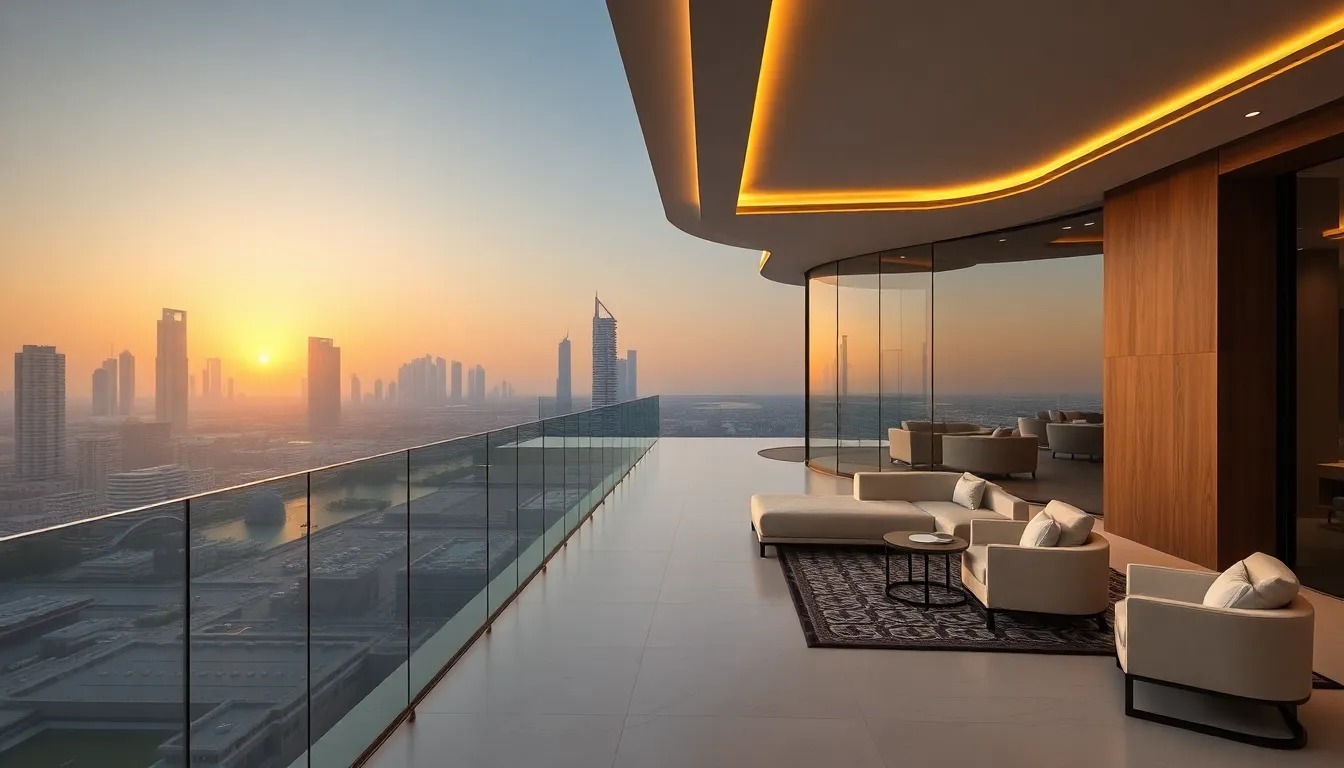
Why do Dubai penthouse buyers still get it wrong?
Most people think a penthouse is automatically the best apartment in a building. They assume that paying more for the top floor guarantees superior views, exclusivity, and a sound investment. I believed that too when I started out. Then I made a mistake that still shapes every piece of advice I give today.
It was a July afternoon, the kind where the city seems to hold its breath between the morning humidity and the evening mists. The summer market was quiet—fewer buyers, fewer viewings, more time to get things wrong. I had a client from Mumbai who wanted a penthouse in the Marina. He was insistent on the highest floor, the biggest terrace, the most dramatic panorama. I showed him exactly that: a sprawling duplex on the 45th floor, windows wrapping every wall, the sea glittering in the distance. He loved it. We walked out onto the terrace, and within seconds, the full force of the westerly sun hit us. The heat bounced off the marble tiles, the railing was too hot to touch, and the view, while stunning, was blasted by glare. He turned to me, sweat beading on his forehead, and said, “Himanshu, I can’t live like this.” That penthouse was perfect on paper, but in reality, it was unlivable at the time of day he’d most want to use it. I lost that sale, and it was my fault. I hadn’t considered how the sun moved across the space, or that in July, during the quietest weeks in Dubai real estate, you need to test a penthouse at the worst possible hour to see its true character.
That experience of a quiet summer market taught me that the best penthouse for sale in Dubai isn't about height—it's about how you live inside it. Over the years, I've seen similar mistakes repeated: buyers falling for tall lobbies and swirly marble without checking if the air conditioning can keep up, or if the panoramic windows turn the living room into a greenhouse. Let me walk you through what I've learned.
How did my early mistake change the way I evaluate penthouses?
After that day, I stopped treating penthouses like trophies and started treating them as complex machines designed for a very specific climate. I realized that a penthouse for sale in Dubai is not a standard apartment with a better view—it’s a volume of air at the top of a structure, subject to extreme temperature swings, wind loads, and maintenance challenges that lower floors never face. My mistake was simple: I focused on the brochure, not the building physics.
Now, before I even show a penthouse, I stand in it at different times of day. I check the sun path. I look at the thickness of the glass and the quality of the seals. I ask about the chiller system—is it district cooling or independent? In many older towers, the penthouse shares the same cooling capacity as units half its size, which means on an August afternoon, you’ll be sweating despite full AC. I once walked through a penthouse in Business Bay where the owner had installed two supplementary split units just to keep the master bedroom below 26 degrees. That’s not luxury—that’s survival.
What makes a Dubai penthouse actually liveable?
It comes down to three things: solar gain management, mechanical systems, and privacy. Solar gain is how much heat the space absorbs from the sun. If a penthouse has floor-to-ceiling glass facing west without external shading, you’ll pay for it in electricity bills and discomfort. Mechanical systems mean air handling, fresh air circulation, and humidity control. Privacy is often overlooked—on the 40th floor, you might think you’re above prying eyes, but with the right binoculars, the building across the street has a front-row seat to your sofa.
A truly liveable penthouse in Dubai will have deep overhangs or balconies that shade the main rooms, low-e coated glass, and a dedicated air handling unit (AHU) rather than fan coil units hooked to a central chiller. I’ve learned to ask for the completion certificate details: what insulation was used in the roof slab? Is there a ventilated cavity above the ceiling? These are questions that matter more than the brand of the kitchen faucets.
How do you spot a penthouse that will age well?
Look at the building’s overall maintenance, not just the penthouse’s fancy interiors. A penthouse is only as good as the common areas, the lift performance, and the management’s response time. I once showed a penthouse in Dubai Marina that was stunning inside—porcelain floors, a private pool on the terrace. But the building had a history of chiller breakdowns, and the residents’ association was in dispute with the developer. That penthouse was a time bomb of service charge hikes and emergency repair levies.
To spot longevity, I check how many original owners still live in the building, the condition of the exterior paint, and whether the pool and gym are properly maintained. If the building feels tired, the penthouse will follow within a couple of years. A quiet summer market is a great time to assess this: when the occupancy is low, you’ll see if the air conditioning in the lobby is struggling, if the landscaping is wilting, or if the security guards are lapsed in their checks.
Sun orientation: the silent dealbreaker no one talks about
In Dubai, the sun is your enemy for about eight months of the year. A north-facing penthouse in a building will have soft, consistent light all day but may feel cooler in winter and miss the dramatic sunset views. South-facing means you get the sun’s full arc—lovely in December, brutal in July. East-facing gives you glorious sunrises but heats up early. West-facing is the worst for afternoon heat, though it catches the sunset.
I advise clients to use a sun path app on their phone during viewings. Stand in the master bedroom at 4 p.m. in June and feel the heat. If the glass is cool to touch, the building has done its job. If not, walk away. I made that mistake in a quiet summer market once, and never again.
What role do service charges play in penthouse ownership?
Off-plan vs. ready penthouse: which is the better move?
Off-plan penthouses can be tempting—you get to choose your floor plan, finishes, and sometimes combine units. But Dubai’s off-plan market carries risk: delays, modifications to specifications, and changes in the surrounding development. A penthouse with a promised sea view can end up facing a new tower. I recall a client who bought off-plan in a premium waterfront project; by the time he got the keys, the adjacent plot had sprouted a hotel that blocked 40% of his panorama.
Ready penthouses let you test everything. You can visit at midday in August, check the acoustics when the wind howls, and see how the terrace handles a rainstorm. In a quiet summer market, sellers are often more motivated, and you can negotiate hard without the pressure of a bidding war. I prefer ready units for penthouses because the risk of disappointment is lower. Before you commit to any off-plan deal, I always recommend you see off-plan projects in Dubai with a critical eye—check the developer’s history of penthouse delivery, not just their marketing materials.
Comparing penthouse locations across Dubai
| Area | Lifestyle | View Dynamics | Connectivity | Typical Handover Standards | Community Feel |
|---|---|---|---|---|---|
| Downtown Dubai | Vibrant, 24/7 city buzz, proximity to malls and fountains | Burj Khalifa or fountain views; high-rise density can block side views | Excellent—metro, road links, walkable | Developer often semi-furnished; high-quality common areas | Lively, transient, many hotel apartments mixed in |
| Dubai Marina | Maritime, active, lots of dining and yachting | Marina basin or sea view; lower floors can feel enclosed | Good tram and access, but traffic bottlenecks | Varies widely; older towers need renovation checks | Social, expat-heavy, younger demographic |
| Palm Jumeirah | Resort-style, exclusive, beach access | Open sea or Atlantis/Ain Dubai; lower buildings mean wider vistas | Limited to road and monorail; car essential | High-end finishes, but maintenance can be challenging with sea exposure | Private, family-oriented, quieter |
| Jumeirah Beach Residence (JBR) | Beachfront living, loud and energetic | Direct sea or walkway; ground-level noise filters up | Excellent tram and promenade | Mixed; some penthouses have dated interiors needing upgrade | Touristy, high foot traffic, great for short-term rentals |
| Business Bay | Urban professional, new restaurants, canal walks | Canal or Downtown skyline; views often partial | Evolving; closer to DIFC, metro connections improving | Newer stock with modern specs; some water-facing gems | Young professionals, less established but growing |
| City Walk / Jumeirah Village Circle (JVC) | Community-centric; low-rise penthouses in suburban settings | Courtyards, parks, or open skies; no high-rise drama | Car-dependent but well-connected to major roads | Clean handovers, but customization options limited | Family-oriented, quieter, more permanent residents |
Inside the penthouse: a viewing checklist based on hard lessons
| Feature | What to Inspect | Why It Matters |
|---|---|---|
| Ceiling height | Measure from floor to slab (not drop ceiling); check any variations | Penthouses often have vaulted areas; ensure the volume is usable and not just for show |
| Window quality | Glass type, frame seals, thermal breaks | Cheap glass turns the room into a sauna; condensation between panes indicates seal failure |
| Terrace orientation | Compass direction, shading from adjacent structures | Usable outdoor space requires shade; a southwest terrace without cover is a no-go |
| Service charge breakdown | Review last two years’ invoices; ask about upcoming capital works | Sudden increases can ruin your budget; a building with poor reserves is a red flag |
| Maintenance history | Request building maintenance logs; check roof membrane repairs | Leaks are common; if the roof hasn’t been resealed in ten years, expect trouble |
| Privacy | Walk to every window and terrace edge; see what neighbors can see | You might be shocked how much is visible from adjacent towers or rooftops |
Why do some penthouses feel smaller than they actually are?
It’s all about the layout and volume trickery. Some developers stuff too many rooms into a penthouse, cutting up the flow with corridors and internal walls. The result is a rabbit warren on the top floor. A true penthouse should have at least one double-height space or an open mezzanine that gives a sense of air. I’ve walked into 4,000 sq ft penthouses that felt like 2,500 because the ceiling was low and the rooms were boxy. Before you fall for a floor plan, visit a completed unit. Stand in the living room and scan—if your eye hits a wall within ten meters, it’s going to feel cramped regardless of the total area.
What about “sky villa” penthouses? Are they worth the hype?
Sky villas are a Dubai invention: penthouses that mimic villas with private gardens, pools, and even multiple floors. They sound incredible, and some are spectacular. But they come with their own headaches. A private pool means you’re responsible for cleaning, chemical balancing, and pump maintenance—unless the building charges for it through service fees, in which case you’re paying anyway. A large garden terrace requires irrigation, drainage, and often specialist landscaping to survive the wind and salt on high floors. I’ve seen sky villa owners spend their weekends chasing after dead plants and pool leaks. They’re wonderful if you have the budget for a full-time maintenance team, but don’t assume it’s as easy as a ground-level villa.
If you’re drawn to the sky villa concept, I’d suggest you review premium Dubai developments that specialize in these kinds of properties. Look for developers who have completed sky villa projects before—there’s a steep learning curve, and you don’t want to be their first experiment.
How do I negotiate for a penthouse without coming off as aggressive?
Does the floor number still matter when you’re already at the top?
Yes, in Dubai, it absolutely does. Not just for views, but for settlement, wind, and even elevator logistics. The higher you go, the more the building sways. Most people don’t notice, but if you’re prone to motion sensitivity, a penthouse on the 60th floor might leave you feeling subtly queasy on windy days. Also, the lift system: if the penthouse is on the highest level, you’re the last stop, which sounds exclusive, but during peak hours, every floor’s stop adds time. And if the lift breaks down, you’re taking the stairs—yes, even in a penthouse.
Frequently Asked Questions
Are penthouses for sale in Dubai a good long-term investment?They can be, if chosen correctly. A well-located penthouse with timeless design and a solid building management record tends to hold value better than standard apartments, but overcapitalizing on customization or buying a flawed unit can lead to stagnation.
What’s the difference between a duplex penthouse and a simplex?A simplex penthouse is a single-floor unit at the top of a building, while a duplex has two floors connected by an internal staircase. Duplexes offer more separation between living and sleeping areas but often lose space to the staircase.
Do penthouses have higher maintenance costs than other apartments?Yes, proportionally so. Larger area means higher service charges, plus many penthouses have exclusive systems that may require specialist maintenance. Always read the service charge structure before signing.
Can I modify the layout of a ready penthouse?It depends on the building’s regulations and the type of modification. Non-structural changes like combining rooms or adding partitions are often allowed with approval from the developer or owners’ association. Structural changes are rarely permitted in completed towers.
How long does it take to buy a penthouse in Dubai from start to finish?For a ready property with a mortgage, expect 4-6 weeks if all documents are in order. Cash deals can close in as little as two weeks. Off-plan purchases have a different timeline tied to construction milestones.
What should I look for in a penthouse viewing beyond the obvious?Bring a telescopic mirror to check behind built-in cabinets for moisture or rust. Touch the walls—are there cold spots or damp patches? Check the water pressure in the showers. And always request a night viewing; some penthouses pick up vibration from rooftop mechanicals that aren’t apparent during the day.
Is it risky to buy a penthouse off-plan without seeing it?It carries higher risk because you can’t test the physical environment. Mitigate by researching the developer’s track record with similar products, visiting other completed projects, and ensuring your contract includes delivery timelines and specifications in detail. If you want to explore current off-plan offerings, I suggest you reach out for a property walkthrough of a comparable completed penthouse so you know what to expect.
Final thoughts from the terrace
I still think about that afternoon in the Marina, watching my client’s face fall. It taught me that a penthouse isn't a status symbol—it’s a sensory experience. The heat on your skin, the sound of the wind, the way the light changes from morning to night. If you’re hunting for a penthouse for sale in Dubai, don’t get seduced by the double-height ceilings and the infinity pool. Think about how you’ll actually live in the space, day after day. Test it at the worst possible moment, and if it still feels like home, then you’ve found the one.
I’ve spent 15 years learning these lessons, often the hard way. I hope sharing them saves you from making the same mistakes I did. For a deeper dive into any of these topics, feel free to explore more buyer resources or reach out directly for honest, boots-on-the-ground advice.
By Himanshu Gupta, Senior Property Advisor at Siddhi Estates — 15 years in Dubai real estate, from off-plan launches to handover and resale.
Siddhi Team
Dubai Real Estate Experts helping Indian investors find their perfect property in UAE.