
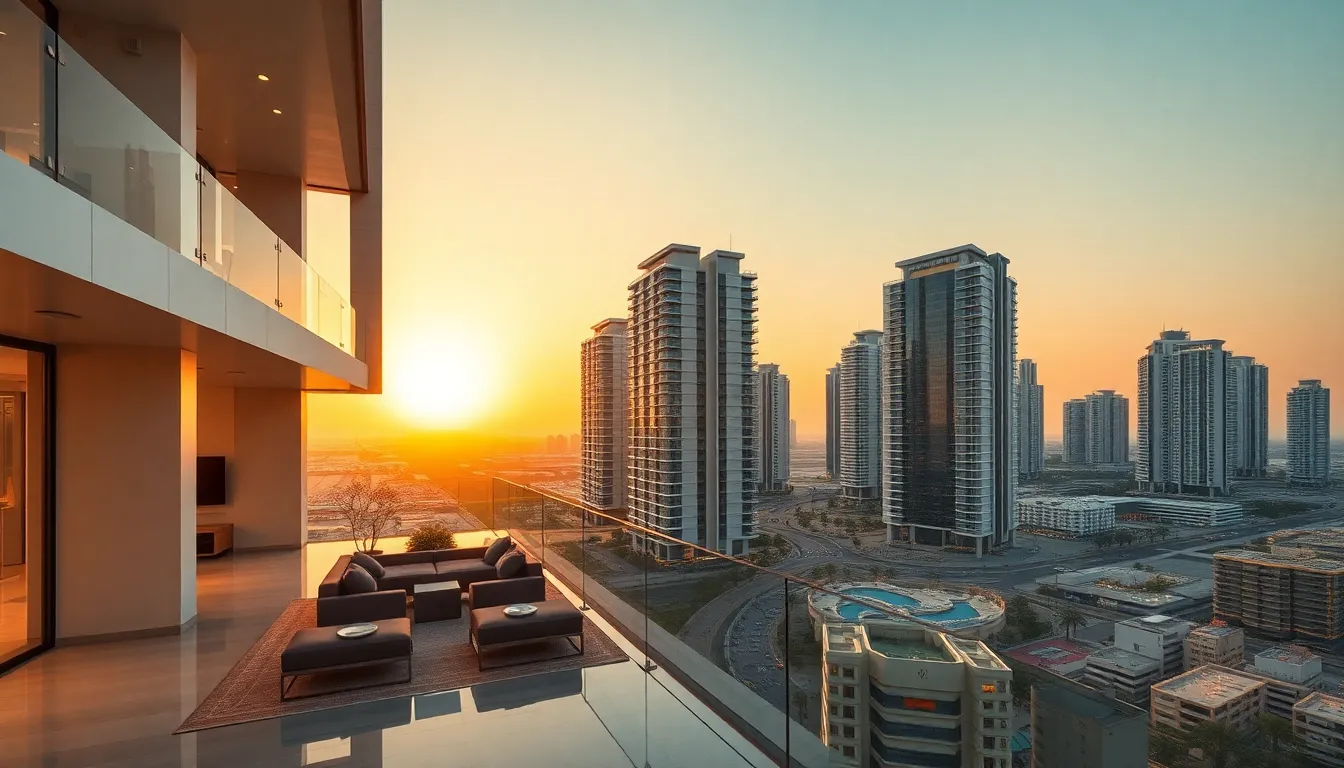
Why are there so many new Dubai projects for sale?
Last month, a client—let’s call her Sara—sat across from me in my office, the faux leather chair squeaking as she leaned forward. She had a stack of brochures so thick they wouldn’t lie flat, their glossy pages smelling like fresh ink. The sun was hammering the windows, and the AC was struggling—the kind of afternoon that makes you forget it’s November. I poured her a glass of water and took a deep breath. “Himanshu,” she said, half laughing, half frustrated, “why are there so many new projects in Dubai for sale? Every day my inbox has three new launch invites. How is a normal person supposed to pick?”
I’ve been in this chair for 15 years, and I’ve never seen a launch calendar like 2026. But Sara’s question is the one I’ve been answering in my sleep. So I told her the truth: it’s not a bubble, but it’s not a free pass either. The scale of off-plan projects today reflects a city that’s learned from past cycles and is building for real demand. Let me walk you through what I told Sara.
What’s driving all these new launches in 2026?
I remember 2008. I remember 2014. Those cycles taught me that launches spike when three things align: buyer appetite, developer confidence, and government push. Right now, we have all three. The government’s updated visa rules (golden, retirement, remote-work) keep bringing in people who want to stay. These aren’t just investors flipping contracts; they’re families, young couples, and professionals who figure Dubai is safer and more liveable than most cities.
Developers aren’t stupid. They see cranes and they want their share. Emaar, Damac, Sobha, and a dozen newer names are racing to carve out niches. Some are betting on suburban-like communities near the Expo City site. Others are squeezing towers onto the last waterfront plots. The Expo 2020 legacy didn’t vanish. It left a skeleton of infrastructure and a mindset. Dubai South is now a proper city-within-a-city, and the new airport terminal is no longer a pipe dream. I drove a client there last week; the roads are smooth, the landscaping mature, and the lack of traffic almost eerie. It made me feel like we were in a completely different emirate.
I had a client, Ahmed, two summers ago. He was buying a resale in JBR—a nice two-bedroom with a view. The negotiation dragged for eight weeks. I can still hear the click of his pen when he was about to sign, only to have the seller’s lawyer call and introduce a new clause about maintenance fees. The negotiation felt like a chess match where the board kept changing. I remember the smell of stale coffee in my office at 11 p.m., the phone buzzing non-stop, the seller’s agent calling with “final” offers that weren’t final, the sound of papers shuffling as we printed another amended MOU. In the end, the seller pulled out. Ahmed was exhausted and said, “Never again with resale.” That frustration is partly why so many buyers now lean toward brand-new projects—there’s a freshness, a clarity, a single contract with a developer who (usually) doesn’t play games.
But the boom is also about infrastructure. The Dubai real estate market has matured. New master plans for areas like Dubai South and the extension of Sheikh Zayed Road towards the new airport are no longer just renders on a screen. I’ve driven there. The roads are real, the streetlights are on. That changes what “off-plan” means—it’s not desert anymore; it’s a community with a school and a supermarket in phase one.
How do I separate the hype from the truly smart buys?
Remember the mega-project that was all over the news in 2024? The one with the floating villas and a monorail? I won't name names, but half of those villas are still empty shells. The marketing was world-class; the execution, not so much. I always tell my clients: if it sounds too good to be true, it probably needs another five years before it becomes reality.
In 2026, we’re also seeing a bigger split between ultra-luxury projects and mid-market communities. The luxury ones tend to sell on exclusivity and design. But the smart money I see goes into well-planned, mid-market communities with good connectivity. They rent out fast. They don’t sit empty. When you sell, there’s actual demand, not just a pool of investors trying to flip to each other.
Before you commit, you should browse our Dubai real estate listings to compare what’s already available in the same area. Often, a nearly complete project from a previous cycle offers better value because you can see it, touch it, and move in within months. But if your heart is set on new, then study the payment plan. The best ones post-handover are 50/50 or even 60/40 across several years, but that only helps if the developer delivers.
I’ve seen clients get mesmerized by a glamorous sales center with free coffee and a virtual reality walk-through. That’s the equivalent of a first date in a fancy restaurant—it’s designed to impress. The real test is the developer’s escrow account history, their RERA rating, and the actual progress on site. I drive to sites unannounced. If a project that broke ground two years ago is still a hole in the ground, I take my clients elsewhere.
What should I know about buying off-plan in 2026?
The core question Sara eventually asked was: “Is it safe?” And I get it. The word “off-plan” still makes some people think of unfinished towers and lost money. But the Dubai Land Department has tightened rules. Every project has an escrow account. Payments are released only when construction milestones are verified. That doesn’t mean zero risk—there are still delays—but it’s a far cry from the wild west of 2008.
In 2026, one new twist: many developers now offer robust post-handover payment plans that stretch up to 3 years. This can be a double-edged sword. It eases cash flow, but it also locks you into a unit you might not want to keep if the market shifts. I always tell clients: buy because you’d live there or you know a renter who would. Not just because the payment plan is easy.
When you’re ready to explore, see off-plan projects in Dubai that I’ve personally toured. I don’t list every project—only those where I’ve kicked the concrete and spoken to the contractors. It’s the only way I can sleep at night recommending them.
And a word on paperwork: NRIs, in particular, need to get their power of attorney sorted early. I’ve seen deals fall through because a POA wasn’t attested in time. The process is faster now with digital Oqood registration, but you still need a reliable agent to walk you through.
Which new communities are worth looking at right now?
I hate questions like “which area is best” because it depends entirely on who you are. But here’s a breakdown based on what my clients tell me they care about in 2026. I’ve compared four popular areas where new projects are clustering. This table is about lifestyle, not numbers.
| Community | Community Feel | Handover Timeline (Typical New Phase) | Commute to Downtown (Peak) | Key Amenities | Most Common Buyer |
|---|---|---|---|---|---|
| Dubai Creek Harbour | Waterfront living, a bit quieter, families and couples | 2–3 years from launch | 15–20 mins via Sheikh Zayed Road | Marina, parks, central plaza, schools underway | End-users looking for a view and community |
| Dubai South | Suburban energy, feels like a new city emerging, very family-oriented | 3–4 years (larger districts) | 30–40 mins, but Al Maktoum Airport proximity matters | Green spaces, soon-to-open metro link, logistics hub jobs | Long-term investors and aviation professionals |
| Jumeirah Village Circle (JVC) | Lively, dense but convenient, mix of young renters and owners | 1–2 years (smaller developments) | 25–30 mins depending on gate exits | Retail strips, community parks, proximity to all major malls | Investors who want quick rental yield and first-time buyers |
| Damac Lagoons | Themed resort-style, almost vacation vibe, heavily planned around water | 2–4 years (massive scale) | 25–35 mins via Hessa Street | Water features, sports zones, retail, but some phases have limited amenities initially | Families seeking a unique lifestyle, cautious investors watching delivery |
Notice I didn’t include JBR or Dubai Marina. Those are mostly built out; new projects there are rare and often ultra-luxury. The real volume is in these growing districts. If you’re an investor, I’d point you to JVC or Dubai South for rental demand. If you plan to live there, Dubai Creek Harbour or Lagoons might pull you in.
How do I time my purchase if I’m an NRI or first-time buyer?
NRIs often ask me if they need to be in Dubai to buy. Not necessarily. I’ve handled purchases entirely over Zoom, with the client signing from London or Mumbai. The key is to have a trusted team on the ground—a lawyer, an advisor, and a good developer liaison. I’ve walked through units with my phone camera, showing everything from the kitchen backsplash to the bathroom drainage. It’s not the same as being there, but in 2026, 360-degree virtual tours and live streaming are a standard part of my day.
First-time buyers, though, should come if they can. Touch the walls. Stand on the balcony and listen to the traffic. The sensory experience matters. When Ahmed was in that resale negotiation, he learned that a photo can’t tell you if the next-door building’s generator hum echoes into the bedroom. With new projects, the risk is different: the noise isn’t there yet, but it will be. So I always recommend visiting the developer’s previous project at the same time of day you’d actually be home.
If you’re feeling overwhelmed, get personalised guidance from our team. We talk through your schedule, your budget constraints (yes, without mentioning numbers, we still figure out your comfort zone), and your five-year plan. Because the best time to buy isn’t when a project launches; it’s when that project matches where you actually want to be in 2030.
Off-Plan Buying Process: Key Milestones
Sometimes it helps to see the timeline laid out. Here’s how it typically goes from the day you say “yes” to the day you get keys.
| Stage | Typical Timeframe | What to Expect | Your Role |
|---|---|---|---|
| Reservation & Booking | 1–5 days | Pay reservation fee, sign initial form, receive unit details | Provide passport copy, select unit, know your payment plan |
| SPA Signing & First Installment | 1–4 weeks | Developer issues Sales Purchase Agreement; you sign and pay 5–10% (varies) | Review SPA with lawyer if unsure, ensure all names correct |
| Construction Updates | Every 6 months (approx) | Developer notifies of progress, may request next installment | Track milestones, visit site if possible, check RERA status |
| Pre-Handover Notice | 1–3 months before completion | You’re informed of approximate handover date; start mortgage finalization if applicable | Arrange finances, get ready for snagging |
| Snagging Inspection | 1–2 weeks before handover | Walk through unit with developer rep to list defects | Be thorough; bring a snagging list or professional; document with photos |
| Handover & Key Collection | Upon snagging resolution | Pay final installments, sign handover papers, receive keys | Verify everything is fixed; get Oqood and title deed registered |
This process hasn’t changed dramatically, but in 2026 the digital side is smoother. Oqood is instant on your phone, and you can track your unit’s title deed online. Still, human error happens. I’ve had to fix a client’s name spelling three times on a title deed because the developer’s admin kept using their email signature instead of passport. Small things, but they delay handover.
FAQs: What People Ask Me About New Projects in Dubai
Q: Are new projects in Dubai safe to buy off-plan?
A: Yes, when you stick to RERA-approved developers with a strong track record. The escrow system protects your payments, but always check the developer’s completion rate.
Q: Can NRIs buy new projects in Dubai?
A: Absolutely. Most developers welcome NRI buyers. You’ll need a valid passport, a UAE bank account (or payment options from abroad), and possibly a power of attorney if you can’t be present for signing.
Q: How long does handover usually take for new launches?
A: Anywhere from 18 months for a small building to 4 years for a massive master community. I always add a 6-month buffer in my head because very few projects hit their first announced date.
Q: What if the project is delayed?
A: Under Dubai Law No. 13 of 2008, if delivery is delayed, you may be entitled to compensation or cancellation rights. But it’s best to choose developers with a reputation for on-time delivery to avoid the hassle.
Q: Can I get a residency visa through an off-plan purchase?
A: Yes, if the property value meets the threshold (varies by visa type) and the construction is complete enough to be registered as your residence. In 2026, the rules are generous, especially for investors.
Q: Is it better to buy new or resale in 2026?
A: It depends. New offers modern design, lower upfront cash flow with payment plans, and warranty. Resale gives you immediate possession and a known community feel. I often lean my clients toward new if they can wait, but only if the developer is solid.
Q: What’s the biggest mistake first-time buyers make in new projects?
A: They don’t check the developer’s past work or visit the site. A brochure and a sales pitch are not a home. Always walk the land first, even if it’s dusty.
If you want to dig deeper into the patterns behind these launches, read more Dubai market insights on our blog. I break down trends without the sales fluff.
By Himanshu Gupta, Senior Property Advisor at Siddhi Estates — 15 years in Dubai real estate, from off-plan launches to handover and resale.
Siddhi Team
Dubai Real Estate Experts helping Indian investors find their perfect property in UAE.