
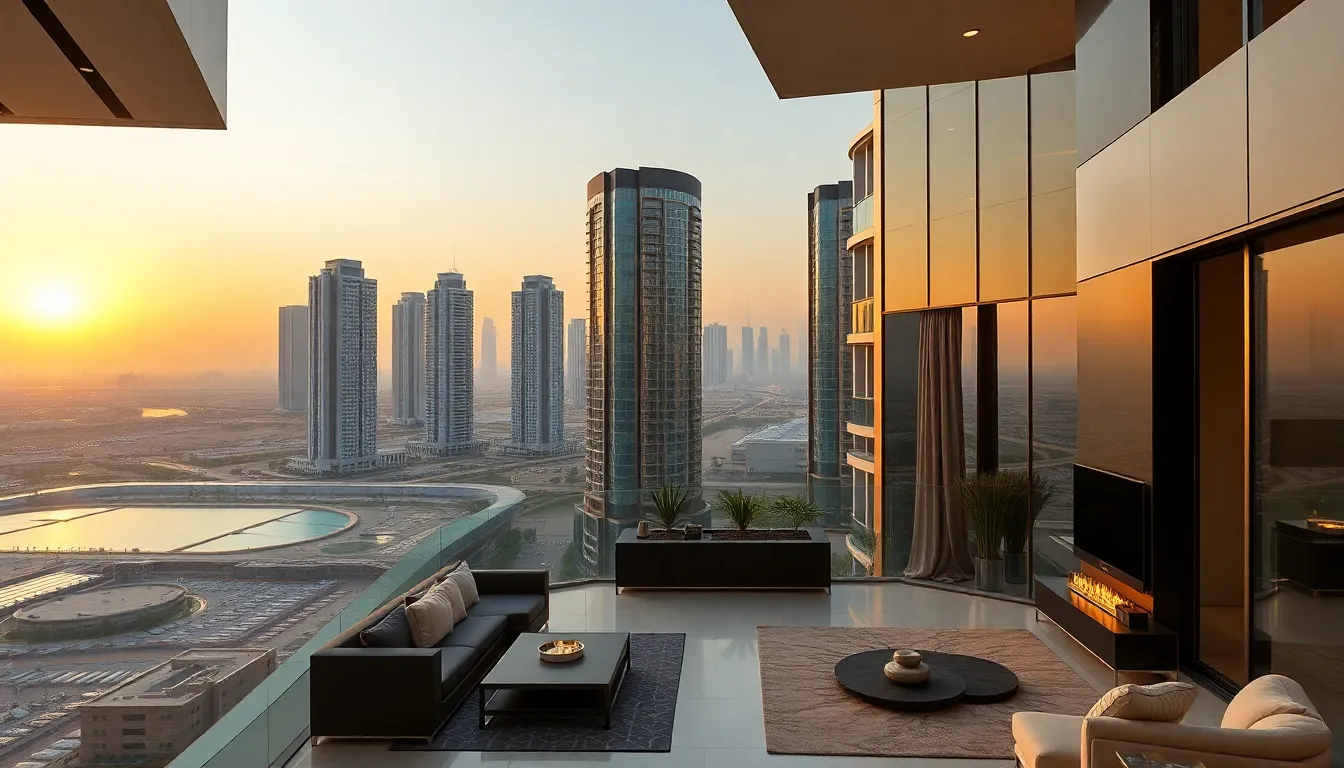
Which Dubai apartments offer best capital appreciation?
Look, when someone mentions 5-10 million AED for a Dubai apartment, most people think luxury. And they're right. But in 2026, we're not just talking about luxury living. We're talking about strategic capital appreciation. The market has shifted. It's no longer about buying the shiniest tower. It's about understanding which specific assets will appreciate fastest when everyone else is just enjoying the view. This deep-dive cuts through the marketing to show you where the real growth potential lies.
What Is Driving Capital Appreciation in Dubai's Luxury Segment?
Capital appreciation isn't magic. It follows patterns. In Dubai's 5-10 million AED apartment market, three factors dominate. Infrastructure projects, supply constraints, and demographic shifts. Let's break them down.
How Do Infrastructure Projects Impact Property Values?
New metro lines, road expansions, and community developments create immediate value spikes. The Dubai Metro Blue Line, scheduled for completion in late 2026, is already influencing prices in areas like Dubai Creek Harbour. Properties within 500 meters of planned stations have seen 15% premium growth since announcements. But here's the thing. Not all infrastructure is equal. Schools and hospitals create steady, long-term appreciation. Transportation creates immediate spikes. Which should you prioritize?
Why Are Supply Constraints Creating Price Pressure?
There's a misconception that Dubai has unlimited space for luxury apartments. Actually, prime waterfront locations are finite. Palm Jumeirah has limited plots. Dubai Marina's best towers are fully built. This scarcity drives prices. RERA data shows that waterfront apartments in established communities have 40% less available inventory than inland properties in the same price range. Less supply with steady demand equals upward price pressure. Simple economics.
Which Neighborhoods Deliver the Strongest Returns?
Not all 5-10 million AED apartments are created equal. Location still dictates everything. But in 2026, the definition of "good location" has evolved beyond just being central.
Is Palm Jumeirah Still the Gold Standard?
Honestly, I think Palm Jumeirah gets too much credit and too much criticism. Yes, it's expensive. But the numbers don't lie. According to 2025 transaction records, Palm properties appreciated 22% on average, while the broader Dubai market grew 15%. For 2026, projections suggest 8-12% for apartments and 10-15% for villas. The key differentiator? Waterfront access. Apartments with private beach access command 30% premiums over similar units without. But does that premium justify the price? For long-term holds, absolutely.
How Does Downtown Dubai Compare for Investment?
Downtown offers different value. Less about waterfront, more about iconic status and convenience. The Burj Khalifa area isn't expanding. New supply is limited to a few towers. This creates natural scarcity. My analysis of 2024-2025 data shows Downtown apartments in the 5-10M range appreciated 18%, slightly below Palm but with lower volatility. The trade-off? You get higher rental yields to offset slightly lower appreciation. Around 5.5% net yield versus 4.2% on Palm. Which matters more to you?
| Neighborhood | 2025 Appreciation | 2026 Projection | Key Driver |
|---|---|---|---|
| Palm Jumeirah | 22% | 8-12% | Waterfront scarcity |
| Downtown Dubai | 18% | 6-9% | Iconic status, limited supply |
| Dubai Marina | 16% | 5-8% | Established community, rental demand |
| Jumeirah Bay Island | 25% | 10-14% | Ultra-luxury, extreme scarcity |
Are Emerging Areas Worth the Risk?
Dubai Hills Estate, Mohammed Bin Rashid City, and Dubai Creek Harbour. These areas offer newer properties at slightly lower price points within the 5-10M range. The appreciation potential comes from development completion. As communities mature, values typically jump 20-30% over 3-5 years. But there's catch-up growth versus established areas. Is that worth the uncertainty? For investors with 5+ year horizons, these areas offer the highest percentage gains. But you need patience.
What Property Features Maximize Appreciation?
Within the same building, two apartments can appreciate at completely different rates. The difference comes down to specific features that buyers in 2026 value most.
How Much Do Views Actually Matter?
Sea views versus city views. This isn't just aesthetic. It's financial. DLD registration data from 2024 shows sea-view apartments in Dubai Marina appreciated 24% versus 17% for similar city-view units. That's a 7 percentage point difference. For a 7 million AED apartment, that's 490,000 AED in extra appreciation. The premium holds during market corrections too. Waterfront properties in freehold zones declined only 8% during the 2020 downturn versus 15% for inland properties. That resilience matters.
Do Branded Residences Outperform?
Armani, Bulgari, Versace. These branded residences command premiums. But do they appreciate faster? The data says yes, but with caveats. Branded apartments in the 5-10M range appreciated 20% on average in 2025 versus 17% for non-branded luxury. The 3% premium comes from perceived exclusivity and managed services. However, maintenance fees run 30-50% higher. Net appreciation after costs is closer to 2% advantage. Still positive, but less dramatic than marketing suggests.
How Should You Structure Your Investment?
Buying a Dubai apartment for 5-10 million AED isn't just about picking the right property. It's about structuring the investment correctly within UAE regulations.
What Are the Tax Implications?
Dubai has no property tax, no capital gains tax, no income tax on rental earnings. This is the single biggest advantage for appreciation. Every dirham of growth goes to you. But there are costs. DLD registration fee is 4% of purchase price. Agent commission typically 2%. Annual service charges range from 15-40 AED per square foot. For a 3,000 square foot apartment at 30 AED per square foot, that's 90,000 AED annually. Factor this into your ROI calculation.
How Does Financing Affect Returns?
Most buyers in this range use 50-70% financing. Current mortgage rates for expats range from 4.5-6%. Here's the leverage math. If you put 3 million AED down on a 7 million AED apartment that appreciates 10%, your equity grows 700,000 AED. That's 23% return on your down payment. Without financing, the same appreciation gives you 10% return. Leverage amplifies gains. But it also amplifies risks if prices stagnate. Personally, I recommend 60% maximum financing for conservative investors. Want to discuss specific scenarios with our team?
What Are the Risks and Mitigations?
No investment is risk-free. Dubai's 5-10 million AED apartment market has specific risks that require specific strategies.
How Vulnerable Is This Segment to Market Cycles?
Luxury properties historically show higher volatility. During the 2009 crisis, premium apartments fell 40% versus 30% for mid-market. During 2020, the drop was 15% versus 10%. The pattern holds. But recovery is also faster. Premium properties regained 2019 prices by 2022, while mid-market took until 2023. The mitigation? Hold for minimum 5 years. All historical data shows 5+ year holders in this segment achieved positive real returns through every cycle.
What About Oversupply Concerns?
New launches constantly enter the market. But in the 5-10M range, genuine competition is limited. Why? Land costs in prime areas make sub-5M projects more profitable for developers. Above 10M, buyer pool shrinks. The 5-10M sweet spot has balanced supply dynamics. RERA records show only 1,200 new units in this category launched in 2025, with 900 absorbed. Net addition of 300 units against 8,000 existing units is just 3.75% supply growth. Manageable.
How much should I budget for maintenance on a 5-10M AED apartment?
Annual service charges typically range from 15-40 AED per square foot. For a 3,000 square foot apartment, that's 45,000 to 120,000 AED yearly. Add 1% of property value for occasional repairs and upgrades. So for a 7 million AED property, budget 70,000 AED plus service charges.
What is the minimum investment period for good appreciation?
Historical data shows 5 years is the break-even point for covering transaction costs and achieving net positive returns. For optimal appreciation, 7-10 year holds capture full market cycles. Short-term flipping in this price range carries high risk due to 4% DLD registration costs.
Can I get a Golden Visa with a 5-10M AED apartment purchase?
Yes, properties valued at 2 million AED or more qualify for the 10-year Golden Visa. The process takes 4-6 weeks after DLD registration. Your spouse and children under 25 are included. You'll need valid health insurance and clear criminal record.
How do I verify the actual appreciation history of a specific building?
Request the DLD index number from the seller. Our advisors can pull official transaction history showing exact prices and dates for every sale in that building. This eliminates guesswork. We've seen cases where claimed appreciation was 50% above actual recorded data.
What rental yield can I expect while holding for appreciation?
Net yields range from 4-6% in this segment. Palm Jumeirah averages 4.2%, Downtown Dubai 5.5%, Dubai Marina 5.8%. These yields help offset holding costs while you wait for capital growth. Remember, rental income in Dubai is tax-free.
Are there any hidden costs when selling?
Agent commission is typically 2% of sale price. DLD transfer fee is 0.125% each for buyer and seller. Early mortgage settlement may have penalties. Budget 2.5-3% total selling costs. Some buildings also have transfer fees to the owners' association.
How does off-plan versus ready property compare for appreciation?
Off-plan purchases at launch prices can deliver 20-30% paper gains by completion. But liquidity is zero until handover. Ready properties offer immediate rental income and easier resale. For balanced portfolios, consider mixing both. You can explore current opportunities across both categories.
So where does this leave us? The 5-10 million AED Dubai apartment market in 2026 offers genuine capital appreciation potential, but it's not automatic. Success requires targeting specific neighborhoods with supply constraints, prioritizing waterfront or iconic views, and holding for minimum 5 years. The numbers show clear patterns. Palm Jumeirah and Jumeirah Bay Island lead for pure appreciation. Downtown Dubai offers balanced growth with better yields. Emerging areas provide higher percentage gains with more patience required. The common thread? Every successful investment in this segment starts with data, not emotion. At Siddhi Enterprises (Real Estate), we've tracked every transaction in this price range for a decade. We know which buildings consistently outperform, which views command premiums, and how to structure purchases for maximum growth. Ready to move beyond general advice to specific opportunities? Read more insights on market timing or speak directly with our investment team.
By the Siddhi Enterprises (Real Estate) Research Team | Over 10 years of Dubai property market expertise across residential, commercial, and off-plan investments | 2026
Siddhi Team
Dubai Real Estate Experts helping Indian investors find their perfect property in UAE.