
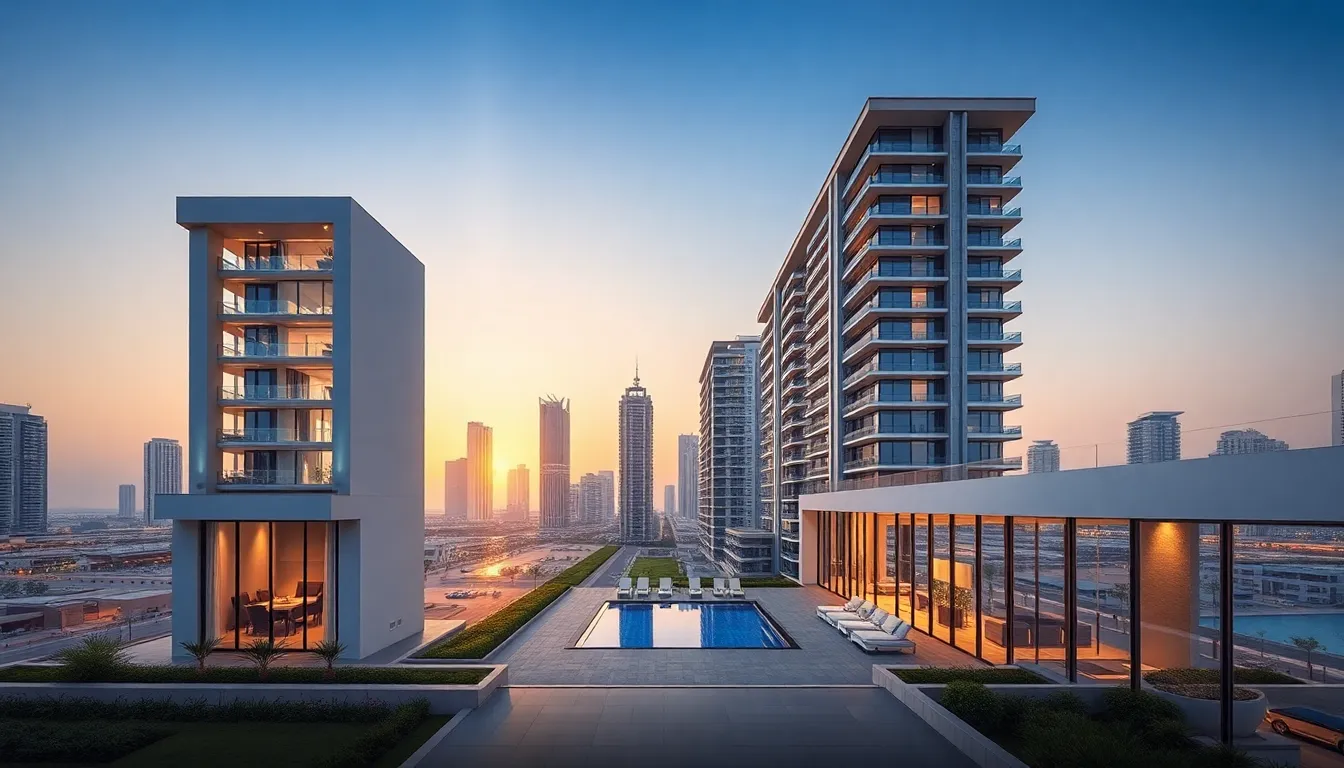
What's Really Changed in New Dubai Property Launches?
Never trust a handover date for a new launch until you’ve seen the actual snagging list from a similar completed project by that developer. I learned that the hard way back in 2024, sitting in a developer’s temporary sales tent with the air conditioning barely working, the smell of fresh concrete and diesel from the construction site mixing unpleasantly. I’d brought a client to finalize a unit in a much-hyped Dubai South development, and we were told “Q4 2025” was firm. Two hours later, after three cups of weak karak, a frazzled sales manager admitted the project had just hit a two-year delay because of a contractor dispute nobody on the front line had been told about. My client’s face fell—and I realized that shiny brochures mean nothing when you haven’t kicked the tires on the developer’s last project.
Over the last 15 years, I’ve watched new Dubai property launches evolve from the frenzy of 2013-2014, through the quiet panic of 2020, to the cautious optimism of today. What’s different now isn’t just the marketing. It’s the entire rhythm of how a project goes from concept to keys in your hand. And if you’re buying off-plan in 2026, you need to know what’s changed, why it matters, and where the traps still hide.
Let’s walk through it, honestly.
What Actually Prompted This Shift in New Launches?
The blunt answer is: a series of market corrections and regulatory slaps on the wrist that forced developers to grow up. Between 2023 and early 2025, Dubai’s off-plan market saw a glut of launches—some from credible names, many from overambitious new entrants who had no business managing a construction budget. Buyers got burnt. I personally heard from four different clients in 2024 who were chasing refunds from projects where handover had slipped by 18 months with no explanation.
RERA and the Dubai Land Department stepped in harder. Developer escrow regulations—the rules that ensure your money only gets used for your project—got teeth. I remember when an escrow account was more of a formality. Now, developers must meet strict milestones to draw funds, and payment plans are often tied to construction progress, not just a calendar. That’s a direct reaction to the chaos.
But it wasn’t just the regulators. Buyers themselves started demanding transparency. I saw a shift in my own meetings: clients began asking for snagging warranties and finished project references, not just renderings. By mid-2025, a developer who couldn’t show a well-maintained five-year-old building was automatically suspect. Reputation became currency, and that forced even the big names to clean up their act.
How Do Today’s Launch Terms Compare to What I Saw in 2021?
Massively. In 2021, a handover date was often a fantasy. Off-plan payment plans were aggressive: 50% during construction, 50% on handover—except handover never came on time, so your final payment also got delayed, which sounded good until the contractor walked off site. Now, I’m seeing 70/30 or even 80/20 splits, with the bulk due after you’ve taken possession. Some developers offer post-handover installments for two years. That’s music to an end-user’s ears who is renting while waiting.
And the frenzy? Gone. Back in the old days, I’d get calls at 6 a.m. to queue for an Emaar launch in Dubai Creek Harbour. People treated it like a concert ticket. Today, you can actually walk into a sales office—or browse online—and have a proper conversation. The buyer profile has shifted too: more end-users with real lives, not pure speculators. If you’re curious about what’s available now, you can check current Dubai investment options without any pressure. It’s become a buyer’s market for off-plan, and that’s a good thing.
What Should You Really Expect from Handover Timelines?
Double the promise, then add a buffer. I’m not being cynical—I’m being practical. In 2024, I had that two-hour wait in the sales tent I mentioned. But that wasn’t my first rodeo. Two years earlier, a different developer in JVC promised a 30-month delivery for a mid-rise building. We’re now 40 months past launch, and some units still have plastic wrapping on the electrical sockets. The official line was “force majeure” due to heatwaves and supply chain—true, but also a convenient blanket.
What’s changed is that more buyers are walking into these deals with open eyes. I now tell my clients: get a developer’s last three handover timelines—actual dates vs. promised ones. If they averaged over six months of delay, factor that in. And always, always inspect a finished property from that developer. You can’t do that with a new launch, but you can at least judge their finishing quality and attention to detail by visiting a community they’ve already built. The days of blindly trusting a brand are over.
Key New Launch Districts — How They Stack Up in 2026
| District | Lifestyle & Vibe | Connectivity | Handover Realism | Amenities | Typical Buyer |
|---|---|---|---|---|---|
| Dubai South | Master-planned around Al Maktoum Airport, growing residential community with a suburban feel | Easy access to Expo Road, Sheikh Mohammed Bin Zayed, upcoming metro link | Moderate; large-scale phases often push back, but recent completions improving | Community parks, retail centres, schools, health clinics | Mid-income families, long-term investors betting on airport expansion |
| Dubai Creek Harbour | Upscale waterfront lifestyle, art and culture emphasis, close to Downtown | Well connected via Ras Al Khor Road, future metro; currently 15-20 mins to Downtown | Realistic from Emaar but expect 12-18 months beyond initial promise for mega-tower phases | Marina promenades, high-end retail, parks, cycling tracks | High-income professionals, second-home buyers, lifestyle investors |
| Emaar South | Tranquil suburban community built around a championship golf course | Adjacent to Al Maktoum Airport, Sheikh Zayed Road access, planned metro | Slightly better; villa phases tend to deliver within 6-12 months of promise | Golf academy, community pools, parks, cycling paths | Families, golfers, expats seeking villa lifestyle away from city core |
| JVC New Phases | Vibrant, mid-density, mix of apartments and townhouses, very popular with expats | Central location, Hessa Street corridor, 20 mins to Marina and Downtown | Mixed; established developers better, but small builders can drag for years | Community pools, gyms, retail squares, medical centres | First-time investors, young professionals, budget-conscious families |
| Dubai Islands | Beachfront resort living, exclusive enclave with hotel-style amenities | Access via new bridges from Deira, potential marine transport; still developing | Longer timelines due to infrastructure scale; handover can slip by 2-3 years | Beach clubs, marinas, luxury spas, waterfront dining | High-net-worth individuals, holiday-home investors, privacy seekers |
What’s Actually Changed in How Developers Operate?
The way developers market and manage money has flipped. Developer escrow regulations are now backed by audits. If a developer misses a construction milestone, funds can’t be released. The Dubai Land Department also tightened project registration—every new launch must have Oqood approval before a single dirham is collected. That’s your safety net.
Payment structures are far more creative. Post-handover plans, rent-to-own schemes, and even partial trade-in options are popping up. It’s worth taking time to review premium Dubai developments that have a solid track record with these models. You’ll see the difference between a developer who genuinely wants you in the home and one who just wants your booking fee.
What hasn’t changed? The marketing hype. The brochures still show infinity pools and sky gardens that might be smaller in reality. But now, more developers offer a “as built” clause—meaning if the final unit deviates materially from the SPA, you can claim compensation. It’s not universal, but it’s a start. And developers are waking up to the power of online reviews; a single viral video of poor finishing can derail a launch.
The Evolution of New Launch Practices (Then vs. Now)
| Aspect | 2020-2022 Practice | 2026 Practice | Why It Matters |
|---|---|---|---|
| Payment Plan Structure | 50/50 with heavy upfront payment during construction | 80/20 or 70/30 with post-handover installments over years | Reduces your financial exposure; links developer’s cash flow to actual completion |
| Handover Certainty | Optimistic promises, frequent 2-3 year delays | More realistic timelines, but still need independent verification | You can plan your life better and avoid costly alternative accommodation |
| Finishing Quality | “Luxury” marketing with inconsistent finishes | Snagging warranties and third-party inspections becoming standard | Fewer nasty surprises; fix defects before move-in without extra cost |
| Developer Communication | Black box; no updates between purchase and handover | Some provide monthly progress reports, 3D walkthroughs | Transparency helps you monitor and detect red flags early |
| Resale Restrictions | Few restrictions; rampant flipping during hype | Transfer fees, minimum holding periods, developer approval needed | Protects community stability; limits speculative bubbles |
How Do I Vet a Developer Before Committing?
My personal checklist: First, visit the developer’s oldest occupied project. Walk around, knock on a door if you’re bold, ask residents about snagging. I once visited a building by a new developer promising “premium finishes” and found water stains on the lobby ceiling within two years of handover. That told me everything I needed to know. Second, check their RERA project status online—see if they’ve had any projects put on hold. Third, look at their financial backing; a listed parent company gives more assurance than a private entity with no track record. Fourth, talk to estate agents who aren’t tied to that developer. When in doubt, talk to our Dubai property advisors who’ve seen the good and the bad up close. We’ve got zero incentive to sugarcoat it—if we steer you into a delayed project, we lose future business.
Also, read the SPA (Sales and Purchase Agreement) thoroughly—and I mean every clause about force majeure, delay penalties, and finish specifications. If the penalty is capped at a low percentage, the developer has little motivation to rush. And never hand over any payment without an Oqood receipt. I’ve seen buyers pay booking fees on a promise, only to find the project wasn’t registered. That money could be stuck for years.
Who Should Actually Avoid New Launches?
If you need to move into a home within the next 12 months, walk away from any new launch. Period. I’ve had newly married couples who wanted a villa ready by their anniversary—only to be heartbreakingly disappointed. Buy a ready property or a near-completion secondary. Also, if you’re a first-time buyer with zero construction knowledge and can’t stomach uncertainty, consider a year-old property where you can see everything already functioning.
I recall a retired couple in 2025 who bought a two-bed off-plan expecting to move in six months before their UK rental ended. Handover slipped by 18 months. They ended up paying for short-term rentals and storage, fuming every day. New launches are best for investors who understand the time-value of money and can wait for capital appreciation, or for end-users with flexible timelines and a stomach for rollercoasters. And if you’re buying with a mortgage, remember banks don’t finance off-plan until handover, so your payment plan needs to be in cash. Many first-timers trip on that.
What About Reselling Before Handover? Is That Still a Thing?
It’s still done, but it’s quieter. Developers used to encourage it; now many impose a transfer fee or a minimum holding period. Flipping is riskier because if the project loses reputation, you’ll struggle to find a buyer. I’ve seen investors stuck holding units they couldn’t offload because the developer’s handover delays became public knowledge. On the flip side, if you bought into a now-desirable area early, you can make healthy capital gains before even seeing the unit. But you need to track the project’s progress obsessively.
What’s the Real Story with 'Luxury' Labels on New Launches?
“Luxury” has become the most abused word in Dubai real estate. I’ve stepped into “luxury” apartments with cheap laminate flooring and plastic light switches. The shift now is that discriminating buyers push back. In 2026, you should always pin down what “luxury” means in the SPA: is it marble or marble-look tile? Are the kitchen appliances from a recognized brand? If the spec sheet is vague, walk away. A genuine high-end developer will name brands, measurements, and finishes without hesitation.
I remember one project in Business Bay that marketed “European kitchens”—which turned out to be assembled in a factory in Sharjah from European parts. Technically true, but not what buyers imagined. Now, the smart move is to ask for an inventory list and compare it with a finished unit from that developer. The gap between promise and reality is where disappointment lives.
Frequently Asked Questions
Is buying off-plan in Dubai safe in 2026?It’s far safer than during the unregulated boom years, thanks to stringent escrow rules and RERA oversight. But safety still hinges on picking the right developer and reading your contract with a magnifying glass.
What’s the biggest risk I’m not considering?Hidden construction quality issues that only surface after months of living. Even renowned developers can cut corners after a launch. That’s why snagging and warranty clauses are non-negotiable.
Can I negotiate payment plans?Sometimes, especially with smaller developers or during slower sales periods. You might stretch a 60/40 to 70/30 or ask for a longer post-handover period. But don’t expect flexibility from the mega-brands.
How long do handover delays typically go?Figure six to eighteen months beyond the promised date as a baseline. In worst-case scenarios, I’ve seen four years. Always assume at least 12 months of padding.
What should I check in a developer’s past project?Walk the common areas, check window and door alignments, ask about service charges, and—if possible—speak to an owner about how the developer handled snagging. Look at five-year-old projects to see how finishes hold up.
Do I need a lawyer?Not necessarily, but a good property advisor should flag red flags. However, for complex payment structures or if you’re buying from a lesser-known developer, a legal review of the SPA is wise.
Are post-handover payment plans worth it?For more strategic advice on navigating Dubai’s property market, see our other property guides.
By Himanshu Gupta, Senior Property Advisor at Siddhi Estates — 15 years in Dubai real estate, from off-plan launches
Siddhi Team
Dubai Real Estate Experts helping Indian investors find their perfect property in UAE.