
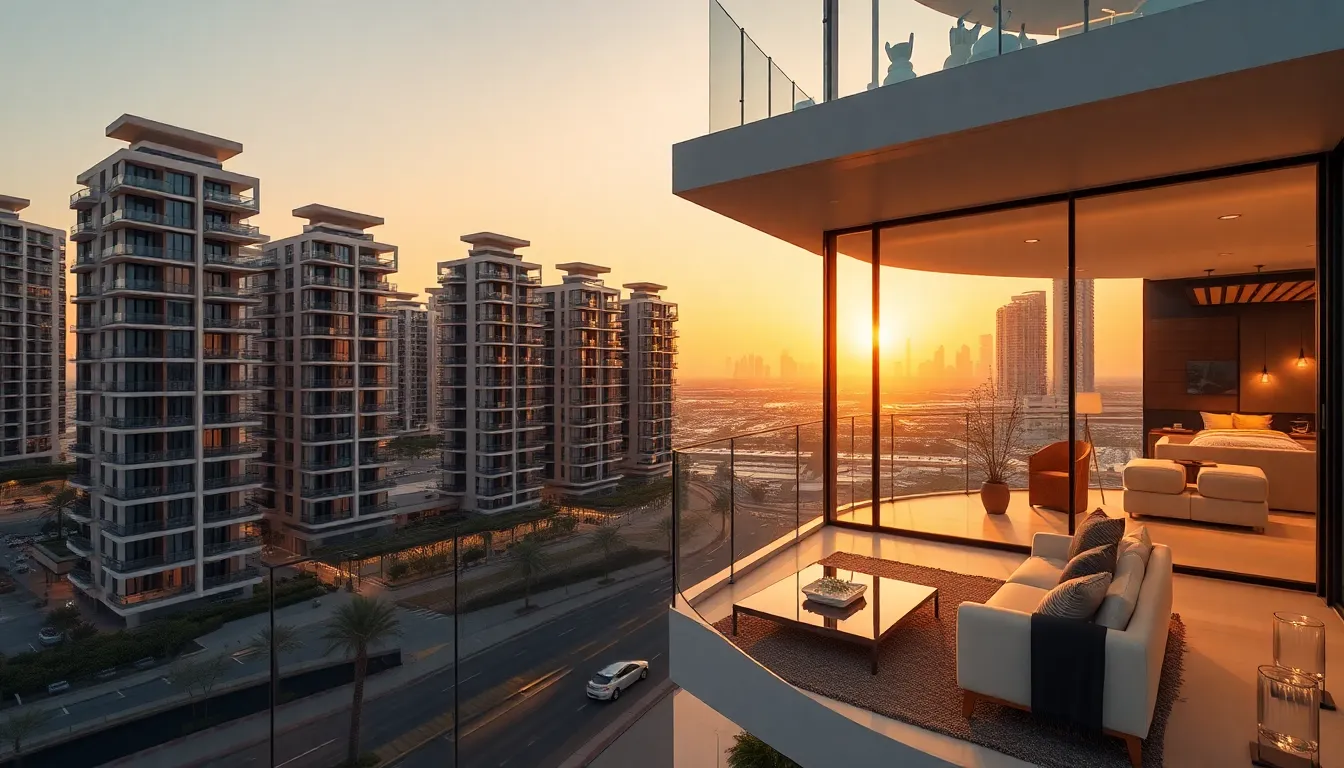
What’s Changed for Apartments for Sale in City Walk?
Last month, a client who’d first viewed City Walk back in 2019 asked me: "Himanshu, why does this place feel completely different now? It’s like the same buildings but the energy’s shifted." I knew exactly what he meant. I’ve been walking these streets since the first tower topped out, and yes — the whole dynamic has flipped.
If you’re looking at apartments for sale in City Walk today, you need to unlearn everything from 2020. The brochures don’t tell the full story. I’ve handled handovers that stretched months past deadline, negotiated for clients who were renting furniture they couldn’t use, and watched this spot evolve from a rendering into one of Dubai’s most distinct corners. Let’s break down what’s actually going on.
So, what actually changed for apartments in City Walk?
Three years ago, half the streets were still behind hoardings. The retail promenade — now packed with patisseries and concept stores — was a skeleton. Delivery trucks outnumbered pedestrians. Today, you can’t book a brunch table without a week’s notice. The trees have filled out. Residents actually know their neighbours by name. That’s the first big shift: City Walk is a lived-in community, not a construction site.
Supply has tightened, too. Most original off-plan units have been absorbed. Only a handful of buildings still have developer inventory — the rest trade on the secondary market. So the old “buy now, flip later” game is over. Buyers are more deliberate. They’re choosing views over speculation, floorplans over hype. The ratio of end-users to investors has flipped from maybe 30/70 in 2021 to something closer to 70/30 now. That changes the feel of the lobbies, the noise in the corridors, even the questions I get at viewings.
The amenities have matured in tandem. The central plaza no longer feels curated for Instagram alone — it’s where kids scooter after school and where residents actually linger. The cinema, the gyms, the rooftop pools all work. The early snagging nightmares have mostly been resolved, meaning you’re not buying into a punch list.
But there’s nuance. Not every building aged the same way. Some have held up brilliantly; others have service-charge disputes that simmer under the surface. I’ll get to that.
Who’s actually buying City Walk apartments in 2026?
I’m seeing three distinct profiles. First, the downsizing European or Emirati couple — they sold the villa in Jumeirah or Umm Suqeim, want walkability without the high-rise chaos of Business Bay. Second, the young professional couple, often one works in DIFC, the other in Media City, and they want a central base that doesn’t feel like a business district. Third, families from London, Paris, or Moscow who want a pied-à-terre that actually feels like a neighbourhood, not a hotel room.
Investors still exist, but they’re different. The ones who stay are looking for long-term capital appreciation and steady rental income from quality tenants. Not flippers. That shift has calmed the price swings. You can forecast your costs, your rent, your exit with much more certainty now. If you’re serious about buying, I’d say book a no-pressure consultation so we can map out which buildings match your lifestyle — because it’s not one-size-fits-all.
What’s the real story with handover delays nobody warns about?
I remember a handover in Building 5, Phase 2. The official completion was announced in June 2022. But when I walked in with my clients three months later, the AC wasn’t connected, there was a lingering smell of drying paint, and the elevator still had protective plywood. The developer’s rep said “two weeks max” for final touches. It took six. My clients had already shipped furniture — a sofa sat in a warehouse in Al Quoz while they argued over temporary housing. The sound of drills two floors up kept us raising our voices during the snagging inspection. That’s a Meraas handover reality not everyone talks about.
Since then, I’ve watched similar patterns in other phases. Not catastrophic — Meraas builds well — but the final 10% always takes longer than the contract says. The landscaping, the common area finishes, the smart home systems integration… always a “soft launch” period where things aren’t quite ready. If you’re buying resale in 2026, you largely skip that pain. But if you ever consider an off-plan replacement unit or a future phase, remember: double every timeline they give you. And plan your move-in date accordingly. I’ve seen too many clients lease furniture for empty flats.
That said, the finished product is worth it. The floorplans are generous by Dubai standards. The ceiling heights swallow furniture. The windows are oversized. Those are things you only appreciate after living there, not during a 15-minute viewing.
How do City Walk apartments compare to Downtown or Jumeirah?
I get this question weekly. Let’s put it into a table because words only go so far.
| Dimension | City Walk | Downtown Dubai | Business Bay | JBR |
|---|---|---|---|---|
| Lifestyle | European low‑rise, walkable boulevard | High‑rise, tourist‑heavy, fast‑paced | Mix of offices & residences, less community | Beachfront, resort feel, transient crowd |
| Community Feel | Tight‑knit, neighbours know each other | Anonymous, revolving door of tourists | Fragmented, more professionals than families | Holiday‑home vibe, not a primary‑living community |
| Connectivity | Quick access to SZR & Jumeirah, but single entry point can choke | Multiple arterial roads, but heavy event traffic | Choked during peak hours, but central | Stranded from main highways, slow exits |
| Amenities | On‑site retail, private pools, cinema — compact scale | Dubai Mall at doorstep, but impersonal | Sparse communal amenities, limited walkability | The Beach, Hilton strip — but seasonal crowds |
| Handover Maturity | Most buildings post‑handover, snagging resolved | Mix of older towers and new launches | Many still under construction, dusty streets | Older stock, well‑maintained but dated |
| Typical Buyer | End‑user families, European downsizers | Investors aiming for short‑term rentals | Young professionals, some buy‑to‑let | Holiday‑home buyers, some renters |
If you want to review premium Dubai developments beyond just City Walk, I’ve detailed a few that might surprise you. But this table speaks to what I see on the ground: City Walk offers something none of the others do — a genuine neighbourhood rhythm with city access.
What kind of apartments can you actually find in City Walk?
Not all apartments here are equal. The masterplan splits into several clusters, each with its own character. Building 1 through 5 sit closest to the boulevard, so you’ll hear the weekend buzz from the cafes. If you value silence, look at the upper floors or buildings set back, like those near the H hotel. One-bedroom units dominate the stock, but two-bedrooms are the sweet spot for families. Penthouses exist, but they rarely trade — and when they do, they’re snapped up off-market.
The layouts are generous. I’ve never walked into a City Walk apartment and felt cramped. The window walls flood the space with light, and every building has decent parking ratios — a rarity in Dubai. Some units face the Burj Khalifa, others overlook the courtyard fountain. That view premium matters more in resale than you’d think. I once sold an apartment where the buyer walked in, saw the fountain lit up from the balcony, and waived the snagging report. Don’t do that — always snag — but it tells you how much ambiance counts.
And here’s a change no one talks about: the smart home systems. Early buildings had mismatched controllers from the handover era. Now, most owners have upgraded to a unified Crestron or Lutron setup, which adds resale value. So when you’re viewing, check if the home automation has been unified or if it’s still a mismatched set of remotes. Small thing, big quality-of-life difference.
What about service charges and ongoing costs? (No prices, but the story matters)
I won’t quote numbers — that’s for a personalised email — but I’ll tell you this: the conversation around service charges in City Walk has changed. A few years ago, owners grumbled about high fees relative to other areas. But by 2026, most have realised they’re paying for something tangible: clean lobbies, functioning elevators, security who actually know residents, and landscaping that gets watered. Compare that to a Business Bay tower where you fight the OA over a broken chiller. Here, the owners’ associations have matured. They’ve hired professional management, and it shows. Still, always ask for the last three service charge statements before you buy. Don’t trust the developer’s estimate from handover — they’re always optimistic.
Also, insurance. Because City Walk isn’t a single-landlord community, building insurance varies. Some towers have comprehensive coverage, others skimp on third-party liability. Get your agent to pull the policy summary. I’ve had clients save themselves headaches by spotting gaps early.
Is City Walk pet-friendly and suitable for families?
Yes, with caveats. Most buildings allow pets, but some have breed restrictions — not always enforced, but they can bite during renewal. The promenade itself is dog-friendly; you’ll see residents walking their retrievers and pugs in the evenings. For families, there’s a small but decent kids’ play area near the plaza, and the proximity to Jumeirah’s schools is a huge plus. But the community isn’t built like a suburban compound — there’s no on-site school, no big backyard. So if you’re moving with kids, ask yourself if you’re okay with apartment living and frequent park visits.
What’s the rental dynamic like now?
Gone are the days of guaranteed 10% yields. Buyers today aren’t banking on renters as their exit strategy. That said, City Walk attracts a very specific tenant: diplomats, senior executives, consultants on six-month contracts who want a furnished, hassle-free base. Occupancy sits high because the product is unique — there’s no substitute for a walkable low-rise in this part of town. But I always advise clients: buy for your own use first, treat rental income as a bonus. Over-leveraging expecting quick rent can backfire. I’ve seen owners get stuck when a tenant catches a delay in renewal.
If you’re comparing, I often suggest clients see off-plan projects in Dubai to understand how new supply might compete with resale units. Sometimes a newer development nearby can pull tenants, so don’t operate in a vacuum.
What’s the paperwork like for a resale purchase in 2026?
Straightforward, but don’t skip the details. Since the masterplan is older now, many units have had multiple owners. That means you need a clean title deed history. I always pull a land department statement showing no liabilities. Some buildings have mortgages against individual units; you want to confirm those are discharged. Meraas has a streamlined transfer process, but it still takes 4–6 weeks from booking to title deed. NOCs from the developer are usually prompt — that wasn’t the case in 2021. So things have improved.
One more thing: if you’re buying from an original owner who bought off-plan in 2018–2019, ask if all the Oqood (initial sale contract) extensions have been properly registered. I’ve seen gaps where a late payment extension wasn’t formalised, causing a hiccup at transfer. Your conveyancing lawyer should flag it, but it’s better to know early.
FAQs
Are City Walk apartments freehold?
Yes, they are freehold for all nationalities. No age restrictions.
Is parking included?
Typically, one-bedroom units get one space, two-bedrooms and above get two. Some penthouses have extra allocated spots. Always verify the parking allocation in the title deed.
Can I rent out my apartment short-term?
Legally, yes, through a DTCM license, but many buildings have their own rules. Some boards frown upon Airbnb. Check the OA policy.
How far is the beach?
Jumeirah Beach is a 7-minute drive; La Mer is even closer, walkable in about 15 minutes.
Is there a community gym?
Each building has its own gym, and some are better equipped than others. The central fitness centre offers paid memberships for extra classes. Ask to see the gym during your viewing — older buildings may have dated machines.
What’s public transport like?
No metro station directly on site, but the bus connects to Business Bay metro. Most residents drive or use taxis. The single main entry on Al Khail Road can congest during rush hour, but traffic has improved since the intersection upgrade in 2024.
Are there any upcoming construction plans nearby?
There’s always something in Dubai. Just east of City Walk, a new mixed-use plot broke ground early 2026. It might affect views from some buildings; I urge buyers to study the surrounding land use map. I wrote more about this in our guides — you can see our other property guides for a deeper dive.
City Walk in 2026 isn’t the development it was. It’s better, in some ways — more honest, less frantic. It wears its flaws openly, which means you can plan around them. And the people who live here aren’t just passing through; they’ve planted themselves. That says more than any brochure ever could.
By Himanshu Gupta, Senior Property Advisor at Siddhi Estates — 15 years in Dubai real estate, from off-plan launches to handover and resale.
Siddhi Team
Dubai Real Estate Experts helping Indian investors find their perfect property in UAE.