
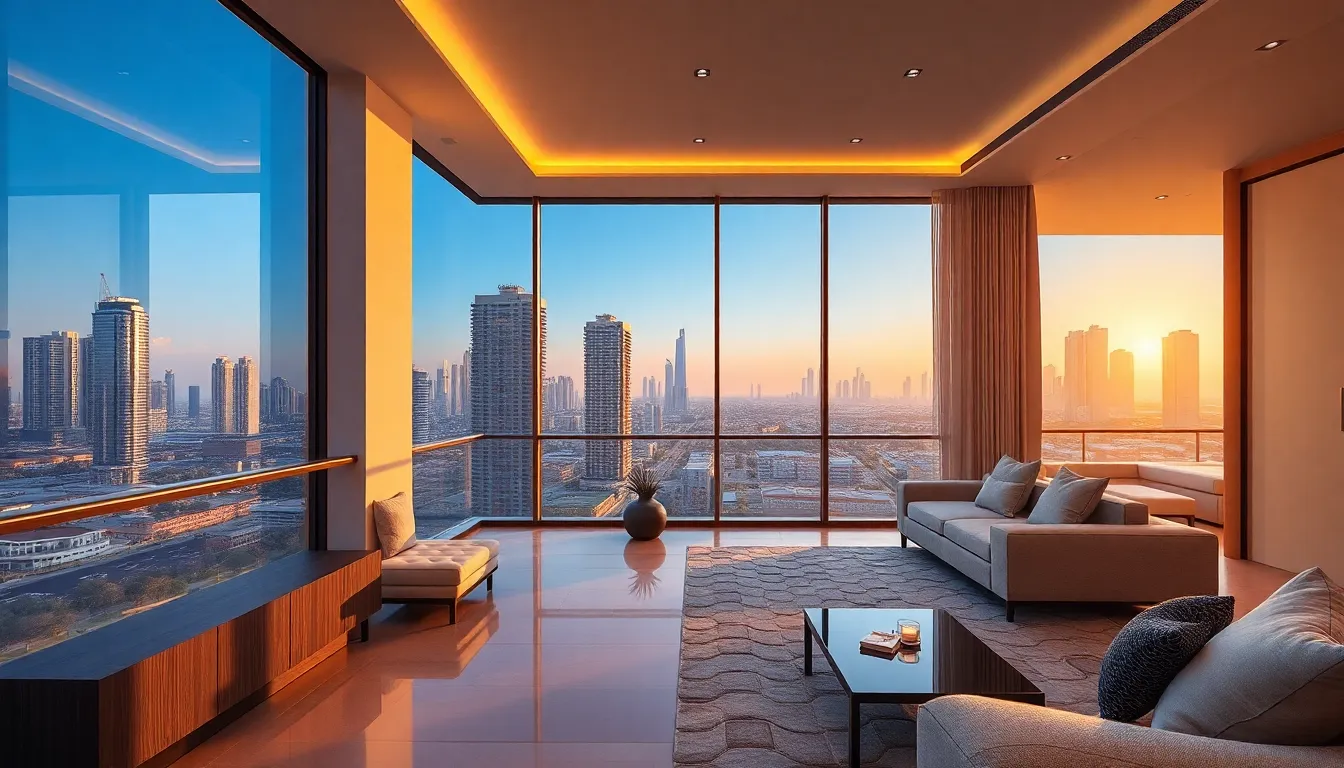
What are the best Dubai apartments for 1-2 million AED?
Look, if you are an NRI looking at Dubai property, you are probably thinking about two things simultaneously. How do I get good returns, and how do I keep my money safe from tax complications back home? The 1-2 million AED apartment market in Dubai answers both questions in a way few other global cities can. This is not just about buying a property, it is about strategic wealth placement. And in 2026, with Dubai's market maturing and new regulations in place, the opportunities are more structured than ever.
Why is the 1-2 million AED range perfect for NRI investors?
This price point hits a unique balance. It is substantial enough to secure quality assets in established communities, yet accessible without requiring massive, single-transaction capital deployment. For NRIs, that matters. You can often fund this through a combination of savings and remittances without triggering excessive scrutiny. But does that actually hold up when you look at the data? Let us break it down.
How does this price align with typical NRI remittance patterns?
Most NRIs I speak with have a remittance flow that builds over time. You might send money back monthly or quarterly. A 1-2 million AED property, priced at roughly 22-45 million INR, aligns well with accumulated savings over a few years. The key is that Dubai allows 100% foreign ownership in freehold zones, so you are buying the asset outright. No joint venture complexities. This simplifies the entire remittance process because you are sending money for a clear, tangible asset purchase.
What tax advantages does this bracket offer specifically?
Honestly, I think most first-time NRI buyers overlook the sheer scale of the tax advantage. Dubai has zero property tax. None. No annual tax based on property value. No capital gains tax when you sell. No income tax on your rental earnings. Compare that to owning property in India, the UK, or even parts of Europe. The money you remit to Dubai works harder because it is not being eroded by annual tax liabilities. Your 7% rental yield is a 7% yield, not a 5% yield after taxes.
Which areas offer the best value for 1-2 million AED in 2026?
Location dictates everything, from your tenant quality to your long-term appreciation. In 2026, the market has evolved. Some older hotspots have plateaued, while newer communities are coming into their own. Here is where I would focus my search if I were allocating funds today.
Is Jumeirah Village Circle still a good bet?
JVC remains a cornerstone for this budget. You can get a spacious 2-bedroom apartment, often with a study, for around 1.4-1.8 million AED. The community is mature, with schools, parks, and retail all operational. Rental demand is consistently high from young professionals and small families. Based on RERA records, average rents here have grown by 4.5% annually since 2023. For 2026, we project stable growth of 5-7%. It is a workhorse investment, reliable and straightforward.
What about emerging areas like Arjan and Dubai Land?
This is where the growth potential lies. Arjan, near Dubai Miracle Garden, offers newer buildings with better amenities. A 2-bedroom here might cost 1.6-2 million AED. The upside? Infrastructure projects slated for 2026 completion, like road expansions, are set to improve connectivity significantly. Dubai Land, particularly around Dubai Sports City, offers even more square footage for your money. You might find a 3-bedroom apartment for under 2 million AED. The trade-off is that these areas are still developing their full retail and lifestyle offerings.
| Area | Avg. Price 2-Bed (AED) | 2026 Rental Yield Projection | Best For NRIs Because |
|---|---|---|---|
| Jumeirah Village Circle (JVC) | 1,450,000 - 1,850,000 | 6.8% - 7.2% | Stable demand, easy management from abroad |
| Dubai Sports City | 1,200,000 - 1,600,000 | 7.0% - 7.5% | Higher yield, sports facilities attract long-term tenants |
| Arjan | 1,600,000 - 2,000,000 | 6.5% - 6.9% | Modern buildings, strong appreciation potential |
| Dubai Silicon Oasis | 1,300,000 - 1,700,000 | 6.2% - 6.7% | Tech tenant base, consistent rental income |
How do you structure the purchase as an NRI?
Buying property in Dubai is straightforward, but NRIs need to pay attention to a few extra steps. The process is designed to be transparent, thanks to RERA regulations, but your funding source matters.
What are the steps for DLD registration?
First, you choose a property. Then, you sign a Memorandum of Understanding (MOU) with the seller. Next, you apply for a No Objection Certificate (NOC) from the developer, if it is in a building. After that, the sale agreement is drafted and registered with the Dubai Land Department (DLD). This is where you pay the 4% DLD registration fee. The entire process can be done remotely with a power of attorney, but I recommend being present for the final signing. It helps to speak with our advisors who specialise in NRI transactions to navigate this smoothly.
How should you handle remittances and currency exchange?
This is critical. Always use official banking channels for your remittances. Keep clear records of every transfer, showing the money moving from your NRI account to a UAE bank account. Why? This documentation proves the legitimate source of funds and simplifies any future repatriation of sale proceeds. For currency exchange, consider timing. The AED is pegged to the USD, so monitor INR-USD trends. Sometimes locking in a rate before a large transfer can save you lakhs.
What does the ROI calculation look like for 2026?
Let us get practical. Return on investment is not just about rental yield. It is about total return, including appreciation, tax savings, and cost deductions. Here is a realistic breakdown for a 1.8 million AED apartment.
How much can you expect in net rental income?
Assume you buy a 2-bedroom in JVC for 1.8 million AED. In 2026, the average rent for such a unit is projected at 110,000 AED annually. From that, deduct the annual service charges (around 7,000 AED) and property management fees (if you use an agent, about 5% of rent, so 5,500 AED). That leaves you with 97,500 AED. Remember, this is tax-free income. No deduction at source. You can remit this entire amount back to India or reinvest it. That is a net yield of 5.4%, which is strong by global standards.
What about capital appreciation projections?
According to DLD transaction data, apartments in well-located communities have appreciated at an average of 6-9% per year from 2023 to 2025. For 2026, conservative projections suggest 5-8%, with prime areas like Arjan potentially hitting 10-12%. So, on your 1.8 million AED investment, you might see an increase of 90,000 to 216,000 AED in value in one year. And when you sell, that gain is not taxed. Compare that to India, where long-term capital gains on property are taxed at 20% with indexation.
Are there any hidden costs or legal considerations?
Transparency is Dubai's strength, but you need to know the full picture. There are no nasty surprises if you do your homework.
What are the ongoing ownership costs?
Beyond the purchase price, budget for the DLD registration fee (4% of property value), agent commission (2%, usually split between buyer and seller), and connection fees for utilities (around 3,000 AED). Annually, you will pay service charges for building maintenance, which vary but average 15-25 AED per square foot. There is also a housing fee, which is 5% of your annual rent, but this is paid by the tenant, not the owner. So, your main recurring cost is the service charge. To explore available listings, always check the service charge history.
How does Golden Visa eligibility work with this investment?
Investing in a property worth at least 2 million AED makes you eligible for a 10-year Golden Visa. But what if your apartment is 1.8 million AED? You can still qualify if you have a mortgage, as long the property value meets the threshold. Alternatively, you can combine multiple properties to reach 2 million AED. The Golden Visa offers residency, access to services, and the ability to sponsor family. It is a significant perk that adds security to your investment.
How much money do I need upfront to buy a 2 million AED apartment?
You typically need 25-30% of the property value upfront. This includes a 20% down payment (400,000 AED for a 2 million AED property) plus the 4% DLD fee (80,000 AED) and agent commission. So, total initial cash required is around 500,000 to 550,000 AED.
Can I get a mortgage as an NRI?
Yes, many UAE banks offer mortgages to NRIs. Loan-to-value ratios are usually up to 75% for properties under 5 million AED. You will need proof of income, bank statements, and a good credit history. Interest rates in 2026 are projected around 4.5-5.5% for fixed-rate options.
What is the minimum investment for a Dubai property visa?
To qualify for a property investor visa, you need a property worth at least 750,000 AED. This grants a 2-year renewable residency visa. For the 10-year Golden Visa, the threshold is 2 million AED in property value.
How do I manage the property from abroad?
You can hire a property management company for about 5-7% of the annual rent. They handle tenant sourcing, rent collection, maintenance, and compliance with RERA regulations. This allows for completely hands-off ownership.
Are there any taxes when I sell the property?
No. Dubai has no capital gains tax. You pay the DLD registration fee when buying, but when selling, the only cost is the agent commission (2%, usually split) and any bank fees if you have a mortgage. The entire sale proceeds are yours to keep or remit.
What happens if I want to remit rental income to India?
You can transfer rental income to India freely. There are no restrictions from the UAE side. In India, this income is taxable under the Foreign Exchange Management Act (FEMA) rules, but you can claim deductions for expenses like property management. It is advisable to consult a tax advisor in India for specifics.
Is off-plan a good option in this price range?
Off-plan properties can offer lower entry prices and payment plans. In 2026, several projects in areas like Dubai South and Dubai Creek Harbour have apartments in the 1-2 million AED range. The risk is construction delays, but RERA's escrow account system protects your payments. It can be a way to secure a property at today's price for completion in 2027-2028.
So, what is the bottom line for NRIs in 2026? The 1-2 million AED apartment market in Dubai represents one of the most tax-efficient, high-yield investment opportunities available globally. You are not just buying real estate, you are buying into a system designed for wealth preservation and growth. The combination of zero property tax, strong rental demand, and clear legal frameworks makes it a compelling alternative to traditional NRI investments like Indian real estate or fixed deposits. But you need to choose the right location and structure the purchase correctly. That is where local expertise becomes invaluable. At Siddhi Enterprises (Real Estate), we have guided hundreds of NRIs through this exact process, ensuring their remittances work as hard as possible. Ready to see specific options that match your goals? Our team can provide tailored analysis based on the latest 2026 market data.
By the Siddhi Enterprises (Real Estate) Research Team | Over 10 years of Dubai property market expertise across residential, commercial, and off-plan investments | 2026
Siddhi Team
Dubai Real Estate Experts helping Indian investors find their perfect property in UAE.