
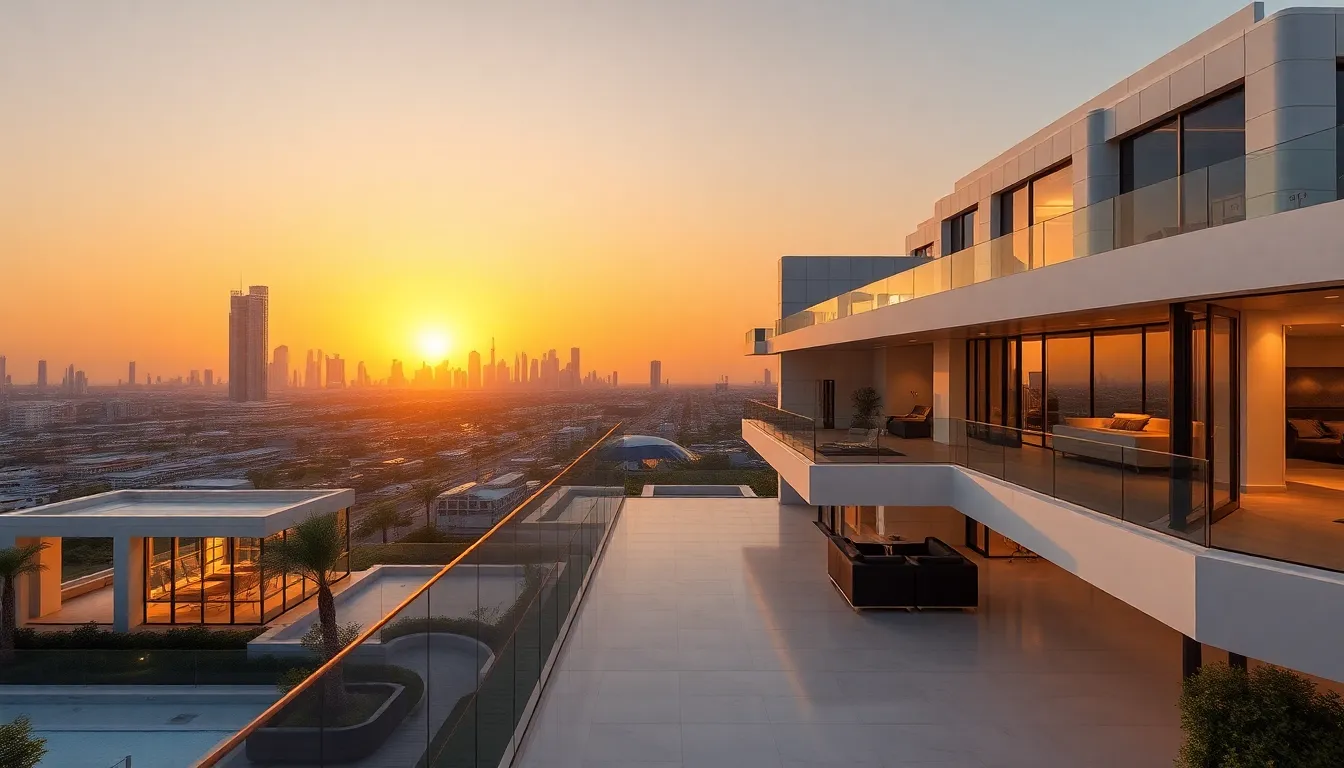
What Are DLD Fees in Dubai Real Estate?
The Dubai Land Department (DLD) fee is a mandatory 4% registration charge paid by property buyers in Dubai, calculated on the property's purchase price or market value, whichever is higher. This one-time government fee covers the legal transfer of ownership and registration in Dubai's official property records, ensuring your investment is legally protected and documented for future capital appreciation.
What Exactly Is the DLD Fee and Why Does It Exist?
The DLD fee is the cornerstone of Dubai's transparent property registration system. When you buy property in Dubai, whether it's an apartment in Dubai Marina or a villa in Palm Jumeirah, this fee must be paid to the Dubai Land Department to make the transaction official.
This isn't just bureaucratic paperwork. The DLD registration creates an immutable record of your ownership, which becomes crucial when you eventually sell for capital gains. Without proper DLD registration, you cannot legally prove ownership, secure financing, or transfer the property to future buyers.
How Does the DLD Fee Protect My Investment?
The DLD fee purchases more than just a registration stamp. It buys you entry into Dubai's world-class property protection system. Once registered, your property appears in the official DLD database, which all banks, real estate agencies, and future buyers will check before any transaction.
This protection directly impacts your capital appreciation potential. Properties with clean, properly registered titles command higher resale values. In 2026, we're seeing properly registered properties in prime areas like Downtown Dubai appreciating 8-12% annually, while properties with registration issues struggle to find buyers at any price.
What Are the Different DLD Registration Types?
DLD handles several registration types, each with different fee implications. The standard property transfer registration carries the 4% fee. Mortgage registration costs 0.25% of the loan amount, plus AED 290. Title deed issuance costs AED 580.
For capital appreciation investors, understanding these distinctions matters. If you're buying with a mortgage, you'll pay both the property transfer fee and mortgage registration fee. These upfront costs factor into your total investment and affect your eventual ROI calculation.
How Much Will DLD Fees Cost Me in 2026?
DLD fees follow a straightforward calculation: 4% of your property's purchase price or official valuation. For a AED 2 million property, that's AED 80,000. For a AED 5 million luxury villa, that's AED 200,000.
These fees remain consistent regardless of property type or location. Whether you're buying a studio in Jumeirah Village Circle or a penthouse in Business Bay, the percentage stays the same. However, the actual amount varies significantly based on your investment level.
What Other Costs Come With DLD Registration?
Beyond the 4% DLD fee, you'll encounter several related costs. The broker commission typically ranges from 2% to 5%, depending on the agency and property value. Administrative fees add another AED 4,000 to AED 10,000. Title deed issuance costs AED 580.
For serious capital appreciation investors, these additional costs represent important considerations. A AED 3 million property in Dubai Hills Estate might have total transaction costs of AED 180,000 (4% DLD) plus AED 90,000 (3% broker commission) plus approximately AED 8,000 in administrative fees. That's AED 278,000 before you even consider renovation or furnishing costs.
How Do DLD Fees Compare to Other Global Markets?
Dubai's 4% DLD fee sits in the middle of global property registration costs. London's stamp duty ranges from 0% to 12% depending on property value. Singapore charges 1-4% buyer's stamp duty plus additional buyer's stamp duty for foreigners. New York has mortgage recording taxes plus transfer taxes that can total 1-3%.
| Market | Registration/Transfer Fee | Additional Foreign Buyer Fees | Average Property Appreciation (2026 Projection) |
|---|---|---|---|
| Dubai | 4% DLD fee | None for most nationalities | 7-15% annually in prime areas |
| London | 0-12% stamp duty | 2% surcharge for non-residents | 3-6% annually in central zones |
| Singapore | 1-4% buyer's stamp duty | 20-30% additional buyer's stamp duty | 2-4% annually for private residential |
| New York | 1-3% transfer taxes | None specific to foreigners | 4-8% annually in Manhattan |
This comparison reveals Dubai's competitive position. While the 4% DLD fee represents a significant upfront cost, the absence of foreign buyer premiums and strong projected appreciation make it attractive for international investors focused on capital growth.
Who Pays the DLD Fee and When Is It Due?
The buyer always pays the DLD fee in Dubai real estate transactions. This differs from some markets where sellers cover transfer costs. The payment occurs at the moment of property transfer, typically handled by your real estate agent or lawyer as part of the closing process.
Timing matters for capital appreciation planning. Since this fee comes out of your investment capital, it reduces your initial equity. A AED 100,000 DLD fee on a AED 2.5 million property means you start with AED 2.4 million in actual property value, affecting your leverage and ROI calculations from day one.
Can DLD Fees Be Negotiated or Reduced?
DLD fees are non-negotiable government charges. No agent, developer, or lawyer can reduce these mandatory payments. However, savvy investors can optimize their overall cost structure through strategic purchasing.
Consider this capital appreciation strategy: Buying during Dubai's off-plan phase often means paying DLD fees on the initial purchase price, not the completed value. If you buy a AED 1.8 million off-plan apartment that appreciates to AED 2.2 million upon completion, you still pay DLD fees based on AED 1.8 million, saving approximately AED 16,000 while capturing the full appreciation.
What Happens If I Don't Pay DLD Fees?
Failure to pay DLD fees results in an unregistered property transaction. This creates multiple problems: You cannot obtain a title deed. Banks won't provide mortgages on unregistered properties. You cannot legally sell the property. Most importantly for capital appreciation investors, you cannot prove ownership for valuation purposes.
In 2026, we're seeing increased enforcement of DLD registration requirements. Properties without proper registration face valuation discounts of 15-25% compared to registered equivalents. This penalty often exceeds the DLD fee itself, making non-payment a poor financial decision.
How Do DLD Fees Impact My Capital Appreciation Strategy?
DLD fees directly affect your investment's entry point and exit strategy. These upfront costs increase your total investment, which means you need higher appreciation percentages to achieve your target returns. A property that costs AED 2 million plus AED 80,000 in DLD fees needs to appreciate to AED 2.24 million just to break even on the fees alone.
However, properly viewed, DLD fees represent an investment in market transparency and legal security. Dubai's registered property market has shown remarkable resilience and growth. From 2023 to 2026, properly registered properties in freehold zones like Dubai Marina and Downtown Dubai have appreciated 35-45% cumulatively, far outpacing registration costs.
What ROI Should I Target After DLD Fees?
After accounting for DLD fees and other transaction costs, target minimum annual appreciation of 6-8% in established areas and 10-15% in emerging districts. These targets ensure you cover costs while generating meaningful returns.
Consider this 2026 case study: An investor purchases a AED 3.5 million villa in Arabian Ranches. DLD fees total AED 140,000. After three years, the property appreciates to AED 4.2 million (20% total appreciation). After deducting DLD fees and selling costs, the net capital gain is approximately AED 560,000, representing a 16% annualized return on the total investment including fees.
How Do DLD Fees Affect Different Property Types?
DLD fees impact various property types differently based on their appreciation patterns. Luxury properties (AED 5M+) typically see slower turnover but higher absolute appreciation, making the DLD fee percentage less significant relative to total gains. Mid-market apartments (AED 1.5-3M) trade more frequently, so DLD fees represent a higher recurring cost.
For capital appreciation focused on off-plan opportunities, DLD fees apply at initial purchase and again upon resale before completion. This double fee structure requires higher appreciation targets. However, successful off-plan investments in areas like Dubai Creek Harbour have delivered 25-40% pre-completion gains in 2024-2026, comfortably covering multiple fee rounds.
What Are Common DLD Fee Misconceptions?
Many investors misunderstand DLD fees as pure government revenue rather than value-added services. The DLD maintains the Oqood system for off-plan properties, the Ejari system for rental registrations, and the comprehensive Dubai REST app for property management. Your fees support these systems that enhance property values.
Another misconception involves fee calculation. Some believe DLD fees apply only to the purchase price, but they actually apply to the higher of purchase price or market value. If you buy a property below market value (a distress sale, for example), you'll still pay DLD fees based on the official valuation, protecting the market's integrity.
Are DLD Fees Tax-Deductible for Investors?
DLD fees are considered capital expenses, not operating expenses. When you sell the property, these fees increase your cost basis, reducing your capital gains tax liability (though Dubai has no capital gains tax currently). This treatment makes DLD fees more valuable than typical transaction costs in taxable markets.
For international investors reporting to home tax authorities, DLD fees typically qualify as acquisition costs that reduce taxable gains upon sale. Always consult with a tax professional in your home country, but in most jurisdictions, these fees improve your after-tax returns on capital appreciation.
How Have DLD Fees Changed Over Time?
The 4% DLD fee has remained stable since its introduction, providing predictability for investors. However, the DLD has streamlined processes significantly. In 2025, they introduced fully digital registrations completing in 24-48 hours, compared to 5-7 business days previously.
This efficiency improvement indirectly enhances capital appreciation by reducing holding periods and administrative delays. When you can register and potentially resell a property within days rather than weeks, you capture market movements more effectively. For active traders in Dubai's dynamic market, this timing advantage can mean 2-5% additional appreciation on quick-turn investments.
Frequently Asked Questions
Can I pay DLD fees in installments?
No, DLD fees must be paid in full at the time of property registration. There are no installment plans available for these government charges.
Do DLD fees apply to commercial properties?
Yes, the same 4% DLD fee applies to commercial properties, warehouses, and land purchases in Dubai. The calculation method remains identical.
How do DLD fees work for joint ownership?
DLD fees are calculated on the total property value regardless of ownership structure. If two buyers purchase a AED 4 million property, they pay AED 160,000 total, typically split according to ownership percentages.
Are there exemptions from DLD fees?
Very few exemptions exist. Immediate family transfers between spouses, parents, and children may qualify for reduced fees, but standard investor purchases always incur the full 4%.
How do DLD fees affect my mortgage?
DLD fees are separate from mortgage costs. Most banks require proof of DLD fee payment before disbursing mortgage funds, as they need the property properly registered as collateral.
Can I claim DLD fees back if the sale falls through?
Once paid to DLD, fees are generally non-refundable. However, if registration hasn't been processed, your lawyer might recover them. This is why using escrow accounts for large transactions is crucial.
Do DLD fees increase with property appreciation?
No, DLD fees are one-time charges based on the value at purchase. If your property appreciates from AED 2 million to AED 3 million, you don't pay additional DLD fees until you sell, when the new buyer pays based on the AED 3 million value.
Strategic Approach to DLD Fees for Maximum Capital Appreciation
Successful Dubai investors treat DLD fees not as costs but as investments in market access and legal security. The 4% fee purchases entry into one of the world's most transparent and dynamic property markets, where properly registered assets in prime locations have consistently delivered double-digit annual appreciation.
For 2026 investments, factor DLD fees into your total acquisition cost, then target districts with strong growth fundamentals. Areas like Dubai Hills Estate, Mohammed Bin Rashid City, and Dubai Creek Harbour offer the appreciation potential to comfortably absorb these fees while delivering substantial returns. Remember that DLD registration enables future Golden Visa eligibility, which itself adds 5-10% premium to property values for eligible buyers.
The most successful capital appreciation strategies view DLD fees as the price of admission to Dubai's property success story. With proper planning and district selection, these fees become minor considerations against the backdrop of substantial wealth creation. As Dubai continues its growth trajectory toward Expo 2030, registered property ownership remains one of the most reliable paths to capital growth in the region.
Ready to navigate DLD fees and maximize your Dubai property investment? Our expert advisors at Siddhi Enterprises (Real Estate) can guide you through the entire process, from fee calculation to district selection for optimal appreciation.
By the Siddhi Enterprises (Real Estate) Research Team | Over 10 years of Dubai property market expertise across residential, commercial, and off-plan investments | 2026
Siddhi Team
Dubai Real Estate Experts helping Indian investors find their perfect property in UAE.