
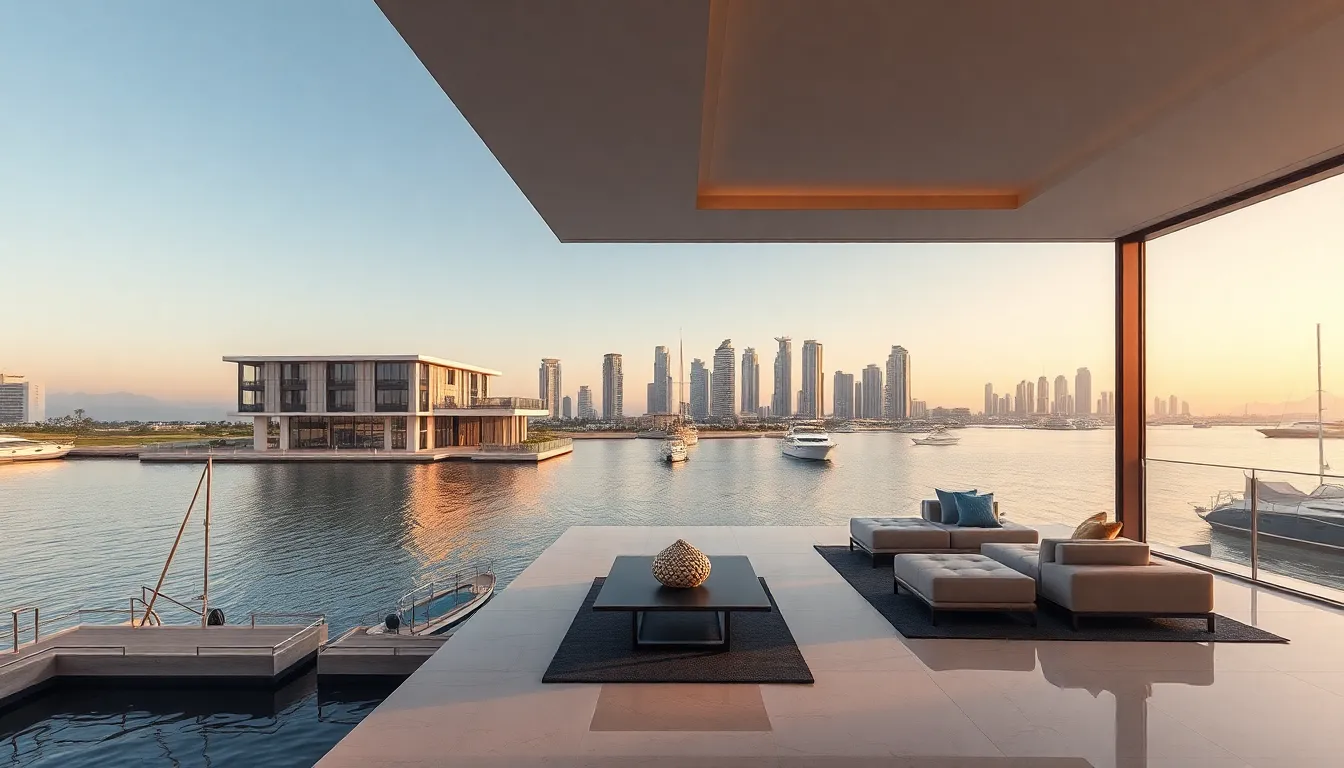
Waterfront Property Dubai 2026: Expat Lifestyle & Rental Income
Waterfront property in Dubai refers to residential and commercial real estate located directly along the city's coastline, canals, or artificial islands, offering premium views and lifestyle amenities that attract expatriates seeking both luxury living and investment returns through rental income. By 2026, this sector has evolved beyond mere luxury to become a strategic asset class for expats balancing lifestyle aspirations with financial security. The convergence of Dubai's ambitious urban development and its status as a global expat hub creates unique opportunities where waterfront living translates directly into robust rental yields. This guide explores how expatriates can leverage waterfront property Dubai not just as a home but as a cornerstone of their financial portfolio in 2026.
Why Should Expats Consider Waterfront Property Dubai in 2026?
The appeal of waterfront property Dubai for expatriates extends far beyond picturesque sunsets. In 2026, these assets represent a dual-purpose investment: a premium lifestyle choice and a reliable income generator. Expatriates, who often face uncertainty about long-term residency, find waterfront properties offer stability through rental demand that consistently outperforms inland areas. The psychological benefit of living near water—proven to reduce stress—combines with practical advantages like higher property appreciation and stronger tenant interest.
Market data for 2026 shows waterfront properties command rental premiums of 15-25% compared to similar non-waterfront units in Dubai. This gap has widened since 2024, driven by increased expat migration and limited new waterfront supply. For an expat family, this means a 2-bedroom apartment in Dubai Marina might yield AED 120,000-150,000 annually in 2026, covering a significant portion of mortgage payments or generating passive income if owned outright. The lifestyle component—access to beaches, marinas, and waterfront dining—enhances quality of life while serving as a key selling point for future tenants.
How Does Waterfront Living Impact Expat Well-being?
Expatriates relocating to Dubai often face adjustment challenges, from climate adaptation to social integration. Waterfront communities address these directly by fostering active, outdoor lifestyles and built-in social networks. In 2026, developments like Palm Jumeirah and Bluewaters Island offer not just homes but complete ecosystems with gyms, pools, and community events that ease expat transitions. The proximity to water activities—yachting, paddleboarding, or simple evening strolls—creates a work-life balance that retains expat talent in Dubai, indirectly supporting rental demand as companies continue to recruit globally.
What Are the Financial Benefits for Expat Investors?
Financially, waterfront property Dubai serves as a hedge against currency fluctuations and economic volatility that expats often encounter. With the UAE dirham pegged to the US dollar, property investments provide stability for those earning in other currencies. In 2026, projected rental yields for waterfront apartments range from 5.5-7.2% annually, with villas achieving 4.8-6.5%. These figures assume professional management through registered brokers, ensuring compliance with RERA regulations that protect both landlords and tenants. For expats, this translates to predictable income streams that can fund education, retirement, or further investments.
Which Waterfront Areas Offer the Best Rental Income in 2026?
Not all waterfront property Dubai delivers equal returns. By 2026, micro-locations within broader districts have emerged as rental income champions, driven by infrastructure completion and community maturation. Dubai Marina remains the perennial favorite for expat tenants, offering a blend of affordability and amenities, but newer areas like Dubai Harbour and Mina Rashid have gained traction for their integrated designs and transportation links. The key for expat investors is matching property type with target tenant profiles—young professionals versus families—to maximize occupancy rates.
Data for 2026 indicates that studio and 1-bedroom units in Jumeirah Beach Residence (JBR) achieve the highest yields at 6.8-7.2%, appealing to single expats and couples. Meanwhile, waterfront villas on Palm Jumeirah yield 5.2-5.8% but offer capital appreciation potential of 8-12% annually, attractive to expat families planning longer stays. Off-plan opportunities in emerging zones like Dubai Creek Harbour present lower entry prices but require patience as communities develop. Savvy expats diversify across areas to balance immediate income with future growth.
How Do Established vs. Emerging Waterfront Areas Compare?
Established waterfront areas like Dubai Marina and Palm Jumeirah offer proven rental demand but higher purchase prices—AED 1.8-2.4 million for a 2-bedroom apartment in 2026. Their advantage lies in immediate rental income and lower vacancy risks, with tenant waiting lists common. Emerging areas like Dubai Islands (formerly Deira Islands) and Al Jaddaf Waterfront offer entry points 20-30% lower but require tolerance for construction activity and slower community buildup. For expats, the choice hinges on investment horizon: established areas suit those seeking quick returns, while emerging zones appeal to long-term holders.
What Role Does Infrastructure Play in Rental Performance?
Infrastructure directly impacts rental income by enhancing accessibility and livability. In 2026, waterfront properties near Dubai Metro expansions or major road projects like the Sheikh Rashid Road enhancement command 10-15% rental premiums. Proximity to schools, hospitals, and retail hubs—especially in mixed-use developments—reduces tenant turnover, a critical factor for expat landlords managing properties remotely. Areas with completed infrastructure, such as Business Bay's canal-side towers, demonstrate how connectivity translates to consistent tenancy, with average lease durations extending to 2-3 years by 2026.
How Can Expats Maximize Rental Income from Waterfront Properties?
Maximizing rental income from waterfront property Dubai requires more than just buying in the right location. By 2026, expat landlords employ sophisticated strategies tailored to Dubai's dynamic market. First, understanding tenant preferences is crucial: furnished units rent 20-30% faster than unfurnished, with smart home features and sustainability certifications (like Dubai's Green Building regulations) justifying premium rates. Second, timing lease renewals to avoid summer vacancies—when many expats travel—ensures year-round cash flow. Third, leveraging property management companies that specialize in waterfront assets optimizes maintenance and tenant relations.
ROI calculation for 2026 must account for new factors like community service charges, which have risen 5-8% annually since 2024, and potential rental caps under evolving RERA regulations. A detailed analysis for a AED 2 million waterfront apartment might show gross rental income of AED 140,000 annually, minus 15-20% for management fees, maintenance, and vacancy allowances, netting AED 112,000-119,000. Expats who treat their property as a business—tracking expenses, marketing strategically, and staying updated on DLD registration requirements—achieve yields at the upper end of market ranges.
What Are the Best Practices for Property Management?
Effective property management for waterfront assets involves proactive maintenance of marine-facing elements—balcony seals, window treatments, and HVAC systems—that face accelerated wear from salt air. In 2026, leading management firms offer specialized packages including quarterly deep cleans and pre-emptive repairs, reducing long-term costs and preserving property value. For expats living abroad or frequently traveling, these services provide peace of mind while ensuring tenants report high satisfaction, leading to lease renewals and positive referrals. Regular inspections, documented through RERA-approved channels, protect against disputes.
How Does Furnishing Impact Rental Returns?
Furnishing a waterfront property in Dubai is no longer optional for competitive rental income. By 2026, tenant expectations have shifted toward turnkey solutions, with furnished units commanding 15-25% higher rents than empty ones. The key is strategic furnishing: investing in durable, marine-grade furniture that withstands humidity, and incorporating lifestyle elements like kayak storage or barbecue areas that highlight waterfront living. For expat landlords, partnering with furniture rental companies offering flexible packages can reduce upfront costs while testing tenant preferences. Data shows furnished two-bedroom units in Bluewaters Island achieve 95% occupancy rates versus 80% for unfurnished.
What Legal and Financial Considerations Apply in 2026?
Expatriates investing in waterfront property Dubai must navigate a legal and financial landscape that has matured significantly by 2026. Ownership in freehold zones remains straightforward, but new regulations affect rental income and resale. For instance, 2026 sees enhanced disclosure requirements for service charge histories and building maintenance schedules, impacting property valuations. Financially, expats benefit from competitive mortgage rates—4.2-4.8% for prime borrowers—but must factor in 20-30% down payments and potential currency exchange costs if funding from abroad.
Tax implications have evolved: while Dubai maintains no income tax on rental earnings, expats must consider tax obligations in their home countries, especially under information-sharing agreements. Setting up a local company to hold the property can offer advantages for some nationalities, though it involves additional compliance. Crucially, the property visa UAE program continues to attract expats seeking residency through investment, with 2026 requirements including minimum property values of AED 750,000 and proof of stable income. This visa pathway adds value beyond rental income, providing long-term security.
How Do RERA Regulations Protect Expat Landlords?
RERA regulations in 2026 provide a robust framework protecting expat landlords through standardized lease contracts, escrow accounts for security deposits, and dispute resolution mechanisms. New for 2026 is the mandatory use of RERA's digital platform for all rental transactions, ensuring transparency and reducing fraud risks. Regulations also cap annual rent increases at 5-10% depending on market benchmarks, preventing tenant pushback while allowing landlords to adjust to inflation. For expats, these rules mean reduced administrative burden and legal risks, making remote ownership more feasible. Regular updates to the rental index offer data-driven guidance for setting competitive rates.
What Financing Options Are Available to Expats?
Financing waterfront property Dubai in 2026 offers expats diverse options tailored to their profiles. Conventional mortgages from UAE banks require proof of income—often AED 15,000-20,000 monthly minimum—and residency visas, but some lenders offer products for non-resident buyers with higher down payments (30-40%). Islamic finance alternatives, growing in popularity, provide Sharia-compliant structures without interest. For off-plan purchases, payment plans spreading costs over construction periods (typically 2-4 years) reduce upfront outlay. Expats should compare offers across multiple banks, noting that loan-to-value ratios for waterfront properties often reach 75-80% due to their collateral strength.
How Does Waterfront Property Compare to Other Expat Investments?
Waterfront property Dubai stands apart from other expat investment vehicles in 2026 by combining tangible asset ownership with lifestyle utility. Compared to stocks or bonds, it offers physical control and hedging against inflation, with historical appreciation rates of 6-9% annually in prime waterfront areas. Versus inland real estate, waterfront assets demonstrate lower volatility and higher resilience during economic downturns, thanks to consistent demand from affluent expats and tourists. The table below illustrates key comparisons for expat investors in 2026.
| Investment Type | Avg. Annual Return (2026) | Liquidity | Expat Lifestyle Benefit | Risk Level |
|---|---|---|---|---|
| Waterfront Property | 5.5-7.2% rental + 4-8% appreciation | Medium (3-6 months sale) | High (direct use possible) | Medium |
| Inland Property | 4.2-6.0% rental + 2-5% appreciation | Medium (4-8 months sale) | Low to Medium | Medium-High |
| UAE Stocks | 8-12% (volatile) | High (instant) | None | High |
| Fixed Deposits | 3.5-4.5% | High (with penalties) | None | Low |
| Off-Plan Property | Potential 15-25% on completion | Low (locked until handover) | Future benefit | High |
For expats, the decision involves balancing immediate income needs with long-term goals. Waterfront property offers a middle ground: lower risk than pure speculation, higher returns than conservative instruments, and the unique advantage of usable collateral. In 2026, diversification across asset classes remains prudent, but waterfront real estate often forms the core of expat portfolios due to its dual income-lifestyle function. To explore specific opportunities, browse our properties curated for expat investors.
What Are Common Mistakes Expats Make with Waterfront Investments?
Even in 2026, expats repeat avoidable errors when investing in waterfront property Dubai. Underestimating maintenance costs tops the list—saltwater exposure requires specialized upkeep adding 10-15% to annual expenses. Overlooking community rules, like restrictions on short-term rentals in some developments, leads to conflicts and lost income. Emotion-driven purchases—choosing based on views alone without analyzing rental demand—result in underperforming assets. Finally, neglecting legal due diligence, especially on off-plan projects, risks delays or disputes that erode returns.
Data from 2026 shows that expats who conduct thorough due diligence—inspecting properties during different seasons, verifying developer track records, and consulting independent valuers—achieve 15-20% higher net yields over five years. Partnering with experienced advisors who understand both waterfront specifics and expat needs mitigates these risks. For personalized guidance, contact our team specializing in expat waterfront investments.
How Can Expats Avoid Overpaying in 2026?
Avoiding overpayment requires market literacy and timing awareness. In 2026, waterfront property prices fluctuate with global economic trends and local supply cycles. Expats should monitor DLD transaction data to identify fair market values, rather than relying on listed asking prices alone. Negotiating during off-peak seasons—summer months when buyer activity dips—can secure discounts of 5-10%. Additionally, considering slightly older buildings (5-10 years) in prime locations offers value, as they often have lower service charges while maintaining strong rental appeal. Professional valuation reports, costing AED 2,000-3,000, provide negotiation leverage.
What Insurance Considerations Are Unique to Waterfront Properties?
Insurance for waterfront property Dubai in 2026 must address marine-specific risks like storm surge, salt corrosion, and higher humidity damage. Standard policies often exclude these, requiring add-ons that increase premiums by 20-30%. Expats should seek coverage for structure, contents, and loss of rental income due to insured events, ensuring policies align with mortgage lender requirements. Working with insurers experienced in waterfront claims—who understand repair costs for features like sea walls or private docks—prevents underinsurance. Annual reviews are essential as climate change impacts escalate, with 2026 seeing new products covering gradual environmental damage.
Frequently Asked Questions (2026)
Q: What is the minimum investment for waterfront property Dubai in 2026?
A: In 2026, entry-level waterfront studios start around AED 800,000 in areas like Dubai Marina, with off-plan options from AED 600,000 in emerging zones. For freehold ownership, most expats budget AED 1.2-1.5 million for a viable rental income property.
Q: How much rental income can I expect from a 2-bedroom waterfront apartment?
A: For 2026, a 2-bedroom waterfront apartment in prime areas yields AED 100,000-150,000 annually, depending on furnishing, view, and exact location. Net income after costs typically ranges AED 80,000-120,000, representing a 5.5-7% return on purchase price.
Q: Are there restrictions on expats renting out waterfront properties?
A: Expats face no nationality-based restrictions, but must comply with RERA regulations: registering the lease, obtaining necessary permits for short-term rentals if applicable, and adhering to community rules set by developers or owners' associations.
Q: What are the top waterfront areas for expat families in 2026?
A: Palm Jumeirah, Dubai Hills Estate (canal-side), and Al Barari Waterfront lead for families due to spacious villas, schools, and recreational facilities. These areas offer rental yields of 4.8-6.0% with high capital appreciation potential.
Q: How does the property visa UAE work with waterfront investments in 2026?
A: The property visa requires a minimum investment of AED 750,000 (reduced from AED 1 million in 2024) and grants renewable residency for 2-5 years. Waterfront properties often exceed this threshold, qualifying expats and their families for visas that facilitate banking, schooling, and long-term planning.
Conclusion: Positioning Waterfront Property in Your Expat Journey
Waterfront property Dubai in 2026 represents more than real estate—it's a lifestyle enabler and financial tool tailored for expatriates. The synergy between Dubai's growth trajectory and expat demand creates a market where premium living spaces generate substantial rental income, offering both immediate cash flow and long-term wealth accumulation. Success hinges on selecting the right location, managing the asset professionally, and staying informed about regulatory shifts. As Dubai continues to expand its waterfront offerings, from Dubai Harbour to the new Marsa Al Arab district, opportunities will evolve, but the core appeal remains: a home that pays for itself while enriching daily life.
For expats, the decision to invest should align with personal and financial goals. Whether seeking a primary residence with income potential or a pure investment, waterfront properties provide flexibility unmatched by other assets. With 2026 projecting stable growth in rental rates and occupancy, now is the time to act. Siddhi Enterprises (Real Estate) specializes in guiding expatriates through every step—from identifying undervalued waterfront gems to optimizing rental strategies. Contact us today to transform Dubai's coastline into your financial anchor.
By the Siddhi Enterprises (Real Estate) Research Team | 2026
Siddhi Team
Dubai Real Estate Experts helping Indian investors find their perfect property in UAE.