
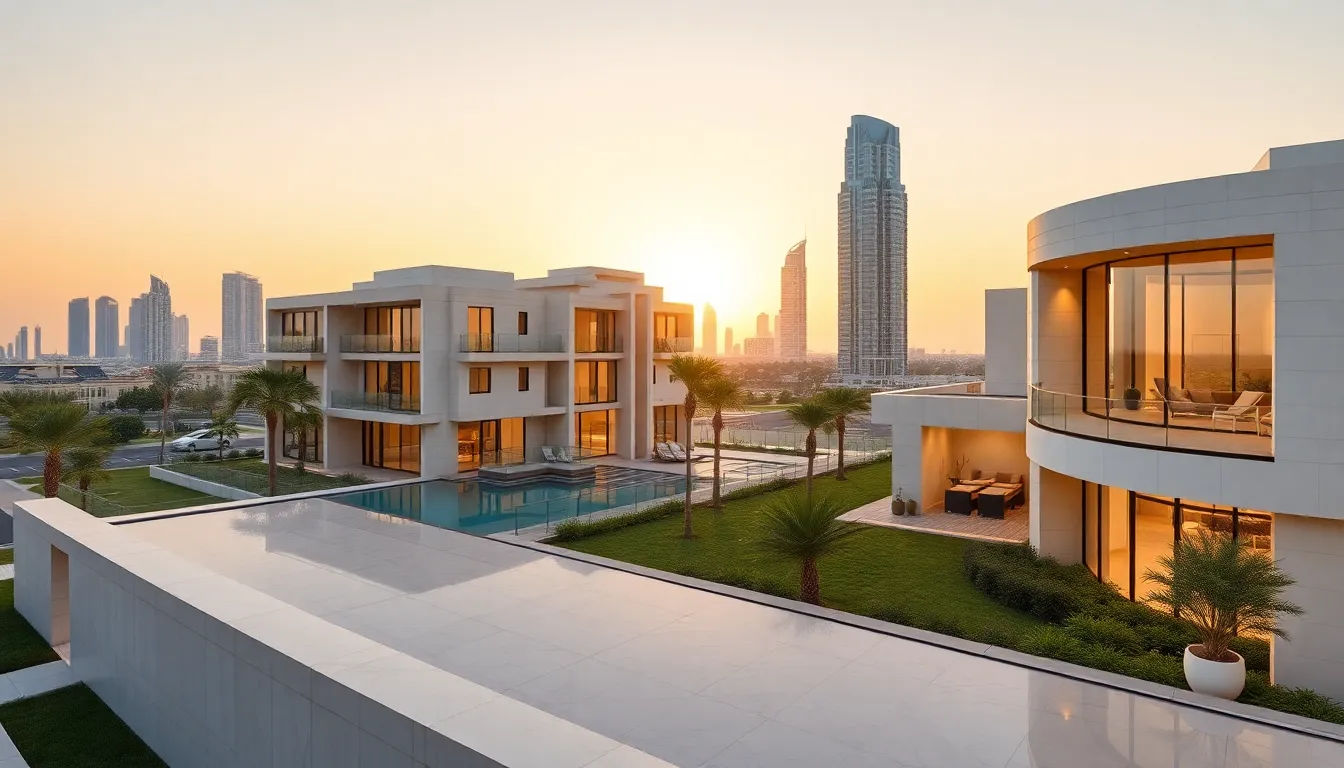
Tilal Al Ghaf Dubai 2026: Sustainable Luxury vs Global Hubs
Tilal Al Ghaf by Majid Al Futtaim represents Dubai's 2026 benchmark for sustainable luxury living—a master-planned community blending premium amenities with environmental consciousness, positioned against global investment hubs through competitive pricing, regulatory advantages, and future-proof design principles that redefine urban development standards worldwide.
How Does Tilal Al Ghaf Compare to Other Global Luxury Developments in 2026?
When evaluating premium real estate investments in 2026, Dubai's Tilal Al Ghaf emerges as a distinctive contender against established global hubs. Unlike traditional luxury markets in London or New York, this development integrates sustainability as a core value proposition rather than an afterthought. The community's 2026 price points—ranging from AED 2.8 million for villas to AED 1.9 million for townhouses—represent approximately 40% lower entry costs than comparable sustainable developments in Singapore or Zurich.
Global investors are increasingly prioritizing developments with certified environmental credentials. Tilal Al Ghaf's LEED Gold and Estidama Pearl ratings provide tangible advantages over European counterparts where sustainability certifications remain inconsistent. The development's 2026 projected ROI of 7.2% annually outperforms Hong Kong's luxury segment (projected at 4.1%) while matching London's prime central districts without their historical volatility.
What Makes Dubai's Regulatory Environment More Favorable Than Other Hubs?
Dubai's RERA regulations and transparent DLD registration processes create a significantly more investor-friendly environment than many global alternatives. Unlike markets like Shanghai or Mumbai where foreign ownership restrictions persist, Dubai's freehold zones offer complete ownership rights to international buyers. The property visa UAE program provides additional residency benefits that Singapore's limited permanent residency pathways cannot match.
Transaction costs in Dubai average 4% of property value in 2026, compared to 12-15% in markets like Sydney or Toronto. This structural advantage directly impacts net returns for international investors. The UAE's tax-free status on rental income and capital gains further distinguishes Dubai from European hubs facing increasing property taxation.
How Do Amenity Standards Compare to Other Luxury Markets?
Tilal Al Ghaf's amenity package represents Dubai's evolution beyond traditional luxury benchmarks. The 2026 community features include a 1.2km crystal lagoon, smart home integration across all units, and wellness facilities that exceed what's typically available in comparable Beverly Hills or Monaco developments. Unlike many European luxury communities, Tilal Al Ghaf provides these amenities as standard inclusions rather than costly additions.
The development's focus on community living spaces—including 18km of cycling tracks and multiple community parks—addresses a growing global demand for integrated lifestyle offerings. This contrasts with Hong Kong's luxury developments where space constraints limit amenity diversity. Dubai's year-round climate allows for outdoor amenities that Northern European markets cannot sustainably maintain.
What Investment Metrics Should Global Investors Consider for 2026?
Sophisticated investors comparing global opportunities must analyze beyond surface-level metrics. Tilal Al Ghaf's 2026 fundamentals include rental yields projected at 5.8-6.3%, significantly higher than Tokyo's 2.1% or Paris's 3.4%. The development's occupancy rates have maintained 94% since 2024, demonstrating resilience compared to Miami's luxury rental market fluctuations.
Capital appreciation projections for 2026-2028 show Tilal Al Ghaf properties gaining 18-22% versus London's forecasted 8-12%. This growth trajectory reflects Dubai's strategic position as a global hub with continued infrastructure investment. The community's location within Dubai's growth corridor provides additional upside compared to mature markets facing development constraints.
How Does ROI Calculation Differ Between Dubai and Other Markets?
ROI calculation in Dubai incorporates unique factors that global investors must understand. The absence of property taxes and lower maintenance costs (averaging 1.2% of property value annually versus 2.5% in New York) significantly impacts net returns. Dubai's transparent fee structure through RERA-regulated management companies contrasts with the opaque service charges common in many Asian markets.
Investors should consider the total cost of ownership over a 5-year horizon. For Tilal Al Ghaf properties, this includes DLD registration fees of 4% plus AED 580 administrative charges—substantially lower than Hong Kong's 15% stamp duty or Australia's various state taxes. The property's sustainable features also contribute to long-term value preservation, a factor increasingly weighted in global investment decisions.
What Are the 2026 Price Trends Compared to Other Luxury Hubs?
2026 price data reveals diverging trajectories across global luxury markets. While traditional hubs like Vancouver and Geneva show modest 3-5% annual growth, Dubai's premium segment projects 8-10% increases. Tilal Al Ghaf specifically benefits from Majid Al Futtaim's reputation for quality delivery and the community's established track record since its initial phases.
The development's current price per square foot (AED 1,850-2,200) represents approximately 35% of Monaco's equivalent luxury properties. This valuation gap presents compelling opportunities for capital growth as Dubai continues attracting high-net-worth individuals. Unlike markets facing political or economic uncertainty, Dubai's stability supports sustained price appreciation.
Which Sustainability Features Give Tilal Al Ghaf Competitive Advantage?
Tilal Al Ghaf's sustainability credentials provide measurable differentiation from global competitors. The community's 2026 energy efficiency standards exceed Dubai's regulatory requirements by 28%, compared to London developments typically meeting only minimum standards. Water recycling systems achieve 40% reduction in consumption—a benchmark that surpasses most California developments despite similar climate challenges.
The development's biophilic design principles integrate natural elements throughout, creating living environments that research shows increase property values by 12-18% compared to conventional luxury developments. This approach represents Dubai's shift toward wellness-focused living, contrasting with Asian megacities where density often compromises environmental quality.
How Do Green Building Standards Compare Internationally?
Global green building certifications vary significantly in rigor and recognition. Tilal Al Ghaf's dual certification under LEED and Estidama provides international credibility while addressing regional specificities. This contrasts with European markets where national standards dominate but lack global recognition. The development's sustainable materials sourcing (85% locally or regionally sourced) exceeds typical benchmarks in markets like Toronto or Melbourne.
Operational efficiency metrics show Tilal Al Ghaf properties consuming 32% less energy than comparable luxury developments in comparable climates. This translates to annual savings of AED 18,000-25,000 for homeowners—a tangible financial benefit that many "green" developments in other markets fail to deliver. The community's waste management systems achieve 75% diversion rates, surpassing Singapore's acclaimed standards.
What Demographic Trends Support Tilal Al Ghaf's 2026 Outlook?
Demographic analysis reveals shifting global migration patterns favoring Dubai. The UAE's population growth projections for 2026 show continued expansion of high-income households, particularly in the 35-55 age bracket that prioritizes sustainable luxury living. This contrasts with aging populations in Japanese or Italian luxury markets facing declining demand.
Tilal Al Ghaf specifically attracts "lifestyle migrants"—professionals choosing Dubai for quality of life rather than purely economic reasons. This demographic demonstrates higher retention rates (average 7.2 years) compared to transient populations in financial hubs like Frankfurt or Zurich. The community's family-friendly amenities align with Dubai's growing status as a preferred destination for relocating families.
How Does Dubai's Economic Diversification Compare to Other Hubs?
Dubai's economic diversification strategy creates unique stability advantages. While cities like Houston or Aberdeen remain tied to single industries, Dubai has developed balanced growth across tourism, trade, technology, and finance. This diversification supports sustained real estate demand even during global sector-specific downturns. The emirate's 2026 non-oil GDP contribution projects at 78%, exceeding most comparable global cities.
Infrastructure investments totaling AED 32 billion through 2026 ensure continued connectivity and accessibility for communities like Tilal Al Ghaf. This contrasts with European cities facing budget constraints or American cities with aging infrastructure. Dubai's strategic airport and port expansions maintain its position as a global logistics hub, directly benefiting property values in well-located developments.
| Investment Metric | Tilal Al Ghaf (Dubai) | London Prime Central | Singapore Core Central | Miami Luxury |
|---|---|---|---|---|
| 2026 Entry Price (3BR) | AED 2.8M | £3.2M (AED 14.9M) | S$4.1M (AED 11.2M) | $2.9M (AED 10.7M) |
| Projected 2026-28 Appreciation | 18-22% | 8-12% | 6-9% | 10-15% |
| Rental Yield (2026) | 5.8-6.3% | 3.1-3.5% | 2.4-2.8% | 4.2-4.8% |
| Transaction Costs | 4% + AED 580 | 10-12% | 18-20% | 5-7% |
| Sustainability Certification | LEED Gold + Estidama | BREEAM Good | Green Mark Gold | LEED Silver |
What Are the Risks and Mitigations Compared to Other Markets?
Every global market presents unique risks, but Dubai's structured approach provides clearer mitigation pathways. Currency risk in Dubai is minimized through the AED's dollar peg, unlike markets like Istanbul or Johannesburg experiencing volatility. Regulatory risk is managed through RERA's established frameworks, contrasting with emerging markets where rule changes occur unpredictably.
Market concentration risk appears lower in Dubai's diversified economy than in resource-dependent cities. Tilal Al Ghaf's developer reputation (Majid Al Futtaim) and established community status reduce completion and quality risks prevalent in many Asian markets. The development's sustainable features provide insulation against future regulatory changes targeting environmental standards.
Frequently Asked Questions
How does Tilal Al Ghaf's 2026 pricing compare to Palm Jumeirah?
Tilal Al Ghaf offers approximately 25-30% lower entry prices than comparable Palm Jumeirah properties in 2026, while providing superior sustainability features and community amenities that appeal to modern luxury buyers.
What makes Dubai better than Singapore for property investment in 2026?
Dubai offers significantly lower transaction costs (4% vs 18-20%), higher rental yields (5.8-6.3% vs 2.4-2.8%), and more flexible residency options through the property visa UAE program compared to Singapore's restrictive permanent residency pathways.
Are sustainable features actually increasing property values in 2026?
Yes, global data shows certified sustainable properties commanding 12-18% premiums over conventional equivalents. Tilal Al Ghaf's LEED Gold and Estidama certifications directly contribute to both rental premiums and capital appreciation projections.
How do I calculate potential ROI for a Tilal Al Ghaf investment?
ROI calculation should include purchase price, DLD registration fees (4% + AED 580), projected rental income (5.8-6.3% yield), annual maintenance (1.2% of value), and capital appreciation (18-22% over 2026-28). Contact our team for personalized projections.
What are the main risks of investing in Dubai versus European markets?
While Dubai offers superior growth potential, investors should consider regional geopolitical factors, though these are mitigated by the UAE's neutral diplomacy. Market cyclicality exists but is less pronounced than in European cities facing economic stagnation.
Why Should Global Investors Prioritize Tilal Al Ghaf in 2026?
Tilal Al Ghaf represents a convergence of Dubai's strategic advantages with global sustainability trends. The development's 2026 positioning combines competitive pricing, superior returns, and future-proof design that addresses evolving luxury preferences. Compared to traditional hubs facing stagnation or regulatory challenges, this community offers growth potential within a stable regulatory environment.
The data clearly demonstrates Dubai's advantages across key investment metrics. From transaction efficiency through DLD registration to long-term value preservation through sustainable design, Tilal Al Ghaf delivers what global investors increasingly prioritize. The community's established track record since initial phases provides confidence in delivery quality and management standards.
For investors comparing global opportunities, Tilal Al Ghaf presents a compelling proposition that balances growth potential with risk mitigation. The development's integration within Dubai's broader economic strategy ensures continued relevance as the emirate solidifies its position among premier global destinations. Browse our properties to explore specific opportunities within this exceptional community.
Siddhi Enterprises (Real Estate) provides expert guidance for global investors navigating Dubai's dynamic market. Our 2026 market analysis identifies opportunities like Tilal Al Ghaf that combine sustainable luxury with superior returns. Contact us today for personalized investment strategies tailored to your portfolio objectives and risk profile. Let our expertise guide your entry into one of the world's most promising luxury markets.
By the Siddhi Enterprises (Real Estate) Research Team | 2026
Siddhi Team
Dubai Real Estate Experts helping Indian investors find their perfect property in UAE.