
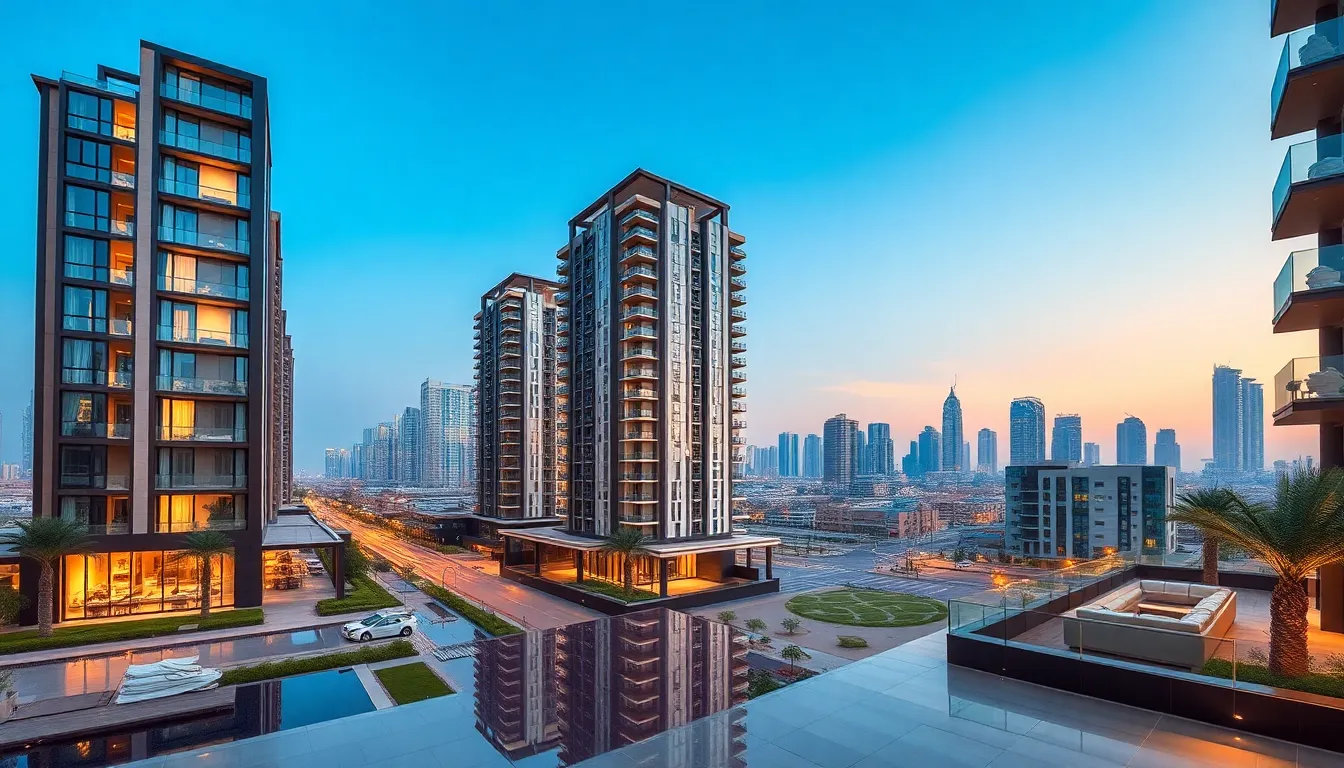
Is Dubailand's Apartment Market Finally Maturing?
I still remember sitting with a client – let's call him Pranav – in 2022. He was convinced that apartments for sale in Dubailand were a gamble. “Too far,” he said. “No metro, no shops. It's all just sand and promises.” Flash forward to March 2026, and the same man just picked up keys to his two-bedroom in a project near Global Village. The difference? He told me he wished he'd bought back then, not because of prices, but because he missed out on the early days of a real community forming.
That's the shift I've watched up close. Over the last three to four years, Dubailand stopped being a collection of isolated off-plan plots with grand brochures. It started to feel like a place where people actually live. This isn't about hype. I've been doing this for 15 years, and I've seen plenty of “next big thing” zones fizzle. Something's different here, and it's worth dissecting if you're even half-curious about buying an apartment in this part of Dubai.
What made Dubailand's apartment market flip in the last few years?
I won't sugarcoat it. For a long time, Dubailand was a punchline among serious buyers. Massive masterplan, yes, but with more camel farms than corner shops. In 2019 or early 2020, I'd take investors out for viewings there, and we'd spend half the time just navigating unmarked roads. Then came the pandemic, and everything twisted. People wanted space. They wanted a home, not a hotel room. Suddenly, those “remote” plots looked like sanctuaries.
But infrastructure is what really cracked it open. By 2023, major road links improved – think the upgraded Al Ain Road, the new interchanges. Retail started creeping in: not just another Spinneys, but proper community malls like Cityland Mall and the expansion around Arabian Ranches. I've seen families who moved to a Dubailand apartment two years ago now have a supermarket, a clinic, and a school within a 10-minute drive. That was unthinkable in 2021.
Another quiet catalyst? Handover volumes. Developers actually finished things. Not on time, mind you – handover chaos is still a rite of passage – but they delivered. When I walk through a newly handed-over tower in Dubailand, even with the dust and the frantic snagging crews, I can see the bones of a functioning neighbourhood. That's a before/after nobody talks about: from promise to possession.
How do Dubailand apartments stack up against other popular areas?
If you're like most buyers, you're probably comparing Dubailand with JVC, maybe Dubai Marina, or even JLT. Let me give you the real picture, stripped of brochure fluff. I've helped clients buy in all these areas, and the distinction is sharper now than ever.
| Dimension | Dubailand | Jumeirah Village Circle (JVC) | Business Bay | Dubai Marina |
|---|---|---|---|---|
| Community Feel | Quiet, spread-out, newer communities forming; feels suburban with a desert edge. Not crowded. | Bustling, dense, lots of young renters; can feel chaotic during peak hours. | Corporate by day, city noise, less family-oriented. | Touristy, vibrant, transient population; high energy but low privacy. |
| Connectivity | Improving: quick access to Sheikh Zayed Road via Al Qudra, Hessa Street. Still car-dependent. Metro not expected soon. | Central location, easy access to major highways, but internal traffic can be a bottleneck. | Excellent: right on Sheikh Zayed Road, metro stations, near DIFC, Downtown. | Good public transport, tram, metro links; choked with traffic on weekends. |
| Handover Timelines | Often delayed, but recently more reliable; spread across multiple developers. Research is crucial. | Many completed buildings, but new launches see delays. Established developer history helps. | Mostly completed; new off-plan rare, and handovers are usually on schedule. | Very few new projects; resale market dominant. No handover surprises. |
| Amenities | Growing: pools, gyms, parks often larger; new retail centers emerging. Still lacks the density of dining. | Plenty of small supermarkets, salons, and casual eats; limited high-end retail. | High-end restaurants, hotels, but limited community parks. More concrete than green. | Beach access, promenades, massive retail at Marina Mall; all at your doorstep. |
| Buyer Type | End-users, families, second-home buyers, some investors looking for growth. Shifted from speculators. | Mix of investors and renters; many short-term tenants. High turnover. | Professionals, investors seeking corporate rental demand. Not for first-time families. | Luxury investors, holiday-home seekers, high-net-worth individuals. Not for everyday living. |
This table tells a story: Dubailand has carved a niche for people who want breathing room. It's not pretending to be a city center. And that's exactly why some of my clients are swapping their Marina apartments for a three-bedroom in a Dubailand mid-rise.
What's the reality of handover week in a new Dubailand project?
Let me take you into handover week. I've been through dozens – probably over a hundred if I count my early years as a junior agent. It's never smooth, but Dubailand handovers have a particular texture. Picture this: you drive into a newly paved road, half of it still barricaded. The building rises clean, but at the entrance, a crowd of contractors, owners, and developer reps jostle around a foldout table. The air smells of fresh paint mixed with construction dust. Someone's arguing about a missing key fob. A security guard is on his third cup of karak, looking like he's been there since dawn.
I was at one last month for a client who bought a one-bedroom in an off-plan apartment project near the Miracle Garden. We walked in, and the first thing I noticed was the echo – the unit was clean, but empty, and the snagging list was two pages long. Things you'd expect: a faulty light switch, a misaligned cabinet door, a single window seal that let in a whistle of wind. We spent three hours walking the property, marking every chip with blue tape, while outside, trucks beeped and workers shouted over the drone of generators. It's chaos. But it's also the day my client's investment turned into something real.
I tell this because if you're considering apartments for sale in Dubailand, you need to plan for handover week like it's a project. Bring a professional snagger if you can. Bring a notepad. Bring patience. The quality in Dubailand has improved, but the process still tests your nerves. The good news? Most developers now have more responsive handover teams than five years ago. I've seen the difference firsthand: they actually send a supervisor to walk with you, not just a driver and a set of keys.
Who is buying apartments in Dubailand right now — and why?
A few years ago, you'd answer: speculators. Flippers. Guys with spreadsheets betting on quick turnarounds. I'd sit in sales centres in 2021 and hear visitors ask, “When can I sell it?” before even knowing the floor plan. That crowd is quieter now. Today, I see more end-users. Families with young kids. Couples in their 30s and 40s who work remotely and don't need to be in an office tower every day. NRI buyers looking for a second home that feels a bit more permanent than a hotel apartment.
I have a client, Ananya, a marketing consultant who moved from London. She wasn't sold on Dubailand initially – she wanted to be near the action. But after renting in JLT for a year, the noise and congestion pushed her to look east. She now owns a two-bedroom apartment near Arabian Ranches III. Her daily drive to Media City is about 35 minutes off-peak, and she says it's worth it for the silence at night. That's not a story I heard in 2020. It's a shift in mindset: from “investment node” to “my home.”
Investors aren't gone, but they're smarter now. They're looking at rental demand from people who actually want to live there, not just tourists. I've seen a steady uptick in inquiries from families wanting to rent in Dubailand because of the school zones and parks. That's a solid underpinning for any apartment buyer.
What should I check before committing to an off-plan apartment there?
I'm not going to give you the bland “do your research” line. Here's what I do before I let a client put money down in Dubailand.
First, I look at the developer's last three projects. Not the ones they promise, the ones they've finished. In Dubailand, I've seen some developers who deliver on time, and some who still can't figure out how to install a gym without a six-month delay. I'll want to see snagging reports from those projects, if possible. Word of mouth among agents is brutal but honest.
Second, I check the escrow account. Is the project registered with RERA? Is the escrow detailed properly? This isn't optional. I've had deals where the developer tried to push a payment plan that bypassed standard procedures, and I shut it down. If you're a buyer, you want that safety net.
Third, I spend time in the area – at different times of day. I drove through Dubailand on a Thursday evening recently, and the difference from a year ago is striking: more cars, more lights in windows, a few new cafes actually open past 8pm. That sort of organic growth tells me more than a glossy brochure. You should look at buying property in Dubai with your eyes and ears, not just a floor plan.
What can I expect from daily life in a Dubailand community?
Life in Dubailand is calmer. Mornings mean walking to a community pool that isn't swarmed by hotel guests. Parking is actually under your building, not a 10-minute trek. I have a family with two kids living in a Dubailand apartment complex, and their weekly routine now circles the local Lulu Hypermarket, the nearby park, and weekend trips to Global Village when it's open. It's a suburban rhythm, but with the Dubai bubble of convenience still within reach.
Commutes are the big adjustment. If you work in DIFC, you'll need to plan your route. Al Qudra Road helps, and the new flyovers have cut down time. But there's no magic teleporter. I've timed the drive from Town Square to Downtown during rush hour – it's about 45 minutes. Off-peak, 25. I tell anyone buying an apartment there: test the commute. Rent a car for a week and drive it. Don't rely on what I say or what Google Maps promises at noon.
On the flip side, you get space. Three-bedroom apartments here are often larger than what you'd find in the Marina for similar configurations. Balconies that actually host a proper table and chairs. Some communities have gates, others don't, but the overall feel is less vertical stress. I've seen people's blood pressure drop after moving from a cramped studio in Discovery Gardens to a one-bedroom here with a view of nothing but dunes and construction – which, oddly, they find peaceful.
Is now the right time to buy an apartment in Dubailand?
I'm not a market timer, but I'll give you my observation. In 2026, Dubailand feels like a teenager who's finally stopped growing out of his clothes. The infrastructure isn't fully baked, but it's functional. The community isn't buzzing like a city centre, but it's alive. For buyers who want a home, and are okay with a bit of construction noise for a couple more years, it makes sense. For pure short-term investors, you need to be more precise – pick the right project, the right handover timeline, and don't bank on a quick flip.
I've watched clients who bought in 2022 settle in now, and their biggest complaint is that the corner shop still doesn't sell their favourite brand of coffee. That's a good complaint. It means the fundamentals are in place, and the details are catching up. If you're curious, check current Dubai investment options across Dubailand and other areas to see how they align with your timeline.
What types of apartments are you likely to find in Dubailand?
Here's a quick breakdown of the common apartment profiles I'm showing clients. This isn't exhaustive, but it covers the spread.
| Apartment Type | Size Example | Best For
By Himanshu Gupta, Senior Property Advisor at Siddhi Estates — 15 years in Dubai real estate, from off-plan launches to handover and resale. Share this article Siddhi TeamDubai Real Estate Experts helping Indian investors find their perfect property in UAE. |
|---|