
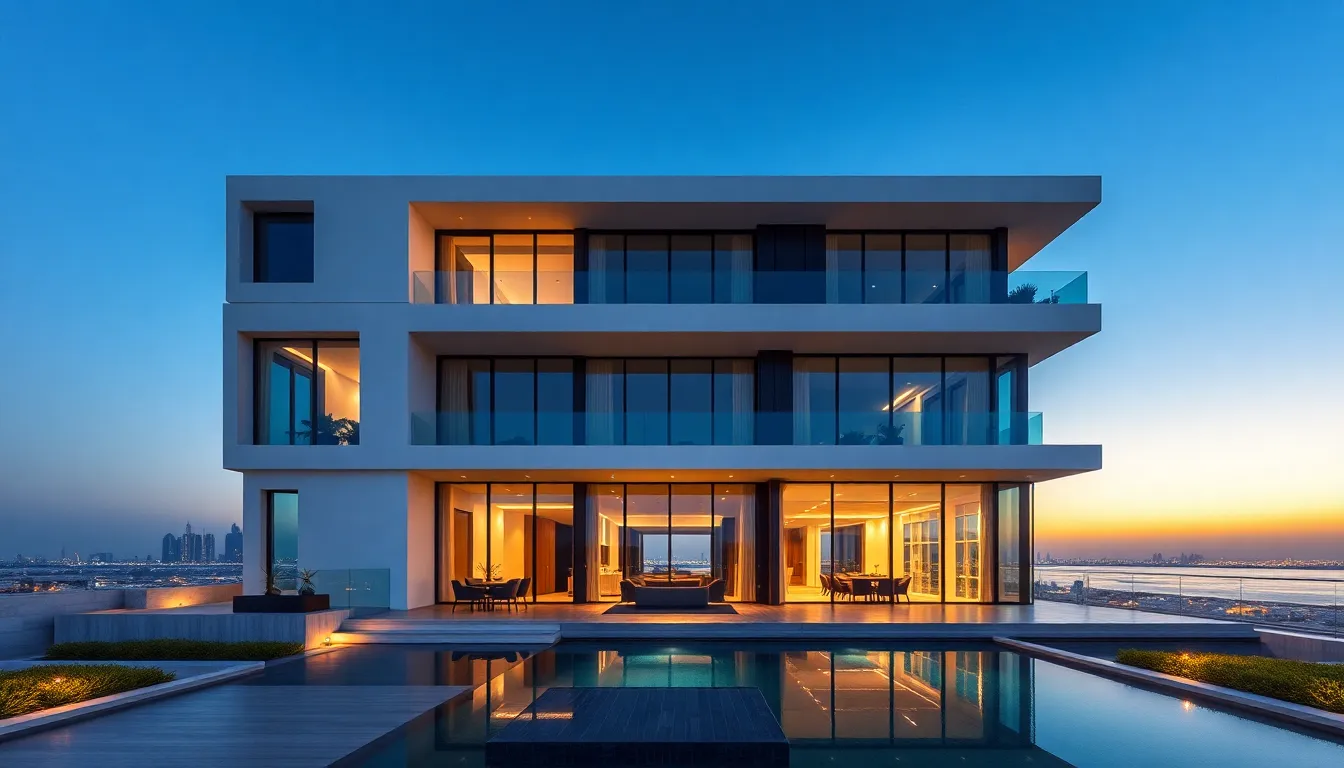
Is Buying a Villa on Palm Jumeirah Still Smart in 2026?
Buying a villa on the Palm isn't about 'investment' anymore—it's a lifestyle purchase, plain and simple. I learned that the hard way. About twelve years ago, I talked a Mumbai-based trader into stretching for a frond villa, promising it would double in 24 months. It didn't. He ended up selling three years later, barely breaking even after all costs, and I lost a client who still probably curses my name. That mistake sticks with me every time I show a villas for sale in Palm Jumeirah today. Now I don’t sugarcoat the trade-offs: the traffic bottlenecks during peak season, the occasional tourist boat noise, the maintenance burden of a beachside property. But I also know these villas deliver something no other community in Dubai can touch—a direct, private slice of the Arabian Gulf, with the skyline glittering behind you.
I was in a villa on Frond G last month, the AC humming softly, holding up my phone to show the granite countertops to a family in London. Their kid waved at the camera when I panned past the pool. The mother made me turn the phone slowly so she could see how the light hit the living room at exactly 4 pm. That’s the kind of detail that matters—not the price per square foot, but how the space feels when you pour your morning coffee and look out at the water. I’ve done more than fifty video-call viewings for NRI buyers over the past three years, and each time I’m hyper-aware that my voice and my eyes are the client’s only proxy. I point out the hairline crack in the patio grout, the silty water colour after a sandstorm, the exact sound of the call to prayer drifting across from the far shore. That’s what shapes my advice today: raw honesty about the product, zero reliance on hype.
What’s the Real Experience of Living in a Palm Jumeirah Villa?
Living on the Palm is a sensory contradiction. In the morning, you’ll step barefoot onto dew-cooled travertine and see nothing but sea and sky—maybe a superyacht creeping past the breakwater. By 8 a.m., you’re in the car and might crawl through 20 minutes of trunk traffic just to reach the first roundabout. It’s a community built for cars, but it’s also a community where your evening walk loops past multi-million-dollar homes with bamboo gardens and the occasional peacock squawk from a neighbour’s lawn.
The fronds are quiet during the day because most households are at work or school. By late afternoon, the joggers and nannies with prams appear, and the boardwalk behind the villas hums with polite hellos. I’ve had long conversations with residents about the two things they didn’t expect: the constant battle against salt-wind corrosion on light fixtures, and the strange solitude of living in a neighbourhood where your nearest grocery run is a 15-minute drive. But none of them regret it. The beach access—your own gate opening onto soft white sand—never gets old. That exclusivity is the real currency here, and it’s why Palm Jumeirah villas still hold value when other luxury areas soften.
For families, schools are on the mainland (GEMS Wellington, Dubai College) so it’s a daily commute. Weekends revolve around the beach clubs: Riva on the Shoreline, or the members-only spots. Dining is clustered at Nakheel Mall, the Pointe, and a handful of frond-side cafes, but you won’t find a buzzing high street within walking distance. It’s introverted luxury—perfect for those who want to entertain at home but don’t mind driving for a night out.
How Do I Choose Between Frond Villas and Signature Villas?
This is the most common question I get, and it’s also the one where my early mistake taught me the most. Back then, I pushed everyone toward crescentside Signature villas because the brochures looked glossy. But I’ve since spent enough time in both types to know the decision hinges on how you actually live, not how you want to impress.
Here’s a breakdown that doesn’t involve a single dirham:
| Villa Category | Beach Access | Privacy | Community Vibe | Outdoor Space | Renovation Flexibility | View You Wake Up To |
|---|---|---|---|---|---|---|
| Frond Villas | Private gate to shared frond beach; water is calm, kid-friendly | High on frond ends; moderate near trunk | Tight-knit, mostly owner-occupied; you’ll know the neighbour’s dog’s name | Generous plot, often with a pool and garden; space for a trampoline or boat storage | Nakheel design guidelines are enforced; major external changes need approval, but interiors are flexible | Frond-water canal with yachts; some also have open sea from upper level |
| Garden Homes | No direct beach; shared access via community pathways | Lower—homes face streets or community gardens | More transient, higher rental turnover; less community engagement | Smaller garden, sometimes a small plunge pool; limited sun exposure in winter | Fewer restrictions on interior redesign; good for investors who want to upgrade kitchens | Landscaped green or neighbour’s wall |
| Signature Villas (Crescent) | Direct private beachfront; wide swathes of sand; deeper water, can moor a small boat | Very high—plots are large with mature landscaping | Ultra-luxury, often second homes; you rarely see your neighbours | Massive plots, huge pools, outdoor kitchens; some with private spa cabanas | High customisation if you build from scratch; older villas often gutted and redone | Uninterrupted open sea or Atlantis silhouette |
What Should NRI Buyers Know About Buying Remotely?
By 2026, remote buying is not a compromise—it’s a well-oiled process. I’ve completed entire transactions where the only time a client saw their villa in person was the morning of handover. And they were perfectly satisfied because we’d built trust through obsessive, granular video walkthroughs.
One NRI family from Singapore, the Choudhurys, bought a resale Frond L villa after 23 video calls. I measured every room corner-to-corner, ran water in the sinks to show pressure, and even called them during a rare Dubai dust storm so they could see how the windows sealed. Their teenage daughter picked the bedroom after I filmed the afternoon light quality while the mum asked me to kneel and show the silicone line under the kitchen counter. Sounds excessive? It’s exactly what they needed to feel confident. That’s my standard now.
Legal logistics are straightforward: you appoint a power of attorney (I’m registered to hold POA, or you use a trusted law firm), the transfer happens at the Trustee Office, and ownership is registered via the Dubai REST app. Financing as an NRI is common—many local banks offer mortgages at competitive LTVs, though you’ll need a bigger down payment and a strong home-country credit history. The key is having a boots-on-the-ground advisor who can smell damp, spot developer shortcuts, and know which community management offices are responsive. Without that, you’re gambling.
Is Now a Good Time to Buy a Villa on the Palm?
Honest answer? It depends entirely on your exit strategy. If you’re hoping for 20% annual appreciation, I’d steer you toward emerging off-plan areas. The Palm has entered a phase of stable, prestige-driven value rather than wild jumps. What you buy today is likely to hold its worth and creep up slowly, but the real payoff is in the lifestyle—for the next decade, you’ll live in one of the world’s most recognised residential icons.
Supply is truly finite, especially for true beachfront. Nakheel’s newer projects like Palm Jebel Ali may siphon some speculators away, but they will never replicate the matured greenery, established retail, and school-run routines that make Palm Jumeirah a home rather than a construction site. I’ve watched the fronds grow from sand pits to streets shaded with mature Ghaf trees. That organic evolution takes a decade, and it’s now here. So if you’re a family looking to settle for 5+ years, the timeline works in your favour. Short-term flippers, look elsewhere.
One shift I’ve observed: more European and NRI end-users are buying renovated villas—taking on properties with outdated interiors and turning them into contemporary masterpieces. Renovation is now a defining trend, which means you shouldn’t fear an older build; instead, assess the structural bones and the plot orientation. I always walk the property after a heavy rain (or check historical service charge records for drainage issues) because a flooded garden can sour an entire winter.
How Does the Handover Process Actually Work?
When you buy a ready villa, handover is the moment where a key fob and a list of snags separate a dream from a headache. I’ve been to handovers where the developer’s representative rushed us through with a “sign here, everything is fine” attitude, only for the client to discover six months later that the hot water tank was undersized and two AC units were miswired.
During handover, confirm that all service charge arrears are settled, chiller accounts are clear, and the title deed matches the physical plot number. I’ve seen deeds with typos that delayed registration by weeks. Also, insist on a full walkthrough of the community rules: storage of personal watercraft, garden landscaping restrictions, short-term rental policies. Many buyers skip this and end up with fines.
What Hidden Details Should I Inspect Before Buying?
I’ve built a mental checklist over 15 years that often saves clients from nasty surprises. Here are the non-negotiables:
- Outdoor porcelain tile condition: Salt and heat cause micro-cracks. Replacements are expensive and tiles might be discontinued.
- AC ducting and chiller plant: Ask for service records. A poorly maintained AC in a coastal environment grows mould fast.
- Boundary wall integrity: On fronds, walls between neighbours share costs; check for pending disputes.
- Window seals and frames: Sand ingress during storms can scratch internal floors if seals are perished.
- Electrical load capacity: Older villas sometimes can’t handle modern pool heaters or EV chargers without an upgrade.
- Community gate access: Test the intercom system; a broken gate motor is a common and annoying fix.
I also recommend driving past the villa at 11 p.m. on a Thursday. Sound travels across water, and a neighbouring party villa can make your nights miserable. Privacy is great on paper; reality sometimes plays loud music.
Why Does Agency Representation Matter in Palm Deals?
Because the Palm has a complex patchwork of title deed histories, overlapping building regulations, and unique service charge structures, going solo is risky. I’ll give you a concrete example: an NRI client agreed on a private sale for a Garden Home, and at the last moment my team discovered an outstanding mortgage charge on the property that the seller’s agent had ‘forgotten’ to disclose. That would have tied up the title for months. We renegotiated the contract with a mandatory seller clearance clause, and the deal closed clean. Without agency representation, my client would have inherited someone else’s debt.
Good agents also keep you away from the noise. I’ve gently nudged couples away from villas that photograph beautifully but sit next to construction plots, or where the community pool has been shut for repairs for two summers. These are the intangibles that listing portals don’t show. When you review premium Dubai developments, context matters as much as the floor plan. I encourage every buyer to discover Dubai freehold communities beyond the obvious names, just to calibrate what ‘value’ means across the city.
For NRI buyers especially, the agency acts as your legal eyes. We verify the seller’s identity through Emirates ID checks, ensure the Memorandum of Understanding is watertight, and manage the escrow of deposit funds. It’s the difference between a three-week seamless transaction and a six-month legal tangle.
Frequently Asked Questions About Palm Jumeirah Villas
Are all Palm Jumeirah villas freehold?
Yes, designated areas for foreign ownership—including the fronds, the crescent, and most garden villas—are freehold. GCC nationals can own anywhere outright, while non-GCC buyers have full rights in the marked freehold zones, including the right to sell, lease, and inherit.
Can I rent out my Palm villa short-term?
Short-term rentals are permitted but subject to DTCM licensing. Some sub-communities, particularly on the fronds, have specific regulations limiting holiday lets to preserve family ambiance. Always check the community master declaration.
How long does a typical villa purchase take from offer to handover?
If the property is vacant and the title clear, I’ve closed sales in 7 days. With a mortgage, allow 3–4 weeks. Out-of-country buyers relying on POA can expect a similar timeline, provided documents are in order.
What are the ongoing maintenance costs I should budget for?
Service charges vary by community and plot size. Additionally, account for air conditioning (district cooling charges), garden upkeep, and periodic villa repainting required by Nakheel every 5–7 years. I always obtain a full statement from the owners’ association before my clients commit.
Is it safe to buy an off-plan villa on the Palm in 2026?
With most of the Palm already built out, off-plan opportunities are rare and usually involve plot redevelopment rather than new launches. As with any off-plan deal, verify the developer’s track record, escrow compliance, and target handover date with a professional.
Which frond is best for families?
Fronds D through G are often favoured for their calmer traffic and closer proximity to the centre of the Palm. Frond H through L offer larger plots but can feel more isolated. I always recommend experiencing the drive times yourself during school runs.
Can I get a mortgage as an NRI for a Palm villa?
Yes, UAE banks offer mortgages to non-residents, typically up to 50–60% LTV for properties above a certain valuation. You will need a strong credit history, bank statements from your home country, and sometimes a salary certificate translated into English or Arabic.
Keeping a Steady Hand in a Shifting Market
Looking at the data, the behavioural shift since 2020 is stark. I’ve maintained a log of my own transactions, and the pattern is clear: the buyer today is younger, more international, and more design-conscious than a decade ago. They’re buying villas to redesign, not just occupy. Here’s a sample of what I’ve tracked:
| Buyer Profile Trend (2018 vs 2026) | 2018 Observation | 2026 Observation | Impact on Villa Choice |
|---|---|---|---|
| Primary motivation | Capital appreciation or rental yield | End-use lifestyle or family relocation | Preference for larger plots, outdoor kitchens, and home offices |
| Age bracket | 45–60, established executives | 32–45, entrepreneurs, remote business owners | Need for high-speed fibre, flexible floor plans |
| Decision timeline | 2–3 months, multiple visits | 2–4 weeks, often decision-ready after virtual tours | Faster closings but heavier reliance on advisor trust |
| Renovation appetite | Low; move-in ready was key | High; seeking “projects” to customise | Surge in purchase of older, well-built villas needing internal remodelling |
| Importance of community rules | Moderate | Critical—short-term rental bans, pet policies, renovation times | Buyers request copies of community declarations before viewing |
This table isn’t from a market report—it’s from my own client meetings. The shift toward renovation-readiness means older frond villas with solid structures but dated interiors have become oddly desirable. Two years ago, a client would have wrinkled their nose at a 2006-built kitchen; today they’re excited about ripping it out and installing a Bulthaup. I’ve had to adjust how I assess value: now I look at the concrete slab thickness, the condition of the waterproofing membrane on the roof, and the potential to move load-bearing walls—things that never came up a decade ago.
Another insight: the seasonality of demand has flattened. Traditionally, September to March saw an influx of European and NRI buyer activity. Now, with remote working entrenched, decisions are spread across the year. I did a deal in August last year for a Swiss family who toured the villa via my phone while sweating through a Zurich heatwave, and they were convinced because I showed them the shaded terrazza stayed 10 degrees cooler than the pool deck. Sensory detail won the day.
One thing that hasn’t changed: the emotional pull of the Palm. Buyers still light up when they step onto their private strip of beach, no matter how many videos I’ve sent. The sound of the water, the weightlessness of the air at sunrise—that can’t be transmitted digitally. That’s why I always offer to use the same book a no-pressure consultation approach: come see it, or send me as your stand-in, but don’t settle for a static listing. And when you’re ready to dig into the details, see our other property guides for comparisons with Jumeirah Bay, Emirates Hills, and Al Barari. Context makes the choice clearer.
Ultimately, a villa on Palm Jumeirah is not a spreadsheet decision. It’s a gut check. Do you want to live somewhere that feels like a permanent holiday? Can you tolerate the occasional traffic hassle for the privilege of a beach at your back door? I’ve seen it make people’s lives richer—and I’ve seen it frustrate the quick-profit chasers. So my advice in 2026 is distilled from that early-career blunder: buy here because you love it, not because you have a calculator. The numbers might just work out anyway, slowly, while you’re busy enjoying the view.
By Himanshu Gupta, Senior Property Advisor at Siddhi Estates — 15 years in Dubai real estate, from off-plan launches to handover and resale.
Siddhi Team
Dubai Real Estate Experts helping Indian investors find their perfect property in UAE.