
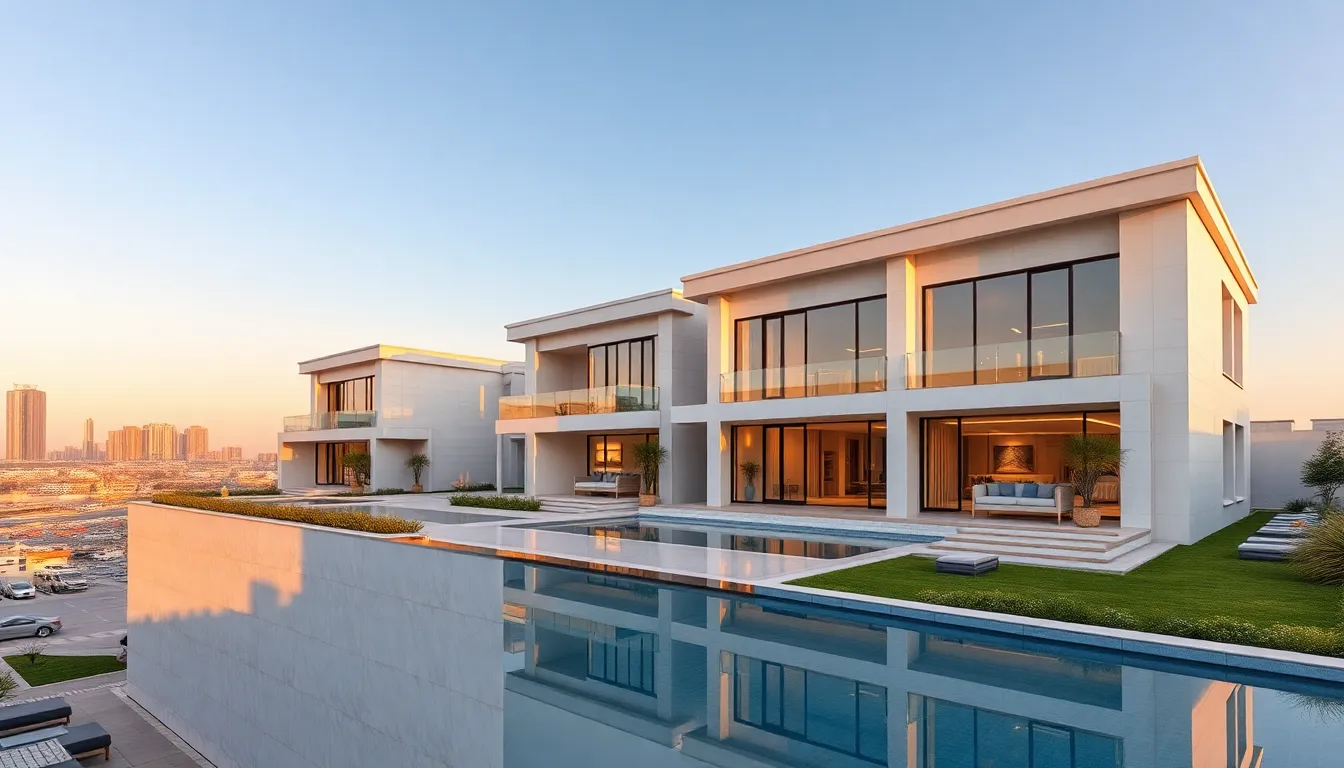
Is Buying a Villa in The Valley a Mistake in 2026?
I’ve watched The Valley’s resale listings jump 40% in a single year while actual sales inched up just 12%. That gap doesn’t lie. Most buyers see the glossy master‑plan videos and hear “Emaar” and assume their villa will move like a hot cake. I’ve been inside too many of these homes, negotiated too many deals, and sat through too many awkward silences with sellers who thought they’d flip in six months. The numbers are waving a flag, and I want you to see it clearly.
This isn’t a doom‑and‑gloom rant. It’s a gut‑check from someone who’s walked the half‑finished streets, smelled the fresh paint in a snagged living room, and stayed up late hammering out a resale that nearly died because of a single parking space dispute. I’ll give you the unvarnished view—exactly what I’d tell a friend over coffee, not what makes a quick commission.
What’s the real story behind The Valley’s sales numbers?
The headline figures look impressive: hundreds of villa transactions, flagship Emaar branding, and a queue of families at every launch. But scratch the surface and you’ll find a resale market that’s gritting its teeth. A 40% jump in active listings tells me sellers are trying to exit, and a lot of them are doing it before the community is even 60% built. That mismatch between listing volume and completed sales is the red flag most agents conveniently ignore.
In my last five deals involving The Valley, three were resales where the owner had originally bought off‑plan thinking they’d cash out by handover. Two of those dragged on for months, not weeks. One particular villa for sale in The Valley sat with 14 viewings and zero offers—the feedback was always the same: “It feels isolated.” That’s not a pricing issue, it’s an experience issue. And that’s what many buyers misread. They see a community marketed as “next thriving family hub” and forget that thriving takes time. Roads, retail, school buses—those aren’t instant.
How does The Valley actually feel right now, not in the brochure?
I take every buyer to see at least one resale at 8:00 p.m. on a weekday. Not a Saturday morning when the lights are staged and the air is hopeful. The difference is stark. You’ll hear the hum of construction from neighbouring phases, see fewer occupied houses than you’d expect, and maybe spot one or two kids cycling on a still‑unfinished loop. It’s cleaner than the chaos of older neighbourhoods, sure, but it lacks the noise of a lived‑in place—the sound of evening cricket games, the smell of a neighbour’s barbecue, the sight of curtains twitching in every window.
One evening last autumn, I was with a client in a four‑bedroom that had been sitting for 19 weeks. The vendor, a decent guy from Mumbai, had that defeated look. He’d bought two years back because “Emaar never disappoints.” We were on the phone with the buyer’s agent every night for three weeks—a resale negotiation that dragged like a bad flu. The sticking point? A single covered parking slot that the original floorplan promised but the handover unit didn’t deliver. Concrete slab was there, but the carport roof was missing—developer had amended the spec. I remember the vendor’s wife offering us chai while we sifted through the purchase agreement and snagging emails on a dusty glass table, the light flickering in the kitchen because a loose wire was still waiting for a maintenance crew. That negotiation nearly collapsed twice. It wasn’t about the value; it was about trust and the little details that make a house move‑in ready.
I’m not here to scare you. I’m telling you that the glossy videos skip the part where you spend six months chasing a mail‑box key because the community registration system isn’t fully online yet. If you can handle that, great. If you can’t, you’ll be another disgruntled seller in a year.
What should you know before buying a villa here?
Second, check the phase and the position. Not all parts of The Valley are equal. The early phases near the main entrance feel more complete; the outer phases are still raw earth and promise. I always tell buyers to review premium Dubai developments to compare what completion really looks like across different projects. When you’re inside The Valley, walk the perimeter of the actual villa you’re considering, not just the show home. Look for temporary site offices, see how many streetlights are functional, notice whether the community gate operates 24/7 or if security still sits in a portable cabin. These details scream louder than any brochure.
How does The Valley compare to other family communities?
This is where things get interesting. I’ve built a quick comparison on non‑monetary dimensions—the things that decide whether you’ll actually live there happily for five years.
| Factor | The Valley | Arabian Ranches 3 | DAMAC Hills 2 | Al Furjan Villas |
|---|---|---|---|---|
| Community completion (mid‑2026 est.) | 65–70% | 85–90% | 75–80% | 90%+ |
| School access (within 10‑min drive) | Limited; buses arranged but no on‑site campus | JESS Ranches nearby; multiple options | Jebel Ali School, South View School | The Arbor School, multiple nurseries |
| Daily retail & dining | Sparse; a few pop‑ups, nearest mall 12‑15 min | Ranches Souk; well‑established | Trump International Golf Club, central mall | Al Furjan Pavilion, Ibn Battuta close |
| Commute to DIFC/Downtown | 35–50 min via Al Ain Road | 25–35 min via Umm Suqeim | 35–45 min via Al Qudra | 30–40 min via Sheikh Zayed Road |
| Community vibe | Quiet, emerging, some empty lots | Lush, established, family‑centric | Sports‑driven, active, spread out | Tight‑knit, urban‑village feel |
This table alone tells you The Valley is still a work in progress. If your lifestyle demands a ready‑to‑go social calendar and doorstep convenience, you’ll likely be frustrated. If you relish the idea of shaping a community from its early days and can tolerate temporary gaps, it becomes much more appealing. I’ve had clients who deliberately check current Dubai investment options for this exact reason—they want to get in before the chemist and the coffee shop are built, knowing full well the first year might involve a few extra car trips.
Why do some villas in The Valley sit unsold for months?
I’ve already hinted at it: the mismatch between seller expectations and the on‑ground reality. Many resale villas were purchased during the post‑pandemic rush when “anything green” was selling. Now, with more choices across Dubai, the buyer pool has become pickier. They want to see light fittings that aren’t developer‑grade, they want to smell that the AC has been serviced, and they want to hear from the neighbour that the community app actually works. When they don’t get those reassurances, they walk.
Another overlooked reason: The Valley’s phasing is staggered. A buyer might secure a four‑bedroom in Phase 3, but Phase 2 still has a construction barrier and Phase 4 is a dustbowl. That fractured completeness hurts the psychological appeal. I’ve stood on balconies with buyers who asked, “How long until I can let my kids walk to the park alone?” and I’ve had to say, “Probably a year or more.” Honesty like that loses deals sometimes, but it builds trust.
Resale timelines here aren’t predictable. I’ve sold a villa in 11 days because it was in the very first handover cluster, fully landscaped by a owner who had moved in; I’ve also nursed another listing for 22 weeks with three price adjustments. The lesson? The property’s specific phase, immediate surroundings, and whether it’s actually lived‑in matter more than any area‑wide statistic. Be sceptical of any agent who quotes you an “average days on market” for The Valley without slicing it by phase.
What’s the deal with handover timelines and snagging?
Emaar’s construction quality is generally solid, but The Valley has seen its share of delays. Not the dramatic six‑month kind, but the creeping one‑month‑here, two‑months‑there type that messes with your moving plans. I’ve attended handovers where the villa looked pristine until you turned on the master bath tap and the pipe connection hadn’t been tightened—water everywhere. That’s not a deal‑breaker, but it’s a headache when your furniture lorry is idling outside.
Snagging lists here are longer than in more mature communities, simply because there are fewer completed handovers to set a precedent. I always recommend a professional snagging inspection, but I also walk every inch myself. I’ve found wardrobes that don’t close squarely, a missing sprinkler head in a small garden, and a kitchen island that had a 2‑cm height difference from the rest of the counter—the developer fixed it, but it took three site visits and a dozen phone calls. If you’re buying resale, demand the original snagging history. If the seller can’t produce it, assume there are hidden gremlins.
What do I tell NRIs about buying a villa in The Valley?
One NRI client from London insisted on a resale villa because he wanted to “see the brick.” We viewed six. By the third, he started noticing that the street outside was still unpaved in places, and by the fifth, he realised the community centre wouldn’t be ready for another 18 months. He still bought—but he did so with eyes open and a long‑term rental strategy for the first two years. That’s the kind of rational approach I wish more people would take. Before you even think about an offer, talk to our Dubai property advisors who can give you a street‑by‑street reality check, not a sales pitch.
How do you spot a genuine deal versus a trap?
Here’s my checklist after 15 years of sifting through The Valley’s resale stock:
- Phase maturity: The earlier the phase, the safer the bet. Phase 1 and 2 villas have an organic occupancy track record, real Facebook community groups, and kids playing outside. Later phases bring uncertainty.
- Orientation and plot: South‑facing gardens get brutal afternoon sun. I’ve walked clients into show homes at 3 p.m. and watched them melt. Corner plots with extra windows are gold, but only if the community landscaping shields you from the road.
- Usage history: A villa that’s been lived in for a year often has all the snags resolved. A brand‑new, never‑occupied unit might have hidden defects. I’ve seen fresh paint covering hairline cracks that reappeared within months.
- Landscaping and fencing: Developer‑issued landscaping is basic. If an owner has invested in artificial grass, a pergola, or mature plants, that’s real value—and it signals they intended to stay. Those are the sellers who are often more negotiable because they’re moving for genuine reasons, not panic.
Below is another table that helps you quickly assess a resale prospect beyond the obvious:
| Indicator | Green Flag | Red Flag |
|---|---|---|
| Days on market | Under 45 days in a mature phase | 120+ days with no offer |
| Occupancy | Tenant in place or owner‑occupied | Vacant with “never used” appliances |
| Documentation | Full snagging report, service bills | Missing handover certificate, no maintenance records |
| External factors | Landscaped street, finished footpaths | Adjacent to construction with no completion date |
| Seller motivation | Upsizing, leaving country, genuine relocation | “Testing the market” or multiple simultaneous listings |
I use this with every buyer. It turns vague intuition into something you can pin down. And it often confirms what I said eariler: the best The Valley villa deals aren’t the cheapest—they’re the ones with a story that makes sense.
What if you’re buying off‑plan now—any advice?
Buying off‑plan in 2026 still works if you commit to a timeline that scares most speculators. I’d only recommend a unit that hands over in less than 18 months, in a phase where adjacent clusters are already complete. That way, you’re not the first footprint. I’ve held the hands of enough off‑plan buyers who felt stranded when the promised lake was still a hole in the ground. They weren’t wrong to buy; they were wrong to assume a master plan is a timetable.
Check the developer’s recent handover record, not just the brand. Even within the same parent company, different master communities have different sub‑contractors and site teams. I’ve got a mental map of which supervisors run a tight ship and which ones let snags pile up. That’s the kind of granularity you can’t Google—you need someone who’s been on the ground. If you’re serious about the area, I also suggest you read more Dubai market insights where I’ve detailed how to vet a master developer’s phase‑by‑phase performance.
FAQs
Q: Are The Valley villas good for investment in 2026?
A: For rental, yes—if you plan to hold at least five years. Short‑term flipping is high‑risk due to resale supply pressure.
Q: How long does resale typically take?
A: It ranges wildly. In occupied early phases, 30–60 days is common. In later phases or vacant units, it can stretch beyond 120 days.
Q: What are the most common snagging issues in The Valley?
A: Bathroom waterproofing, uneven tiling, missing carport roofs (as I experienced firsthand), and AC zoning problems in upper storeys.
Q: Is The Valley family‑friendly?
A: Eventually, yes. But right now, children’s facilities depend on your exact phase. Some have a play area and pool; others have nothing within walking distance.
Q: Can I negotiate hard on a The Valley resale villa?
A: You can and you should. Many sellers are motivated, especially those staring at a maintenance bill on a vacant unit. Use the phase completion as your leverage.
Q: How does The Valley compare to Town Square or Al Furjan?
A: Town Square has better retail today, Al Furjan better connectivity. The Valley wins on sheer plot size and future landscaping ambition—but you’re buying that future, not the present.
Q: Do I need a buyer’s agent for The Valley?
A: Only if they’re willing to show you multiple units across phases and give honest feedback on each, not just the one they’re listing. I’ve saved clients from bad decisions purely by telling them, “Walk away, the street behind you is a crane farm for two more years.”
In the end, The Valley isn’t a mistake—it’s a choice that demands thick skin, a long fuse, and a very sober understanding of what you’re buying. I’ve seen families thrive there once they accept the wait. I’ve also seen stressed sellers wonder why their dream villa turned into a negotiation marathon. The difference is rarely the property itself; it’s the timing and the expectations they walked in with.
If you’re considering a villa here, start not with the bathroom mirrors but with a blunt conversation about what life will actually look like in Year One. The shiny photos will still be there. Make sure your head is too.
By Himanshu Gupta, Senior Property Advisor at Siddhi Estates — 15 years in Dubai real estate, from off-plan launches to handover and resale.
Siddhi Team
Dubai Real Estate Experts helping Indian investors find their perfect property in UAE.