
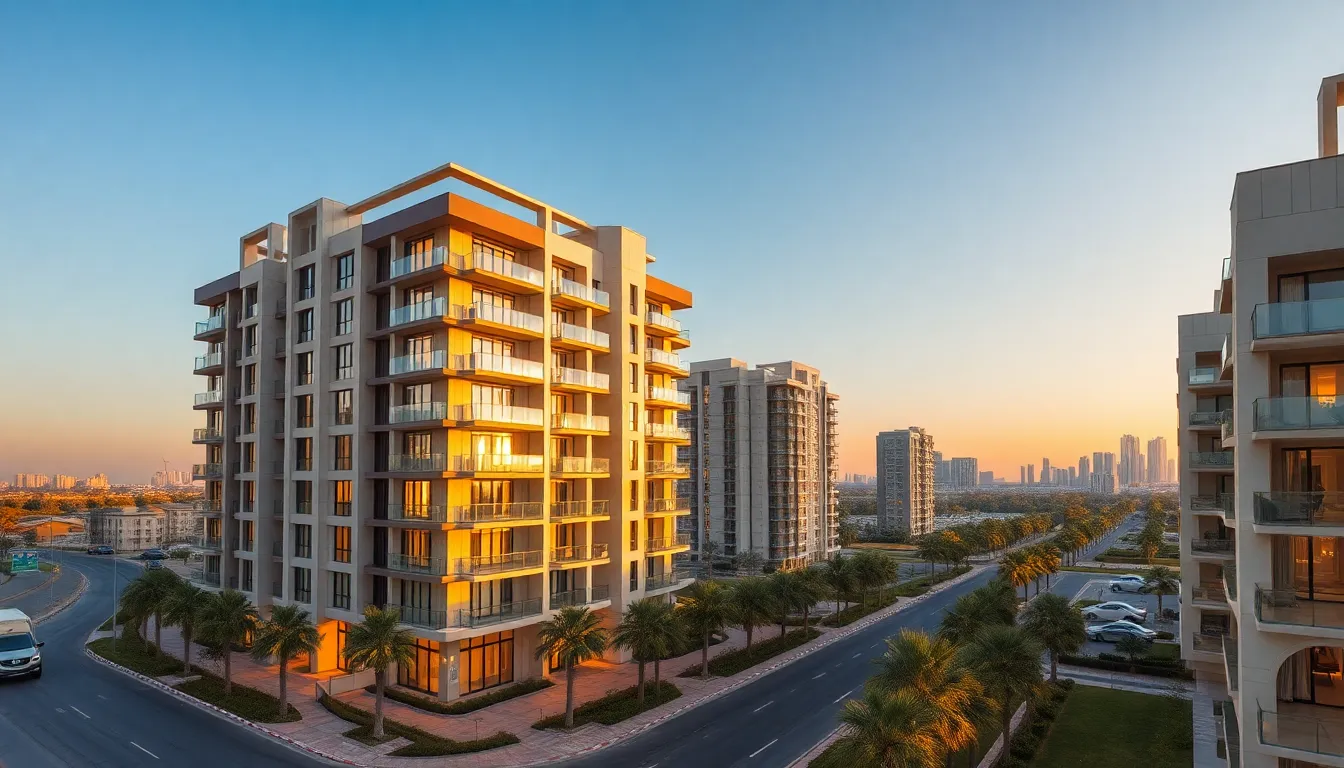
Is Al Furjan the Right Place to Buy an Apartment in 2026?
Just last week I got the call. Same question I’ve heard a hundred times over 15 years, but this one had an edge. “Himanshu, we want an apartment in Al Furjan. Is this the right time?” The voice was familiar—Mr. Rao, an NRI buyer I’d helped before. He and his wife had been circling Al Furjan for months, half in love with the tree-lined streets and the calm, but terrified of missing out or overpaying. I was in my car, stuck on Sheikh Zayed Road in the August afternoon heat, the AC wheezing against the heavy stillness, the faint burnt smell of dashboard leather filling the cabin. Outside, the city shimmered in a haze, and I remember thinking: this call is going to decide whether they buy or walk away. And it all came down to timing.
See, Al Furjan isn’t the shiniest new district on the block. It doesn’t scream for attention like Dubai Marina or Downtown. But that’s exactly why I’ve put more than a dozen buyers into apartments here over the years. It’s where I’ve seen a deal almost collapse, and where I learned that getting the timing right in a quiet summer market can be the difference between a brilliant buy and a drawn-out nightmare. That afternoon, as the sun glared off the bonnet and the city felt half-empty, I knew I had to explain to Mr. Rao what I’d learned the hard way: sometimes the best moment to act is when nobody else is looking.
What’s the Real Draw of Al Furjan Apartments?
I’ll tell you what I tell every client who asks about apartments for sale in Al Furjan. This is a place for people who want a home, not just a trophy asset. The community was built with a master plan that actually makes sense—a grid of streets where you can walk to the mosque, the supermarket, or your kid’s school without feeling like you’re crossing a highway. There’s a genuine neighborhood feel here that’s rare in new Dubai. I’ve watched kids cycle down the footpaths, and I’ve seen neighbours actually stop to chat by the gates. That kind of thing matters more than a fancy lobby.
I remember showing a two-bedroom in the Quortaj buildings a few summers back. It was July, the market was dead quiet. You could almost hear the dust settle on the empty balconies. The agent met us with keys and a half-hearted smile—he hadn’t had a viewing in three weeks. But that’s when the serious buyers show up. Mr. Rao, the client I mentioned, walked into that apartment and just stood on the balcony, looking at the community pool below. No one else around. The silence was thick, broken only by the distant hum of a lawn sprinkler and the soft click of a balcony door somewhere above. He turned to me and said, “This feels like a place my children would actually play outside.” That quiet summer moment sealed it—but then the deal nearly fell apart over something stupid: paper timing.
How Does Location and Connectivity Compare to Other Family Areas?
One thing I’ve always respected about Al Furjan is how it sits right on the pulse of new Dubai without being in the middle of the noise. You’ve got the Discovery Gardens metro station on the Route 2020 line, and the Al Furjan pavilion with a Spinneys, a clinic, and enough coffee shops to keep any remote worker happy. Ibn Battuta Mall is a five-minute drive, and the Gardens is just across the road. For families, the fact that you can walk to a supermarket or get a metro to the Expo site in minutes is a genuine lifestyle advantage.
But let’s break it down honestly. I’ve put together a table that compares what I see buyers actually care about—things like lifestyle fit, ease of daily errands, and the kind of neighbors you’ll have—not just which one has a flashier lobby.
| Feature | Al Furjan | Jumeirah Village Circle (JVC) | Dubai South | Dubai Hills Estate |
|---|---|---|---|---|
| Community Vibe | Established, quiet, family-oriented with villas and low-rise apartments | Buzzy, dense mix, younger crowd, heavy rental | Up-and-coming, master-planned but still raw | Polished, green, aspirational, more transient expat feel |
| Walkability | High—parks, mosques, shops within 10-minute strolls | Moderate—parks but spread out, car is king | Low—still developing, long blocks | High in certain pockets, but relies on car |
| Metro Access | Direct—Route 2020 line, stations at Discovery Gardens and Al Furjan | None, relies on bus links | Future metro line in planning | No metro, reliant on car/taxi |
| Handover Timelines (2026) | Mix of ready-to-move and off-plan with 2026–2027 delivery | Many off-plan projects, completion delays common | New launches, handover post-2028 | Mostly ready luxury, limited new mid-range launches |
| Buyer Type | End-users, families, long-term residents, NRIs | Investors and first-time renters | Speculative investors, some first-time homebuyers | Affluent professionals, investors seeking premium |
I’m not saying Al Furjan is perfect for everyone. If you want to be in the center of the city, it’s not for you. But if you want a home that feels lived in from day one, with real community roots, it’s hard to beat. The metro alone is a game-changer for anyone commuting to the Marina or JLT, and the fact that you can actually walk to a decent coffee shop without getting into a car is something a lot of newer communities still can’t offer.
How Do I Start My Search for an Apartment in Al Furjan?
Most buyers I meet get stuck before they even start. They scroll property portals for hours, drowning in options, and lose sight of what they actually need. Here’s what I do with every client: step away from the listings and answer three questions. First, are you buying to live in it or as an investment? Second, do you need to move in within six months or can you wait a year or two? Third, what does your daily life look like in terms of commute, schools, and errands?
Once that’s clear, I map out the sub-communities within Al Furjan—the low-rise Quortaj blocks, the slightly taller Yasmin and Azalea buildings, or the newer off-plan clusters near the pavilion. Each has a slightly different character. Some buildings have direct park views, others back onto a main road. I’ve walked through enough of them to know which ones have thick walls and which ones were hastily finished. That’s the kind of detail you won’t find on a floor plan. I remember one buyer who loved a unit in Azalea until I pointed out the bedroom window faced a blank wall three meters away. That’s the sort of thing you only catch in person.
If you’re serious about buying, I’d suggest you explore more buyer resources to understand the market before even booking a viewing. It’ll save you from being sold a dream that doesn’t match your reality. There’s a glut of information out there, but very little of it is filtered through someone who’s actually stood in those rooms and heard the street noise or felt the cross-breeze. That’s my edge, and I give it freely.
What’s the Deal with Off-Plan vs. Resale in Al Furjan?
Here’s where I get opinionated. I’ve seen too many buyers lose their nerve—or get overexcited—because they didn’t understand the timing of each option. In Al Furjan, you’ll find both ready-to-move apartments and off-plan projects with handovers in 2026 or 2027. The resale market gives you an immediate home, often in a building that’s already proven its build quality. The off-plan route lets you get in with a payment plan, but you’re gambling on completion dates. And in a quiet summer market, that gamble can bite you.
Off-plan, meanwhile, can be less dramatic if you’ve got patience. You lock in a unit today and wait. But I always tell my NRI clients: don’t just look at the glossy brochure. Dig into the developer’s track record. I’ve walked through newly handed-over buildings where the promised “luxury finish” was literally peeling off the walls. Al Furjan has a mix of developers—some of them are committed and on schedule, others… not so much. That’s why before you commit, I’d say review premium Dubai developments to see what real quality looks like across the city. It puts a developer’s claims in perspective. You start to notice the difference between a door handle that feels solid after five years and one that wobbles from day one. That’s the stuff that tells you whether a building will age well.
How Does the Buying Process Actually Work?
Let me walk you through it like I’m sitting across from you with a coffee. The process in Dubai is straightforward if you know the steps, but it can feel like a labyrinth if you’re new. First, you get your finances in order—either cash or mortgage pre-approval. The pre-approval is not optional; don’t even look at apartments seriously without it. I’ve seen too many heartbroken buyers fall in love with a place only to find out the bank won’t back them.
Once you’re prepped, we filter and view. I always do a first round of four to six apartments in one go, so you can compare freshly. After that, you make an offer. In Al Furjan, especially in a slow summer, don’t be afraid to negotiate. Sellers are often more flexible than they let on. If it’s an off-plan purchase, you’ll deal directly with the developer’s sales team and sign an SPA (Sales and Purchase Agreement) with a payment schedule tied to construction milestones.
For resale, once the offer is accepted, you sign a Form F—the Memorandum of Understanding—with the seller. You’ll pay a deposit cheque to a real estate trustee. Then the buyer’s mortgage process kicks into gear, if applicable. The bank will send a valuer, approve the property, and then issue a final offer letter. Everything converges at the transfer appointment at the Dubai Land Department, where you hand over the final payment and get the title deed. It sounds clean, but in practice, delays are common. That’s my job—to make sure those delays don’t become deal-breakers.
If you’re confused at any stage, I recommend you talk to our Dubai property advisors for a no-pressure chat. Even if you don’t buy through us, getting the steps right from someone who’s been through hundreds of transfers is invaluable. Nothing beats having a steady voice on the other end of the phone when the trustee is closed for lunch and you’re pacing the corridor outside.
What Should I Check During a Viewing in Al Furjan?
I’m a stickler for details. When I take a client to a viewing, I’m looking beyond the staged furniture and the scent of fresh paint. I check the windows—are they double-glazed? In Al Furjan, some buildings face the internal road, and you might hear the occasional delivery vehicle. I test the water pressure. I open every cupboard to see if the hinges are straight. I ask to see the AC chiller unit if it’s on the balcony, because maintenance access matters.
One thing specific to Al Furjan: the community is huge on outdoor living. So I always check the view from the balcony—not just the immediate scene but what’s coming up behind the building. Is there an empty plot? Because that empty plot will someday be a construction site. The quiet summer market is the perfect time to suss this out; with fewer people around, you can actually notice the hum of air conditioning units or the distant traffic drone that gets masked during busier months. I once stood on a balcony in August with a client, and the only sound was a single bird and the faint click of a sprinkler in the garden below. That’s when you know you’ve found a good unit.
Also, ask about service charges. They vary by building and can sneak up on you if you’re not careful. A well-managed building will have a history of stable charges and a healthy reserve fund. I’ve seen some buildings in Al Furjan where the owners’ association is on top of things, and others where a leaky roof takes months to fix because nobody wants to pay. That’s a red flag. If the corridor carpets are stained and the lifts look unloved, walk away—it won’t get better.
How Does the Community Feel Across Seasons?
Al Furjan changes with the seasons, and understanding that can help you time your purchase. In winter, the community comes alive—joggers, kids in the parks, weekend barbecues. It’s very easy to fall in love with it then. The air smells of cut grass and grill smoke, and every bench seems occupied by a nanny or a teenager with headphones. But summer? That’s the test. The quiet summer market is when you see it stripped back. The pools are still open but you might be the only one in them. The pavilion shops buzz with the sound of air conditioning, not crowds. It’s the season when you can really assess a building’s insulation and whether the corridors stay cool.
I’ve made offers for clients in July and August that got accepted with much less pushback than in peak winter. Sellers who list in summer are often motivated. They might be relocating for new school terms or just tired of waiting. That’s where timing comes in. If you can stomach viewing apartments in 45-degree heat and have your paperwork ready, you can snap up a place that a winter buyer would fight over. Mr. Rao’s balcony moment happened because we were willing to walk through an empty, sun-soaked apartment while everyone else was on vacation. I still remember the feel of the warm balcony railing under my hand and the almost surreal quiet of that afternoon—it was like the whole community was holding its breath.
Is Al Furjan a Smart Choice for NRI Buyers?
I work with NRI families all the time, and they often have a specific checklist: safety, community, proximity to good schools, and rental potential if they’re not moving immediately. Al Furjan ticks a lot of those boxes, but there’s a caveat about rental demand. It’s not as white-hot as JVC or Marina for short-term rentals, but it’s strong for long-term families. I’ve had clients who bought a two-bedroom here, lived in it for three years, and then rented it out when they moved back to India. The tenant stayed for five years. That’s stability.
If you’re an NRI, you need to think about the property management. Check the building’s management because in Al Furjan, some are self-managed by owners’ committees and others have professional firms. The latter is easier for NRIs. You’ll also want to know the rental index for the area, which influences what you can legally charge. I always tell NRIs to explore Dubai property investment opportunities beyond just the unit itself, to understand the whole lifecycle of owning from abroad. There’s a rhythm to remitting funds, managing tenants, and even renewing the title deed after so many years—it’s all part of the game.
One more thing: currency fluctuations. That’s outside my remit except to say, time your transfer right. I’ve seen a client lose a deal because the rupee strengthened against the dirham by the time they had to transfer the down payment, and suddenly they were short. It’s an awkward conversation that can be avoided with a forward contract or just better timing.
What Are the Hidden Costs I Should Prepare For?
I had a client who budgeted perfectly for the apartment but almost defaulted on the transfer because he hadn’t accounted for those add-ons. So now I give everyone a checklist and run through it line by line. It’s not glamorous, but it stops the kind of last-minute panic that can sour the whole experience. The look on his face when he realized he’d have to draw more funds from back home—that’s a look I never want to see again. So I over-communicate now, and it’s saved many a deal.
How Do I Choose the Right Developer in Al Furjan?
If you’re going off-plan, the developer matters more than anything. Nakheel is the master developer, and they’ve done a solid job with the infrastructure, but individual buildings are done by private developers. Some have delivered on time with good quality, and others have dragged their feet. I won’t name names here, but I will say: ask to see completed projects by the same developer. Go and walk around their older buildings. Look at the lobby after a few years—is it still well-maintained? Talk to a resident if you can. That’s the real litmus test.
And when you’re reading the SPA, pay attention to the handover date clause. Some contracts give the developer an automatic extension of 12 months without penalty. That’s common in Dubai, but you need to know it exists. I’ve had a client who banked on a June 2026 handover only for it to slip to March 2027. They had to rent for an extra nine months. It wasn’t a disaster, but it stung.
Another resource I often point people to is the blog where I share regular updates from my own boots-on-the-ground experiences. You can explore more buyer resources there—it might save you from a mistake that takes years to correct. I once wrote about a building that had a fantastic spec on paper but a terrible snagging history, and three buyers later told me that post saved them from a bullet.
What’s the Timeline from Search to Keys in Hand?
Realistically, if you’re a cash buyer for a resale apartment, you can go from first viewing to owning the keys in two to three weeks, provided all parties are responsive. With a mortgage, allow six to eight weeks as a safe buffer. Off-plan purchases are a different game—the handover could be a year or more out, and you’re just securing the unit with a reservation fee and subsequent payments. That’s why I always ask my buyers: how quickly do you want to wake up in your new home? That answer dictates the strategy.
I’ve also noticed that the cadence of the market affects speed. In the quiet summer, banks can be slower because key decision-makers are on holiday. Valuers might take a few extra days. But on the flip side, sellers and developers are often more willing to expedite if they know a genuine buyer is on the line. So it’s a double-edged sword. You might get a faster closing because the other side has no other offers, but you might also get stuck waiting for a valuer who’s in Lebanon until the 15th. Managing expectations is half the battle.
Table: Al Furjan Building Profiles at a Glance
| Building Cluster | Typical Unit Types | Occupancy Rate | Proximity to Metro | Build Quality & Handover Year |
|---|---|---|---|---|
| Quortaj (Low-Rise) | 1, 2, 3 BR apartments; some with maid’s room | High—mostly owner-occupied or long-term rentals | 5–10 minute walk to Al Furjan metro station | Completed 2013-2015; solid build, well-maintained |
| Yasmin / Azalea (Mid-Rise) | Studio, 1, 2 BR; more compact layouts | Moderate—mix of owners and tenants; higher turnover | 8–12 minute walk to Discovery Gardens metro | Completed 2015; decent quality, some snagging issues |
| Al Furjan Pavilion Area | 1, 2, 3 BR; newer finishes | Growing—newer handovers, still stabilizing | Directly adjacent to pavilion, 12–15 min walk to metro | Post-2020; modern specs, some off-plan still ongoing |
| Off-Plan (Various Developers) | Studio to 3 BR; some with flexible payment plans | N/A—handover from late 2026 onward | Varies; newer plots may be slightly farther | To be seen; research developer history |
This is the kind of data I wish I’d had as a younger agent. It cuts through the hype and lets you see where you’d actually be living, not just what the brochure promises.
Frequently Asked Questions
Is Al Furjan freehold for foreign buyers? Yes, all apartments in Al Furjan are in designated freehold areas, so expats and NRIs can own outright with full rights. I’ve handled title deeds for clients from over a dozen countries, and it’s always straightforward.
How is the school situation around Al Furjan? There are several reputable schools within a 15-minute drive, including Arbor School and the International School of Choueifat. Many parents do the school run easily from here. I’ve even had clients move to Al Furjan specifically to cut their children’s commute to half an hour.
Are pets allowed in Al Furjan apartments? Generally yes, but it’s up to the individual building’s rules. I always check the building’s pet policy before viewing if the buyer has a dog or cat. One building I know has a strict “no pets” policy because of a past incident; in another, the ground-floor garden apartments are dog heaven.
What are the service charges like? They’re reasonable by Dubai standards, and they’re calculated per square foot. Charges cover maintenance, common area cleaning, and pool upkeep. It’s smart to review the last two years’ accounts before buying. I’ve seen charges stay flat for years, and I’ve seen them jump when a building suddenly needed a new chiller.
Can I rent out my apartment on a short-term basis? Yes, with a permit from Dubai Tourism. Buildings near the metro tend to do better for short-term rentals, but long-term is the more stable option here. I’ve had clients try the short-term route and then switch back because the tenant turnover was exhausting.
How is the traffic from Al Furjan during peak hours? Sheikh Zayed Road access is easy via the Discovery Gardens interchange. It can get busy at peak times, but the metro gives a traffic-free alternative. If you work in Media City, you can be door-to-desk in 35 minutes by train—that’s better than sitting in a car for an hour.
Is now a good time to buy in Al Furjan, considering the 2026 market? I believe so, especially if you’re buying to live in. The community is mature, infrastructure is done, and upcoming developments nearby will only add value. But talk to an advisor first—every situation is different. The right time for you might be next week or next summer, depending on your paper readiness and what you’re looking for in a view.
By Himanshu Gupta, Senior Property Advisor at Siddhi Estates — 15 years in Dubai real estate, from off-plan launches to handover and resale.
Siddhi Team
Dubai Real Estate Experts helping Indian investors find their perfect property in UAE.