
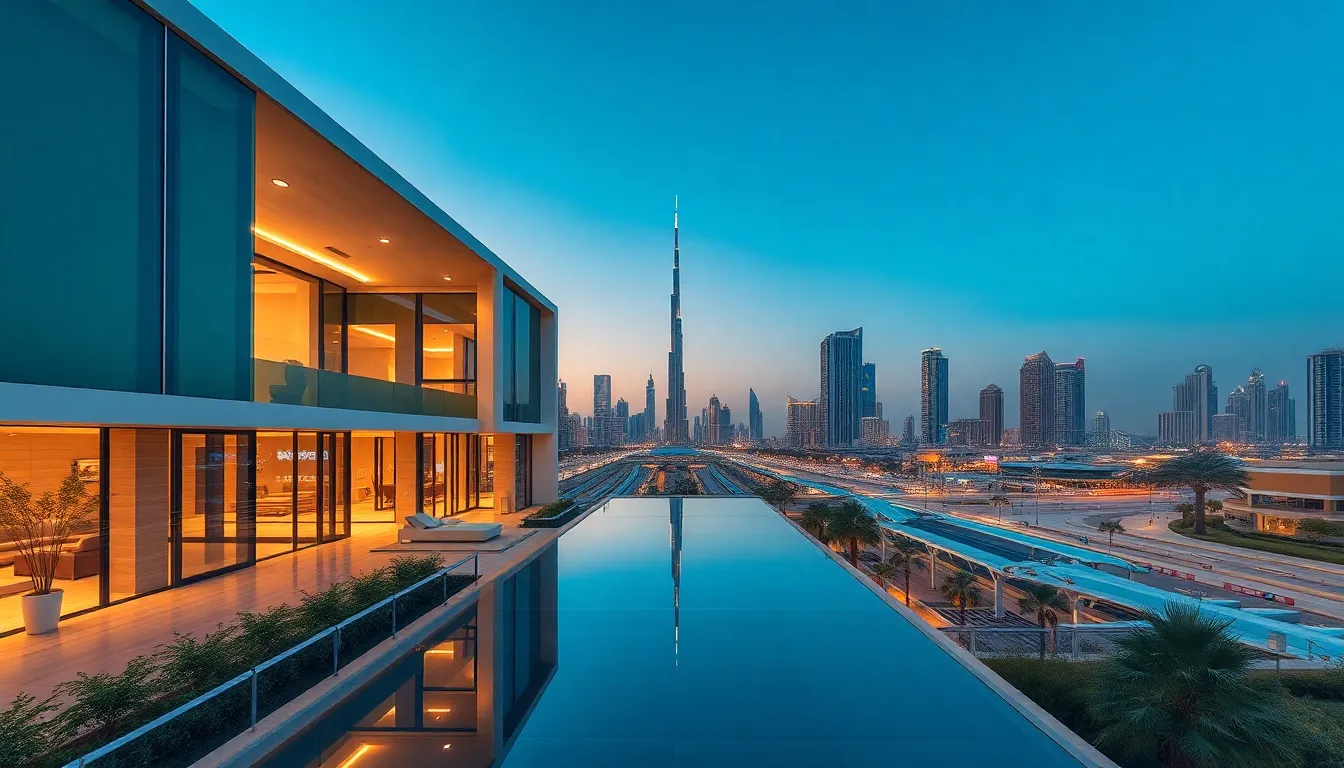
How does Dubai property value growth compare to other?
Look, everyone talks about Dubai's property boom. But when you actually compare it to other global investment hubs, the story gets much more interesting. I have been analyzing real estate data across cities for over a decade, and 2026 is shaping up to be a pivotal year. Most investors focus on local trends. They miss the bigger picture. How does Dubai really stack up against London, Singapore, or Miami? That is where the real insights are.
What is driving Dubai property value growth in 2026?
Dubai's growth is not accidental. It is built on specific policies and economic shifts. The government has been methodical. But does that actually hold up when you look at the data?
How do tax policies compare globally?
Dubai has zero property tax. None. Compare that to London, where stamp duty can hit 12% on high-value purchases. Or New York, with its combined city and state taxes. Honestly, I think most first-time buyers overlook this. They see the headline prices and get nervous. But the absence of annual property taxes means your holding costs are dramatically lower. Over five years, that difference compounds. It is not just about the purchase price. It is about what you keep.
What role does the Golden Visa play?
The Golden Visa program is a game-changer. For a property investment of AED 2 million or more, you can secure a 10-year residency. This is unique. Other hubs might offer investment visas, but they are often more restrictive or temporary. Singapore's various passes, for example, do not provide the same long-term security. This visa incentive pulls in capital from regions like South Asia, Europe, and Africa. It creates a steady demand base that other cities simply cannot match. So what does this mean for you? Stability. A market supported by long-term residents, not just speculative flippers.
How does Dubai's ROI compare to other global hubs?
Return on investment is the bottom line. Everyone wants to know where their money works hardest. Let us break it down.
What are the rental yields like?
Dubai consistently delivers gross rental yields between 6% and 8%. In prime areas like Dubai Marina or Downtown, you might see slightly lower yields, around 5-6%, but with higher capital appreciation. Now, compare that to other hubs. London averages 3-4%. New York is similar. Singapore might offer 2.5-3.5%. Even emerging markets like Lisbon rarely exceed 5%. The difference is stark. Why? Partly because Dubai's purchase prices per square foot are still competitive relative to rental rates. And partly because the tenant pool is diverse and deep, from expats to new residents. But is that sustainable? With population growth projections and continued corporate relocation, the data suggests yes.
What about capital appreciation forecasts?
Forecasts for 2026 point to 8-12% annual appreciation for well-located Dubai properties. Off-plan projects in areas like Dubai Creek Harbour or Mohammed Bin Rashid City might see even higher spikes. Contrast this with other hubs. London is predicted to grow at 2-4% annually. Miami, perhaps 5-7%. Hong Kong remains volatile. The table below puts this in perspective.
| City | Projected Annual Appreciation (2026) | Average Rental Yield | Key Tax Consideration |
|---|---|---|---|
| Dubai | 8-12% | 6-8% | 0% property tax |
| London | 2-4% | 3-4% | Stamp duty up to 12% |
| Singapore | 1-3% | 2.5-3.5% | Additional buyer's stamp duty for foreigners |
| Miami | 5-7% | 4-5% | Property tax ~1-2% annually |
See the gap? Dubai leads on both fronts. But remember, higher growth often comes with higher volatility. That is where regulations like RERA come in. They provide a safety net that many other markets lack.
Which global hubs offer better stability than Dubai?
Stability matters. Some investors prioritize predictability over explosive growth. Where does Dubai fit?
How does regulatory oversight compare?
Dubai's RERA regulations are robust. They govern everything from escrow accounts for off-plan sales to standard rental contracts. This reduces fraud and builds trust. Compare that to some European markets where regulations can be fragmented, or Asian hubs where enforcement is inconsistent. Singapore is strong here too, with its Urban Redevelopment Authority. But Dubai's system is particularly investor-friendly. It is designed to attract capital, not just control it. That is a subtle but important difference. So, if you are worried about market crashes, Dubai's regulatory framework offers more protection than you might think.
What about economic diversification?
Dubai has aggressively diversified beyond oil. Tourism, trade, logistics, and tech are now major contributors. This insulates the property market from commodity price swings. Other hubs have their own strengths. London is a financial center. Singapore is a trade hub. But Dubai's diversification is more recent and deliberate. The push into sectors like fintech and green energy, backed by initiatives like the Dubai Economic Agenda 2033, creates new job markets. New jobs mean more housing demand. It is a virtuous cycle. Honestly, I think the diversification story is still underappreciated by international investors.
What are the risks compared to other investment hubs?
No market is perfect. Every opportunity has its downsides. Let us be realistic.
Is oversupply a concern?
Dubai has faced oversupply issues in the past. Remember the 2008-2010 correction? The market learned from that. Today, supply is more managed. According to DLD transaction data, new launches in 2025 were about 35,000 units, closely aligned with demand projections. Contrast this with cities like Bangkok or Istanbul, where oversupply remains a persistent risk. Or even parts of Miami, where condo towers keep rising. Dubai's planning is more coordinated now. But you still need to pick your locations carefully. Prime freehold zones like Palm Jumeirah or Emirates Hills have limited land, which naturally constrains supply. That supports property values better than sprawling suburban areas.
How does geopolitical risk compare?
Dubai is in a complex region. That is a fact. But it has positioned itself as a neutral, stable hub amidst regional tensions. Compared to other emerging markets, its record is strong. Think about it. When was the last time Dubai had a major political disruption affecting property titles? It has not happened. Other hubs might seem safer on paper, like Zurich or Vancouver, but they have their own issues—slower growth, higher barriers to entry. The geopolitical risk in Dubai is often overstated by those who have not visited recently. The reality is, capital flows here precisely because it is a safe haven within the region.
How should investors approach Dubai in 2026?
Strategy is everything. You cannot just buy anything and expect magic.
Which property types offer the best value?
In 2026, townhouses in communities like Arabian Ranches or villas in Dubai Hills Estate are showing strong demand. They offer space, which became a premium post-pandemic. Apartments in well-connected areas like Business Bay also hold appeal for rental income. But here is my personal opinion. Off-plan properties in upcoming zones, like those near the new Al Maktoum Airport, could deliver the highest appreciation. Why? Infrastructure spending is concentrated there. The key is to balance your portfolio. Do not put all your money in one asset class. Spread it across different property types and locations to mitigate risk.
What are the financing options compared to other hubs?
Dubai offers mortgages up to 75-80% for expats, with interest rates competitive with global standards. In 2026, rates are expected to hover around 4-5% for fixed-term loans. Compare that to the U.S., where rates might be higher, or Europe, where lending criteria are stricter. The process is streamlined through RERA-approved banks. But you need a solid credit history, often from your home country. For cash buyers, the advantage is even greater. No financing means faster transactions and sometimes price discounts. So, if you have liquidity, Dubai can be more accessible than many other hubs.
How much money do I need to start investing in Dubai property?
You can enter with as little as AED 500,000 for a studio in emerging areas. But for a solid investment, aim for AED 2 million to access better locations and Golden Visa eligibility. That is roughly $545,000, which is lower than many global hubs.
Is Dubai property a good long-term investment compared to London?
Yes, for growth-oriented investors. Dubai offers higher potential returns and tax advantages. London provides stability but slower appreciation. Your choice depends on your risk tolerance and income goals.
What are the hidden costs in Dubai versus other cities?
Dubai has a 4% DLD registration fee and agency commissions of 2%. Compare that to London's stamp duty and higher agency fees. Maintenance costs are similar globally, but Dubai lacks annual property taxes, saving you money yearly.
Can foreigners own property in Dubai freely?
Yes, in designated freehold zones. Over 140 areas allow 100% foreign ownership. This is more liberal than many Asian markets, like Thailand, which have stricter leasehold structures.
How does Dubai's rental market stability compare to New York?
Dubai's rental laws via RERA provide clear frameworks for increases and disputes. New York has rent control but complex regulations. Dubai's market is more predictable for landlords, with fewer tenant protections limiting returns.
What is the impact of Expo 2030 on property values?
Expo 2030 is driving infrastructure projects worth billions, like the Dubai Metro expansion. Historically, such events boost nearby property values by 15-25% in the years leading up to them. It is a key catalyst for 2026 growth.
Are there any property taxes expected in Dubai soon?
No credible proposals exist as of 2026. The government's strategy relies on attracting investment through tax incentives. Any shift would be announced years in advance, unlike some European hubs where tax changes can be sudden.
So, where does this leave us? Dubai property value growth in 2026 is not just a local phenomenon. It is a standout performer on the global stage. When you stack it against hubs like London, Singapore, or Miami, the numbers speak for themselves. Higher yields, stronger appreciation, and favorable tax policies. But it is not without risks. Oversupply in certain segments and geopolitical perceptions require careful navigation. The key is to invest with eyes wide open. Use the data, understand the comparisons, and choose assets that align with your goals. For personalized advice tailored to your portfolio, reach out to our team at Siddhi Enterprises (Real Estate). We have been guiding investors through these global comparisons for years, and 2026 is no exception.
By the Siddhi Enterprises (Real Estate) Research Team | Over 10 years of Dubai property market expertise across residential, commercial, and off-plan investments | 2026
Siddhi Team
Dubai Real Estate Experts helping Indian investors find their perfect property in UAE.