
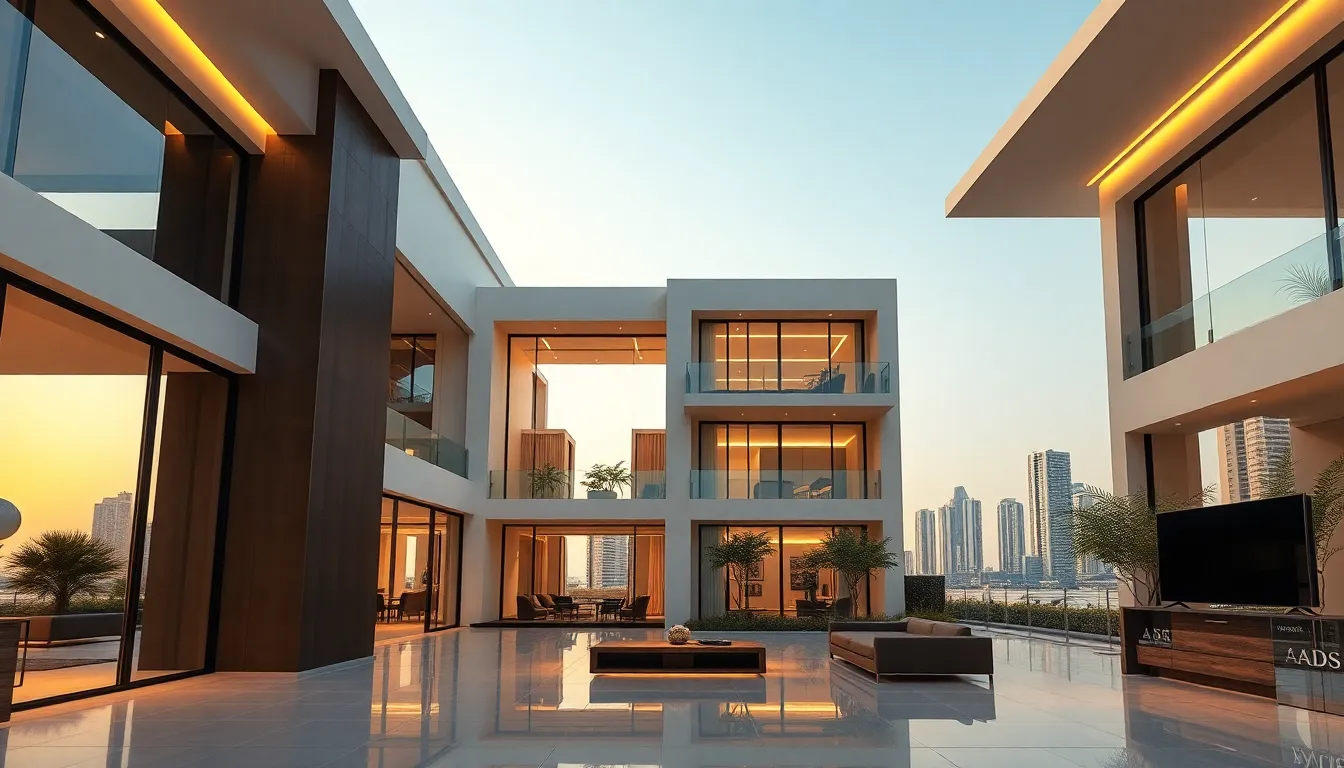
Dubai South Property: Hype or Real Opportunity?
Just last week, a client slid a glossy brochure across my desk in my office, the paper so crisp it could cut. “Himanshu, is Dubai South the next big thing or am I about to flush my money down another off-plan drain?” he asked, half-joking, half-haunted. I knew that tone too well—it was the same one I heard from another investor two years ago, when a resale negotiation in Business Bay dragged for weeks. The conference room smelled of stale coffee and recycled air, the seller’s agent playing hardball with every extension, my client’s hope fraying thread by thread. We eventually closed the deal, but not before I watched that man age a decade. That experience sticks with me: the gap between what a developer promises and what you can actually touch, sell, or rent out.
I’ve spent 15 years in Dubai real estate. I’ve seen entire skylines rise from sand, and I’ve seen masterplans that never made it past the brochure. Dubai South is on everyone’s lips these days—the airport expansion, the Expo 2020 legacy, the new city center. But for every genuine project, there are three that are just hype. Sorting one from the other is a skill I’ve honed through countless viewings, snagging sessions, and yes, those soul-draining resale negotiations. Let me walk you through how I do it, so you don’t have to learn the hard way.
What’s really driving the excitement around Dubai South?
First, let’s get our bearings. Dubai South isn’t just one neighbourhood. It’s an entire master-planned city covering 145 square kilometres, anchored by Al Maktoum International Airport—slated to be the world’s largest when fully operational—and the Expo City Dubai legacy. It’s got residential zones, logistics hubs, a business park, and even a dedicated “Residential City” with townhouses, villas, and apartments. The government’s “2040 Urban Master Plan” positions this as a major economic and population hub.
When a client asks me about Dubai South property, I don’t just rattle off numbers. I ask them: are you buying a lifestyle or a line on a map? Because the hype machine loves to sell future potential, but you’ll be living in the present for a long while. I’ve walked the streets of The Pulse community—there’s a tangible buzz there: families strolling, kids on bikes, a supermarket that’s actually open. Then I’ve stood in the middle of what a developer swears will be a thriving boulevard “within two years,” and all I saw was compacted sand and a couple of survey stakes. The difference? Delivery momentum.
How do I personally filter out the noise?
My method hasn’t changed much in a decade: I look for evidence, not brochures. When I’m evaluating any new project, especially off-plan projects in a still-developing area like Dubai South, I pull up the developer’s completion history. How many projects have they handed over on time? Then I drive to the site. I want to see foundations, not just hoardings. I talk to the construction workers (if I can), count the cranes, and check if utility lines are being laid—those are the signs that money is actually being spent, not just committed.
I remember a resale negotiation I handled for a villa in a community that shall remain nameless. The developer had promised a park and a community centre. Four years later, the park was a patch of weeds and the community centre a concrete shell. The seller had overpaid based on those promises, and we had to navigate a buyer who’d done his homework. We ended up closing at a figure both parties swallowed hard on, but I learned to never take a developer’s timeline at face value. That’s why, when someone asks me to book a no-pressure consultation, my first question is always: “What’s more important to you—immediate livability or potential upside?”
Which sub-communities within Dubai South have proven delivery?
Let’s get concrete. Over the years, I’ve tracked the progress of several key residential projects here. Below is a comparison that cuts through the marketing fluff—focusing on community feel, connectivity, and what you’ll actually experience if you move in today.
| Sub-Community | Community Feel | Handover Status | Connectivity | Amenities | Typical Buyer |
|---|---|---|---|---|---|
| The Pulse | Established, family-oriented with active street life | Phases 1-3 fully handed over; Phase 4 underway | 15 mins to Expo City, 10 mins to Airport, direct metro link planned | Supermarket, parks, play areas, mosque, retail spine | Families, mid-career professionals looking for community |
| Emaar South | Resort-like, golf-course living, quieter | Villas handed over; apartment towers in early stages | Adjacent to Al Maktoum Airport, 25 mins to Downtown via Emirates Road | 18-hole golf course, clubhouse, pools, gym, minimal retail yet | End-users wanting villa lifestyle, frequent travelers |
| MAG 5 Boulevard | Urban, more apartment-focused, commercial buzz | Phase 1 complete, Phase 2 ongoing | Close to logistics district, quick access to Sheikh Mohammed Bin Zayed Road | Retail outlets, cafes, gym, pool, landscaped courtyards | Young professionals, investors targeting rental yields |
| Residential City (Damac, etc.) | Mix of villa and townhouse clusters, still patchy | Some completed pockets, many plots vacant | Spread out, car-dependent, future metro extension uncertain | Varies widely; some areas have basic retail, others little | Speculative investors, those betting on long-term appreciation |
This isn’t a beauty contest. The Pulse, for instance, has a waiting list for three-bedroom townhouses because people actually want to live there now. Emaar South appeals to a buyer who values peace and a golf view and doesn’t mind driving 20 minutes to a mall. Meanwhile, some plots in Residential City are a gamble—you might get a great deal, but you might also be staring at construction sites for five years.
What about developer credibility in this area?
Too often, I see buyers seduced by a glossy payment plan from a developer they’ve never heard of, with a website that screams “24/7 luxury” but an office in a rented co-working space. My rule: if a developer hasn’t delivered at least two projects in Dubai, I need a very good reason to consider their off-plan. The resale market is my reality check. I track which communities have active resale transactions and, more importantly, which ones have sticky residents who actually renew leases.
| Developer/Project | Completed Projects in Dubai | Notable Delays? | Rental Demand (Current) | Owner-Occupied Ratio |
|---|---|---|---|---|
| Dubai South (The Pulse) | Multiple phases delivered | Minor: 3-6 months on some phases | High: waiting list for townhouses | ~70% owner-occupied |
| Emaar (Emaar South) | Dozens across Dubai | Generally on time | Moderate: growing with airport staff | ~50% owner-occupied |
| MAG (MAG 5 Boulevard) | 10+ projects delivered | Phase 2 delayed by 8 months | Solid: popular with logistics workers | ~40% owner-occupied |
| Smaller private developers | Often 0-1 | Common: 12+ months or stalled | Low unless extremely cheap | Mostly investor stock |
When you see off-plan projects in Dubai, arm yourself with this kind of data. Don’t just fall for the “limited units left” pressure play. I’ve lost count of how many times I’ve walked a client out of a sales gallery because the math didn’t add up, only for them to thank me years later when the project stalled.
Who is actually buying in Dubai South right now?
Each profile has different risk tolerance. The first two do well if they pick a build-complete community. The third? That’s a multi-year bet, and it often leads to those nightmare resale negotiations I described. I once handled a seller who had put 30% down on an off-plan studio in Dubai South back in 2017, expecting handover by 2020. When I met him in 2024, the handover was still “imminent,” and he was trapped—couldn’t sell, couldn’t rent, couldn’t get his money back. We eventually found a buyer at a steep discount, but the scars were permanent. That’s the darker side of this market.
What are the non-negotiables I insist on before you commit?
After so many handovers, I’ve distilled a checklist. First, only consider properties in sub-communities where at least 50% of the planned housing is built and occupied. Second, visit the site at different times of day—morning rush, afternoon, and evening. I once walked through a community at 8 p.m. and realized there were no streetlights functioning, a detail the sales brochure conveniently omitted. Third, talk to a resident. If you can’t find one, that’s a red flag.
Fourth, understand the title deed status. Some projects in Dubai South sit on land owned by the master developer with long-term lease agreements to sub-developers. If a sub-developer goes under, you could be stuck in a legal tangle. I always verify the Oqood (off-plan registration) and the developer’s escrow account status. And finally, if you’re buying for investment, run the numbers on realistic rental demand. I’ve seen too many studios sit empty because the rental pool is thin.
How does Dubai South’s lifestyle compare to other Dubai freehold communities?
Many clients come to me after exploring discover Dubai freehold communities like JVC, Dubai Hills, or Arabian Ranches. Dubai South is fundamentally different. It’s not trying to be a lush green suburb. It’s an airport city. The lifestyle is more practical than polished. You have wide roads, a more industrial edge in certain parts, but also incredible potential for connectivity. If you work in DWC free zone, you can’t beat walking to your office.
Community events are starting to pop up in The Pulse—weekend markets, outdoor movie nights. It’s not yet the polished machine you find in Emaar communities, but it’s getting there. The wait for a school or a large hospital is still on, so families with young kids need to factor in commutes. But that’s exactly why the opportunity exists: you’re buying into a work-in-progress.
Frequently Asked Questions
1. Is Dubai South a good place for families?
Yes, in the right pocket. The Pulse and Emaar South offer parks, play areas, and a safer, community vibe. Schools are in the pipeline, but currently you’ll need to drive to Dubai Investment Park or Jebel Ali for established schools. I recommend visiting on a Friday to see how many kids are out playing—that tells you more than any brochure.
2. What about the airport noise?
Al Maktoum Airport currently handles limited passenger flights, so noise is minimal. However, once it scales up, certain areas—particularly those directly in the flight path—will be affected. Emaar South is surprisingly quiet despite its proximity, due to soundproofing and flight path design. I’ve stood in a villa there and barely heard a whisper. Always do a sound check at different times.
3. Should I buy off-plan or go for a ready unit?
For Dubai South, I lean toward ready units or projects within six months of handover. The premium you pay over off-plan buys you certainty. I’ve seen too many delays. If you do go off-plan, stick to developers with a proven track record and visit their previous projects to see the finish quality. Don’t buy a floorplan—buy a finished home you can stand in.
4. Can foreigners buy property in Dubai South?
Yes, many areas within Dubai South are designated as foreign freehold communities. You’ll get a title deed in your name. Always confirm the exact plot status with the Dubai Land Department. I’ve helped NRI buyers from India, the UK, and Europe navigate this smoothly, but it’s crucial to check the developers’ registration.
5. What’s the rental market like?
6. How long until Dubai South is “complete”?
Realistically, 2030-2035 for significant build-out, with full maturity perhaps a decade beyond that. But real estate rewards patience. I’ve seen buyers make great returns simply by holding through the initial infrastructure phase. Just be sure your patience is backed by actual milestones, not promises.
7. Is it wise to sell now if I bought a few years ago?
If you bought in a delivered community like The Pulse, you might have a tidy gain because product is scarce. If you’re holding an off-plan unit that’s nowhere near handover, selling can be a nightmare—buyers will lowball you. My advice: only sell if you have a strong alternative investment; otherwise, hold and let the area mature. I once helped a client exit a delayed project near the airport, and it took eight months and a 15% discount to move it.
Dubai South is not a get-rich-quick scheme. It’s a calculated long-term bet on one of the world’s most ambitious urban projects. I’ve put my own reputation on the line recommending it to certain buyers, but I never do so without that thorough check. If you’re considering a purchase here, watch where the cranes are, not where the renderings end. And if you’re still not sure, see our other property guides to compare your options.
By Himanshu Gupta, Senior Property Advisor at Siddhi Estates — 15 years in Dubai real estate, from off-plan launches to handover and resale.
Siddhi Team
Dubai Real Estate Experts helping Indian investors find their perfect property in UAE.