
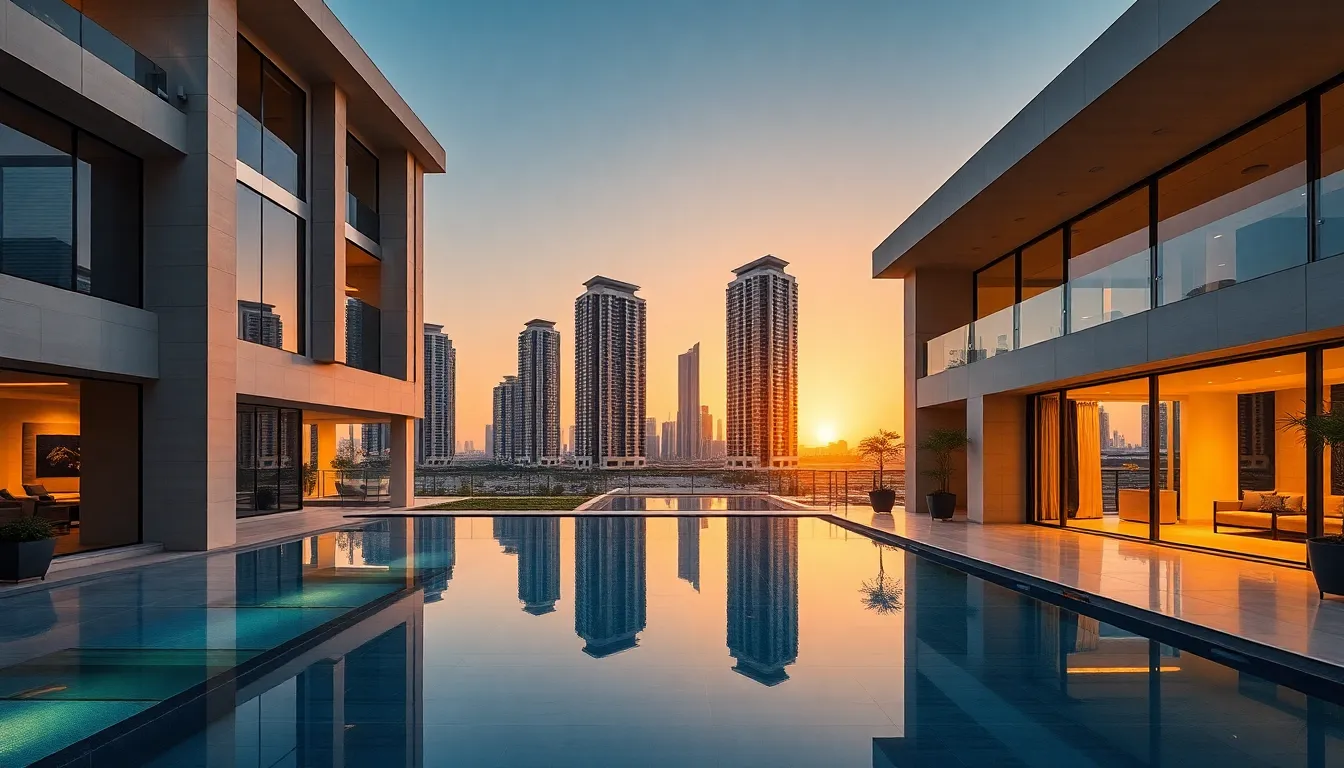
Dubai Property Market 2026: Capital Appreciation Deep Dive
The Dubai property market in 2026 represents a mature investment landscape where capital appreciation potential is driven by infrastructure projects, regulatory stability, and strategic location advantages, offering investors predictable growth patterns across specific property segments and neighborhoods.
What Drives Capital Appreciation in Dubai's 2026 Property Market?
Capital appreciation in Dubai's real estate sector has evolved beyond speculative gains. The 2026 market demonstrates sustainable growth mechanisms rooted in economic diversification and urban planning. Infrastructure projects like the Dubai Metro expansion and Al Maktoum International Airport development create ripple effects across surrounding communities. Regulatory frameworks from RERA ensure transparent transactions that protect long-term value. Population growth projections show Dubai reaching 4.2 million residents by 2026, creating consistent housing demand. Global economic shifts toward Middle Eastern stability further enhance Dubai's appeal as a safe haven for property investment.
How Do Infrastructure Projects Impact Property Values?
Major infrastructure initiatives directly correlate with property price movements. The Dubai 2040 Urban Master Plan prioritizes sustainable communities with integrated amenities. Areas adjacent to new metro stations typically experience 8-12% annual appreciation in the two years following completion. The Dubai Creek Tower district shows particular promise with projected 15% annual growth through 2026. Waterfront developments along Dubai Islands demonstrate how strategic location combined with premium amenities drives premium pricing. These projects create micro-markets where capital appreciation outpaces city-wide averages by 3-5 percentage points annually.
Which Regulatory Factors Protect Investor Returns?
RERA regulations implemented between 2024-2026 provide unprecedented investor protection. The Escrow Account Law ensures developer accountability throughout construction phases. DLD registration processes now include blockchain verification for title deeds, reducing fraud risk. Property visa UAE requirements have been streamlined for investors holding properties valued above AED 2 million. These regulatory improvements create market stability that supports consistent capital appreciation rather than volatile price swings. The transparency in ROI calculation methods allows investors to make data-driven decisions with confidence.
Which Property Types Deliver the Strongest Appreciation in 2026?
Different property segments exhibit varying appreciation patterns based on buyer demographics and market dynamics. Luxury waterfront villas in Palm Jumeirah and Emirates Hills continue showing resilience with 7-9% annual appreciation. Mid-market apartments in established communities like Dubai Hills Estate and Arabian Ranches demonstrate 6-8% steady growth. Emerging categories like branded residences and smart homes command premium appreciation rates of 10-12% annually. Commercial properties in Dubai South benefit from logistics corridor development with 8-10% appreciation projections. Each segment requires distinct investment strategies to maximize capital appreciation potential.
How Do Luxury Properties Perform Compared to Mid-Market Options?
Luxury properties (AED 5M+) maintain stronger appreciation percentages but require larger capital outlays. Palm Jumeirah villas appreciate at 8.5% annually while maintaining high rental yields of 5-6%. Mid-market apartments (AED 1.5-3M) in Jumeirah Village Circle show 7.2% appreciation with higher liquidity. The key difference lies in buyer profiles—luxury properties attract international investors seeking safe assets, while mid-market units appeal to resident professionals. Both segments benefit from Dubai's economic growth, but luxury properties demonstrate greater resilience during global economic uncertainty. Investors should browse our properties across both categories to identify optimal entry points.
What Emerging Property Categories Show Promise?
Branded residences developed in partnership with luxury hospitality brands achieve 11-13% annual appreciation through 2026. Sustainable communities with LEED certification command 3-4% premiums over conventional developments. Co-living spaces in business districts cater to young professionals with 9% projected appreciation. Smart homes integrated with IoT systems show 8-10% appreciation as technology becomes standard. These emerging categories represent niche opportunities where capital appreciation often exceeds market averages. However, they require specialized knowledge about buyer preferences and regulatory considerations specific to each segment.
Which Geographic Areas Offer Superior Capital Appreciation?
Location analysis reveals distinct appreciation patterns across Dubai's neighborhoods. Freehold zones established before 2020 show mature growth of 5-7% annually. Newly developed areas along the E311 corridor demonstrate 8-10% appreciation as infrastructure completes. Waterfront communities maintain premium positioning with 7-9% steady gains. Each geographic cluster responds differently to economic factors, making localized analysis essential for investment decisions. The Dubai property market in 2026 rewards investors who understand micro-location dynamics rather than relying on city-wide generalizations.
How Do Established Communities Compare to Emerging Districts?
Established communities like Downtown Dubai and Dubai Marina offer stability with 6-7% annual appreciation through 2026. These areas benefit from completed infrastructure and proven demand patterns. Emerging districts like Dubai Creek Harbour and Mohammed Bin Rashid City show 9-11% appreciation as development phases complete. The trade-off involves risk tolerance—established areas provide predictable returns while emerging districts offer higher potential with greater uncertainty. Investors should balance portfolios across both categories, with emerging districts comprising 30-40% of allocations for optimal risk-adjusted returns.
What Role Do Freehold Zones Play in Value Growth?
Freehold zones continue driving Dubai's property market expansion in 2026. Areas like Dubai Land, Dubai South, and Al Furjan attract international buyers seeking ownership security. These zones typically appreciate 1-2 percentage points higher than leasehold areas annually. The Dubai property market benefits from continuous expansion of freehold territories, creating new investment frontiers. Regulatory enhancements in these zones include streamlined DLD registration and tax advantages for long-term holders. This combination of ownership security and administrative efficiency creates ideal conditions for capital appreciation across multiple property cycles.
How Can Investors Maximize Capital Appreciation Potential?
Strategic approaches to the Dubai property market require timing, research, and portfolio management. Market entry during infrastructure announcement phases captures maximum appreciation. Diversification across property types and locations reduces concentration risk. Active management through value-add improvements can boost appreciation by 2-3% annually. Understanding macroeconomic factors like oil prices and currency fluctuations provides context for timing decisions. The Dubai property market in 2026 rewards informed investors who combine local knowledge with global economic awareness.
What Timing Strategies Optimize Entry Points?
Infrastructure announcement cycles create predictable appreciation patterns. Properties purchased within six months of major project announcements typically appreciate 5-8% within the first year. Off-plan purchases during early construction phases offer 10-15% appreciation upon completion. Secondary market acquisitions during seasonal dips (summer months) provide 3-5% immediate equity through strategic negotiation. Each timing approach requires different risk profiles and capital availability. The Dubai property market's cyclical nature allows prepared investors to capitalize on predictable patterns rather than relying on market timing luck.
How Does Portfolio Diversification Impact Returns?
Balanced portfolios across geographic areas and property types achieve more consistent appreciation. A mix of 60% established communities and 40% emerging districts optimizes risk-adjusted returns. Including both residential and commercial properties (20-30% commercial allocation) provides diversification benefits. Luxury properties should comprise 25-35% of high-net-worth portfolios for stability. This diversification strategy smooths appreciation curves while maintaining exposure to high-growth segments. The Dubai property market's depth allows sophisticated investors to construct portfolios matching specific risk tolerance and return objectives.
What Economic Factors Influence 2026 Appreciation Projections?
Macroeconomic indicators provide context for Dubai's property appreciation trends. Oil price stability above $75/barrel supports regional investment flows. UAE GDP growth projections of 4-5% annually through 2026 create employment-driven housing demand. Currency stability against major currencies maintains Dubai's appeal to international buyers. Tourism recovery to pre-pandemic levels supports hospitality-linked property values. Global economic uncertainty increases Dubai's safe-haven status among Middle Eastern markets. These factors combine to create favorable conditions for sustained capital appreciation across most property segments.
How Do Global Investment Flows Affect Local Markets?
International capital represents 35-40% of Dubai property transactions in 2026. European and Asian investors seek currency diversification and political stability. This foreign investment concentrates in premium segments, driving luxury property appreciation. Regional wealth from GCC countries focuses on large-scale commercial and residential developments. These investment flows create demand layers that support price growth across market segments. The Dubai property market benefits from its position as a neutral investment destination amid global geopolitical tensions. This status ensures consistent capital inflows that fuel appreciation across multiple property cycles.
What Role Does Population Growth Play?
Dubai's population reaches 4.2 million by 2026, creating natural housing demand. Professional migration patterns favor communities near business districts and transportation hubs. Family formation increases demand for larger units in community-focused developments. This demographic expansion supports 6-8% annual appreciation in mid-market residential segments. The Dubai property market uniquely benefits from both population growth and increasing per-capita wealth, creating dual drivers for value appreciation. Strategic investors monitor demographic trends to identify emerging demand patterns before they reflect in price data.
| Property Category | Average Price 2026 (AED) | Annual Appreciation 2026 | Primary Driver | Risk Profile |
|---|---|---|---|---|
| Luxury Waterfront Villa | 12-25M | 8.5% | International Demand | Medium |
| Mid-Market Apartment | 1.8-3.2M | 7.2% | Population Growth | Low |
| Branded Residence | 4-8M | 11.5% | Premium Positioning | Medium-High |
| Commercial Warehouse | 3-6M | 9.0% | Logistics Expansion | Medium |
| Community Villa | 3.5-6M | 7.8% | Family Demand | Low-Medium |
Frequently Asked Questions
What is the expected capital appreciation for Dubai properties in 2026?
Average capital appreciation ranges from 6-9% annually across different property segments, with luxury waterfront properties and branded residences achieving 8.5-11.5%. These projections account for completed infrastructure projects and regulatory stability through 2026.
Which areas in Dubai offer the best capital appreciation potential?
Dubai Creek Harbour, Mohammed Bin Rashid City, and Palm Jumeirah show strongest appreciation potential at 9-11% annually. Established communities like Downtown Dubai and Dubai Marina provide stable 6-7% growth with lower risk profiles.
How does RERA protect capital appreciation for investors?
RERA regulations ensure transparent transactions, escrow protection for off-plan purchases, and standardized ROI calculation methods. These measures prevent speculative bubbles and support sustainable appreciation patterns through market cycles.
What is the minimum investment for significant capital appreciation?
Properties valued above AED 1.5 million typically demonstrate consistent appreciation, with optimal returns in the AED 2.5-5 million range. Below this threshold, properties may appreciate but often with higher volatility and lower percentage gains.
How do property visas affect capital appreciation?
Property visa UAE requirements for investments above AED 2 million create additional demand from international buyers seeking residency. This policy supports price stability and appreciation in qualifying property segments, particularly luxury residences.
Conclusion: Strategic Positioning for Maximum Returns
The Dubai property market in 2026 presents structured opportunities for capital appreciation across carefully selected segments. Success requires understanding infrastructure timelines, regulatory frameworks, and demographic shifts. Luxury properties maintain premium positioning while mid-market segments benefit from population growth. Geographic diversification across established and emerging communities optimizes risk-adjusted returns. Economic stability and global investment flows create favorable conditions for sustained value growth. Investors who combine local market knowledge with disciplined portfolio management will capture superior returns through the coming property cycle.
Navigating Dubai's dynamic real estate landscape requires expert guidance and market intelligence. Siddhi Enterprises (Real Estate) provides comprehensive investment analysis tailored to your capital appreciation objectives. Our team offers localized insights into emerging opportunities and risk management strategies. Contact our team today for personalized portfolio recommendations and access to off-market opportunities in high-appreciation segments. Let us help you build a property portfolio designed for maximum capital growth through 2026 and beyond.
By the Siddhi Enterprises (Real Estate) Research Team | 2026
Siddhi Team
Dubai Real Estate Experts helping Indian investors find their perfect property in UAE.