
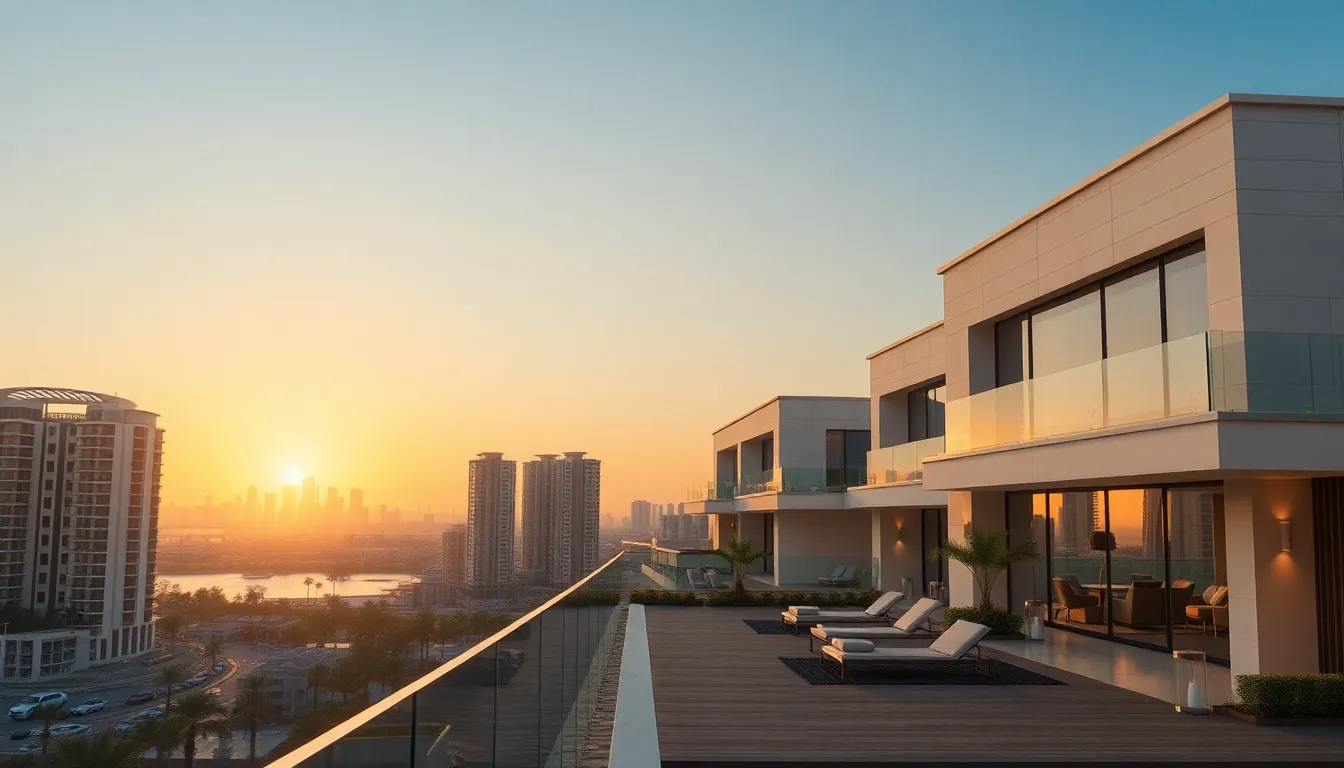
Dubai Property Investment Guide 2026: First-Time Buyer's Pra
Dubai property investment in 2026 represents a strategic entry into one of the world's most dynamic real estate markets, offering first-time buyers unique opportunities through regulated freehold ownership, competitive pricing structures, and government-backed investor protections. This practical guide cuts through the noise to deliver actionable insights specifically for newcomers navigating the 2026 landscape.
Why Should First-Time Buyers Consider Dubai Property Investment in 2026?
The 2026 Dubai property market presents unprecedented conditions for first-time investors. Market corrections throughout 2024-2025 have created price stability in key segments, with entry-level properties now accessible at 2021 levels. Government initiatives like the Golden Visa program continue evolving, offering residency pathways for property investors meeting specific thresholds.
Current market data shows mid-range apartments in established communities averaging AED 1.2-1.8 million in 2026, representing a 15% adjustment from 2023 peaks. This correction creates genuine buying opportunities rather than speculative positions. The Dubai Land Department's transaction transparency has reached new heights, with blockchain integration providing real-time ownership verification.
What Government Incentives Exist for New Investors?
First-time buyers in 2026 benefit from multiple government-backed initiatives. The expanded Golden Visa program now includes properties valued at AED 2 million or more, down from previous thresholds. Special mortgage products through Emirates NBD and Dubai Islamic Bank offer first-time buyer rates starting at 3.99% for UAE residents.
RERA regulations in 2026 mandate developer escrow accounts for all off-plan projects, eliminating completion risks that plagued earlier market cycles. The DLD registration process has been streamlined to 48 hours for straightforward transactions, with online portals handling 85% of documentation.
How Does Market Timing Favor New Entrants?
Market cycles indicate 2026 sits at the beginning of a new growth phase. Historical data shows Dubai property typically experiences 7-8 year cycles, with 2026 positioned after the 2023-2025 consolidation period. Infrastructure projects like Dubai Metro Route 2026 and the expanded Al Maktoum International Airport create immediate value appreciation corridors.
Supply-demand dynamics in 2026 show balanced inventory across most segments. Unlike the oversupply concerns of 2019-2021, current development pipelines align with population growth projections of 3.2% annually. This equilibrium prevents the volatility that disadvantages inexperienced investors.
What Are the Essential Steps for Your First Dubai Property Investment?
Successful first-time Dubai property investment requires methodical preparation. Begin with financial assessment: determine your budget including the 4% DLD fee, 2% agency commission (if applicable), and 0.25% mortgage registration fee. Most first-time buyers in 2026 allocate 30-40% of property value as initial capital.
Next, secure pre-approval from UAE banks. In 2026, standard requirements include six months of UAE salary statements, employer confirmation letter, and valid Emirates ID. Non-resident investors need 12 months of international bank statements and typically receive 50-60% financing versus 75-80% for residents.
How Do You Navigate the Legal Framework?
Understanding RERA regulations forms the foundation of secure property investment. All transactions must occur through RERA-certified brokers, with contracts using standardized templates. The 2026 regulatory environment mandates cooling-off periods for off-plan purchases, allowing buyers 14 days to reconsider without penalty.
DLD registration represents the final legal step. This process transfers ownership officially and includes title deed issuance. First-time buyers should budget AED 4,000 plus 4% of property value for registration fees. The DLD portal provides real-time tracking, with most registrations completing within three working days in 2026.
Which Documentation Is Non-Negotiable?
Essential documents for first-time Dubai property investment include passport copies with visa pages, Emirates ID (for residents), proof of income, and bank statements. Non-residents additionally need attested power of attorney if purchasing through representation. All documents require English or Arabic translation by certified translators.
Post-purchase, maintain organized records of the sales agreement, title deed, service charge statements, and utility connections. Digital copies stored on the DLD app provide accessible verification for future transactions or visa applications. Proper documentation management simplifies eventual resale or rental operations.
Which Areas Offer the Best Value for First-Time Dubai Property Investment?
Location selection dramatically impacts first-time investment outcomes. In 2026, established communities like Dubai Silicon Oasis and International City provide entry points below AED 1 million for studios and one-bedroom units. These areas offer 5-6% rental yields with consistent tenant demand from young professionals.
Mid-range options include Jumeirah Village Circle and Dubai Sports City, where two-bedroom apartments range AED 1.4-1.9 million in 2026. These communities balance affordability with amenities, attracting families and generating 4.5-5.5% annual returns. Infrastructure developments like the Route 2026 metro extension enhance their long-term appreciation potential.
What Makes Freehold Zones Particularly Attractive?
Dubai's freehold zones permit 100% foreign ownership, making them ideal for first-time international investors. Designated areas like Dubai Marina, Downtown Dubai, and Palm Jumeirah maintain premium positioning, but emerging zones like Dubai Hills Estate and Arabian Ranches 3 offer better value propositions in 2026.
Recent expansions have added 15 new freehold areas since 2023, including Dubai Islands and Mohammed Bin Rashid City. These developments feature master-planned communities with integrated amenities, often priced 20-30% below established counterparts. First-time buyers achieve higher square footage per dirham while benefiting from modern infrastructure.
How Do You Evaluate Growth Potential Versus Immediate Returns?
First-time investors must balance immediate rental income against long-term capital appreciation. Areas with completed infrastructure typically offer stable 4-6% yields but slower appreciation. Emerging corridors like Dubai South and Al Furjan show 8-10% annual growth potential but may have lower initial occupancy rates.
Conduct ROI calculation incorporating both rental yield and projected appreciation. A property generating 5% annual rental income with 7% appreciation delivers 12% total return before costs. Factor in service charges (typically AED 12-25 per square foot annually), maintenance reserves, and potential vacancy periods of 2-4 weeks between tenants.
How Do You Finance Your First Dubai Property Investment?
Mortgage options for first-time buyers have diversified significantly by 2026. UAE banks offer products specifically tailored to new investors, including fixed-rate periods of 3-5 years before transitioning to variable rates. Loan-to-value ratios typically reach 75% for UAE nationals, 70% for expatriate residents, and 50-60% for non-residents.
Interest rates in 2026 reflect global monetary policy normalization, with fixed rates starting at 3.99% for prime borrowers. Variable rates track EIBOR plus 1.5-2.5%, providing flexibility for investors anticipating rate decreases. Some institutions offer Islamic financing alternatives with similar effective rates but different payment structures.
What Alternative Financing Options Exist?
Developer payment plans remain popular for off-plan purchases, often requiring 20-30% down payment with installments spread across construction. These plans sometimes include post-handover payment extensions, reducing immediate mortgage requirements. However, they typically exclude secondary market purchases.
Joint investment structures have gained popularity among first-time buyers pooling resources. RERA provides standardized co-ownership agreements specifying percentage ownership, usage rights, and exit mechanisms. This approach enables entry into higher-value properties while sharing risks and responsibilities.
How Do You Calculate True Affordability?
Beyond purchase price, first-time buyers must budget for recurring costs. Service charges average 15-20 dirhams per square foot annually in mid-range communities. DEWA (utilities) deposits reach AED 4,000 for apartments and AED 10,000 for villas. Annual property insurance typically costs 0.1-0.2% of property value.
Maintenance reserves should equal 1-2% of property value annually, covering repairs and upgrades between tenancies. Agent management fees for rental properties range 5-7% of annual rent if using professional services. These ongoing expenses impact net returns and cash flow sustainability.
What Are the Common Pitfalls in First-Time Dubai Property Investment?
Emotional decision-making represents the most frequent first-time investor mistake. Falling for "limited time offers" or purchasing based solely on aesthetic appeal often leads to poor financial outcomes. Every investment should undergo rigorous financial analysis before commitment.
Underestimating hidden costs creates cash flow challenges. Beyond obvious expenses, budget for occasional special assessments (building repairs), chiller charges in certain communities, and potential increases in service fees as buildings age. These can reduce net yields by 1-2% if unanticipated.
How Do You Avoid Legal and Regulatory Missteps?
Working with uncertified agents remains a persistent risk despite RERA enforcement. Always verify broker credentials through the DLD website before engaging. Similarly, ensure developers have valid permits and escrow accounts for off-plan projects. The DLD portal displays current project status and escrow balances.
Title deed verification prevents ownership disputes. Before transferring funds, confirm the seller's ownership through official channels. For inherited properties or corporate sales, additional documentation may be required. Legal due diligence typically costs AED 5,000-10,000 but prevents substantially larger losses.
What Market Timing Errors Should First-Time Buyers Avoid?
Attempting to time market bottoms perfectly often causes missed opportunities. Historical data shows Dubai property cycles have clear patterns but unpredictable exact turning points. Dollar-cost averaging through phased purchases sometimes proves more effective than waiting for ideal conditions.
Over-leveraging during low-rate periods creates vulnerability when rates adjust. Even with fixed initial periods, eventual rate increases impact affordability. Conservative debt levels (below 60% of property value) provide resilience across market cycles. Stress test your finances against potential rate increases of 2-3%.
| Area | Property Type | 2026 Price Range (AED) | Estimated Rental Yield | Growth Potential (5-year) |
|---|---|---|---|---|
| Dubai Silicon Oasis | 1-Bed Apartment | 850,000 - 1,100,000 | 6.0-7.0% | 15-20% |
| Jumeirah Village Circle | 2-Bed Apartment | 1,400,000 - 1,900,000 | 5.0-6.0% | 20-25% |
| Dubai Hills Estate | 3-Bed Villa | 3,200,000 - 4,500,000 | 4.0-5.0% | 25-30% |
| Dubai South | Studio Apartment | 600,000 - 800,000 | 5.5-6.5% | 30-35% |
| Downtown Dubai | 1-Bed Apartment | 2,100,000 - 2,800,000 | 4.5-5.5% | 10-15% |
Frequently Asked Questions About Dubai Property Investment
What is the minimum investment for Dubai property in 2026?
Entry-level studios in emerging areas start around AED 600,000 in 2026. With standard financing, this requires approximately AED 240,000 initial capital including fees. Certain communities offer smaller units below this threshold, but most first-time buyers should budget AED 800,000+ for viable investment properties.
How does the property visa UAE work for investors?
The UAE property visa (Golden Visa) requires minimum investment of AED 2 million in 2026, reduced from previous thresholds. The visa provides 10-year residency renewable under same conditions, includes spouse and children, and allows 100% business ownership. Application occurs through the Federal Authority for Identity and Citizenship after property registration.
What are the tax implications for foreign investors?
Dubai maintains zero property tax, capital gains tax, and rental income tax in 2026. Only transaction fees apply: 4% DLD fee, 2% agency commission (if used), and 0.25% mortgage registration. Annual costs include service charges and municipality fees (5% of annual rent value), but no income-based property taxes exist.
Can I get financing as a non-resident first-time buyer?
Yes, but with stricter conditions. Non-residents typically receive 50-60% loan-to-value ratios versus 70-75% for residents. Requirements include 12 months of international bank statements, employment verification, and higher interest margins. Some banks require larger down payments for specific nationalities based on risk assessment models.
How do I calculate ROI on Dubai property investment?
ROI calculation combines rental yield and capital appreciation. First, determine net annual rental income (gross rent minus service charges, maintenance, vacancy allowance, and management fees). Divide by total investment (purchase price plus fees) for yield percentage. Add projected annual appreciation (typically 4-8% in 2026) for total return estimate.
How Do You Transition from First-Time Buyer to Seasoned Investor?
Successful first-time Dubai property investment establishes foundations for portfolio growth. Document your entire process—what worked, what didn't, unexpected challenges. This creates a replicable framework for future purchases. Many investors begin with single properties, then leverage equity for subsequent acquisitions.
Building relationships with reliable professionals accelerates growth. A trustworthy broker, responsive property manager, and knowledgeable accountant prove invaluable across multiple transactions. Browse our properties to see professionally vetted opportunities matching different investment strategies.
What Portfolio Diversification Strategies Work in Dubai?
Geographic diversification across Dubai's various corridors reduces market-specific risks. Combining established areas (stable yields) with emerging zones (higher growth) balances income and appreciation. Property type diversification—apartments versus villas, residential versus commercial—further mitigates sector-specific volatility.
Temporal diversification involves staggered purchases across market cycles rather than concentrated buying. This approach averages entry prices and captures different growth phases. Some investors combine direct ownership with REIT exposure for additional diversification without direct management responsibilities.
When Should You Consider Exiting Your First Investment?
Exit timing depends on original objectives and market conditions. Many first-time buyers hold properties 5-7 years to benefit from full market cycles. Signs for potential exit include achieving target returns, identifying superior reinvestment opportunities, or changing personal circumstances requiring liquidity.
Tax-efficient strategies involve 1031-like exchanges where proceeds reinvest in similar properties within specific timeframes. While Dubai lacks formal exchange programs, strategic reinvestment within six months maintains portfolio momentum. Professional advice ensures optimal timing relative to market conditions and personal goals.
First-time Dubai property investment in 2026 offers structured entry into a maturing market with reduced volatility and enhanced transparency. The combination of corrected prices, evolving regulations, and diversified financing creates conditions favoring disciplined newcomers over speculative traders. Success requires embracing the learning curve while maintaining financial discipline.
Your journey begins with education, continues through careful planning, and culminates in informed action. The market rewards those who respect its complexities while capitalizing on its opportunities. Contact our team at Siddhi Enterprises (Real Estate) for personalized guidance through your first investment. We specialize in translating market data into actionable strategies for first-time buyers navigating the 2026 landscape.
By the Siddhi Enterprises (Real Estate) Research Team | 2026
Siddhi Team
Dubai Real Estate Experts helping Indian investors find their perfect property in UAE.