
Dubai Hills vs Arabian Ranches: Which Is Better for NRIs?
Let's cut through the noise. Both Dubai Hills and Arabian Ranches are top-tier communities. But the remittance and tax angle changes everything for NRIs in 2026. I have seen too many buyers pick the wrong community because they ignored how their money would move in and out of the UAE. So let's break this down from an NRI perspective.
How Do Dubai Hills and Arabian Ranches Compare on Price and ROI for 2026?
Let's get the numbers on the table first. In 2026, average villa prices in Dubai Hills Estate hover around AED 4.2 million for a 3-bedroom. Arabian Ranches? A similar-sized villa in Al Reem or Al Manara averages AED 3.5 million. That is a 20% price gap. But the rental yield tells a different story. Dubai Hills delivers around 6.2% gross yield. Arabian Ranches sits closer to 5.5%. So you pay more upfront in Dubai Hills but earn more rent annually.
What About Capital Appreciation in 2026?
Now, this is where it gets interesting. Dubai Hills has appreciated 12% year-on-year since 2023. Arabian Ranches? Closer to 7%. The difference? Dubai Hills is still in its growth phase. More infrastructure, the golf course, and the central location near Al Khail Road. Arabian Ranches is mature. Capital growth is slower but more stable. For NRIs looking to flip or sell in 5 years, Dubai Hills is the clear winner. But if you want a steady, low-volatility asset, Arabian Ranches feels safer. Honestly, I think most first-time NRI buyers overlook this trade-off.
How Does NRI Remittance Work for Buying in These Communities?
Here is the thing though. Both communities are in freehold zones. That means you can buy as a foreigner. And both are designated as 'freehold' under Dubai Law No. 7 of 2006. So the legal framework is identical. The real difference? The developer payment plans. For remittance, you want a developer that accepts international wire transfers without extra fees. Emaar (developer of Dubai Hills) has a dedicated NRI payment portal. They process remittances in AED, USD, GBP, and INR. Arabian Ranches (also Emaar) offers the same. So no difference there. But here is a subtle point: Emaar charges a 1% processing fee on foreign currency payments for Arabian Ranches. For Dubai Hills, that fee is waived if you use their preferred exchange partner. Small detail, big savings if you are remitting AED 3-4 million.
Are There Any Tax Implications for NRIs?
This is the big question. UAE has no property tax, no capital gains tax, and no rental income tax. So the tax angle is purely about your home country. For Indian NRIs, the biggest concern is the remittance of funds to buy property. Under the Liberalised Remittance Scheme (LRS), you can remit up to USD 250,000 per financial year. But if you are buying a property worth AED 4 million, that is roughly USD 1.1 million. You will need multiple years or a loan. Or you can use a non-resident external (NRE) account. The key is that both communities qualify for bank financing for NRIs. Most UAE banks offer 50-60% LTV for NRIs. So your out-of-pocket remittance is lower.
But here is a twist: if you sell the property later, the capital gains are tax-free in UAE. But if you repatriate those gains to India, they become taxable under the Income Tax Act. So the smart move is to reinvest within UAE or use a Dubai-based investment account. I have seen NRIs lose 20% of their gains to Indian tax because they wired the money back. Plan your exit strategy before you buy.
Which Community Offers Better Rental Returns and Occupancy?
Let's talk rental. In 2026, Dubai Hills 3-bedroom villas rent for AED 220,000 per year. Arabian Ranches? Around AED 190,000. That is a 16% difference. But the occupancy rates are similar—around 90% for both. The difference is tenant profile. Dubai Hills attracts corporate executives and families who work in Dubai Marina or Downtown. Arabian Ranches attracts families who want a quieter, suburban feel. For NRIs, the higher rental income from Dubai Hills means better cash flow. But you also pay more in service charges. Dubai Hills service fees are AED 12 per sq ft. Arabian Ranches are AED 10 per sq ft. So the net yield gap narrows.
How Easy Is It to Find Tenants as an NRI Owner?
This matters more than you think. If you are not in Dubai, you need a reliable property manager. Both communities have Emaar's own management. But Dubai Hills has a higher turnover of tenants because of its proximity to business hubs. Arabian Ranches has longer tenancies—average 2-3 years versus 1-2 in Dubai Hills. So if you want hassle-free, passive income, Arabian Ranches might be better. But if you want the option to sell quickly, Dubai Hills has deeper buyer pool.
So what does this mean for you? If you are an NRI planning to hold for 10 years and rent out, go with Arabian Ranches for stability. If you plan to sell in 3-5 years, Dubai Hills gives better capital gains.
What Are the Lifestyle and Community Differences for NRIs?
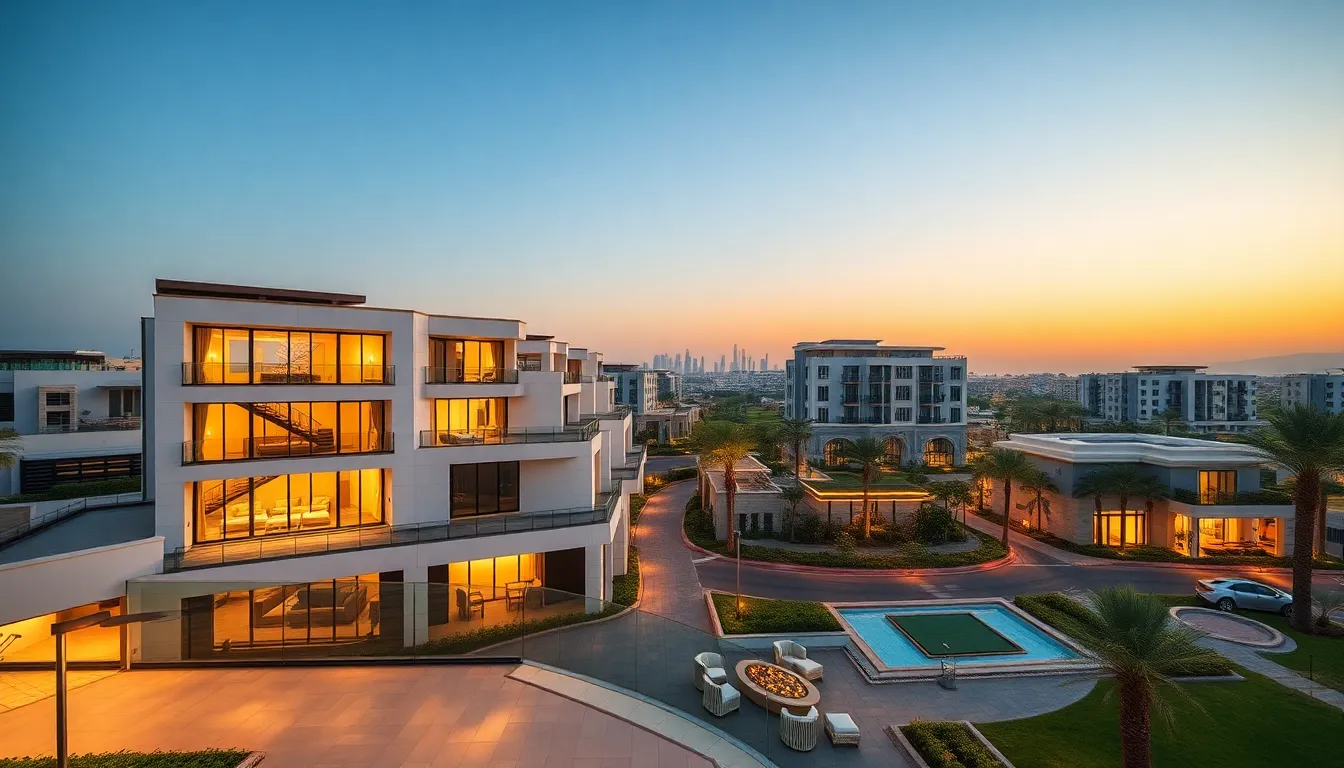
Now, let's talk about living there. Dubai Hills is built around a golf course. It feels like a resort. It has a mall (Dubai Hills Mall), a hospital, and schools. Arabian Ranches is older, more established. It has a desert feel, with sand-colored villas and vast open spaces. For NRIs, the proximity to schools is a big factor. Dubai Hills has GEMS International School and Dubai British School. Arabian Ranches has Ranches Primary School and Jumeirah English Speaking School. Both are good. But Dubai Hills is closer to the city center. A commute to Dubai Marina is 15 minutes. Arabian Ranches? 30 minutes on a good day. Factor that in if you plan to work or visit frequently.
Which Community Has Better Golden Visa Eligibility?
Both communities qualify for the UAE Golden Visa if you invest AED 2 million or more in property. But the value threshold is easier to hit in Arabian Ranches because prices are lower. A 3-bedroom in Arabian Ranches costs AED 3.5 million, well above AED 2 million. In Dubai Hills, you are looking at AED 4.2 million. So both work. But if you want to invest in a smaller unit, Dubai Hills has more affordable apartments starting at AED 1.2 million. Arabian Ranches is exclusively villas. So if your budget is tight, Dubai Hills offers a way into the Golden Visa with a lower entry point.
| Feature | Dubai Hills | Arabian Ranches |
|---|---|---|
| Avg Villa Price (3BR) | AED 4.2M | AED 3.5M |
| Gross Rental Yield | 6.2% | 5.5% |
| Annual Rent (3BR) | AED 220K | AED 190K |
| Service Charges (per sq ft) | AED 12 | AED 10 |
| Capital Appreciation (YoY) | 12% | 7% |
| Commute to Marina | 15 min | 30 min |
What Are the Hidden Costs NRIs Often Miss?
Let's talk about the stuff that does not show up in brochures. DLD registration fee is 4% of the purchase price. Both communities charge it. But Arabian Ranches has a higher proportion of off-plan inventory from Phase 2 and 3. Off-plan purchases have a lower upfront registration fee (1% plus admin). Dubai Hills is mostly ready properties now. So if you are remitting money, ready property means you pay 4% immediately. Off-plan gives you breathing room. However, off-plan carries risk. In 2026, Emaar has delivered 98% of its off-plan projects on time. So the risk is low. But for NRIs, the remittance timing matters. You might prefer to spread payments over 3 years with off-plan. Dubai Hills has fewer off-plan options left. Arabian Ranches has more.
How Do Mortgage Options Differ for NRIs?
NRIs can get mortgages from UAE banks like Emirates NBD, ADCB, and Mashreq. Typically, they finance 50-60% of the property value. Interest rates for NRIs are around 4.5-5% in 2026. Both communities are on the bank's approved lists. But Dubai Hills properties have higher loan-to-value ratios because of their central location. Some banks offer up to 65% LTV for Dubai Hills. Arabian Ranches? Usually 50-55%. So if you need a loan, Dubai Hills is better. But remember, the loan amount is in AED. If your income is in INR, exchange rate fluctuations matter. In 2026, the AED has been strong against INR. That works in your favor when you remit, but against you if you need to convert back.
But here is a rhetorical question: Are you planning to live in the property or just rent it out? If you are not living there, you can claim mortgage interest as a deduction against rental income in your home country. Check local tax laws. In India, you can deduct up to INR 2 lakh per year on housing loan interest. But that only applies if the property is self-occupied. For rental, the deduction is unlimited. So if you rent out a Dubai Hills villa, you can offset the mortgage interest against Indian rental income tax. That is a huge advantage for NRIs.
Which Community Should You Choose in 2026?
Look, there is no one-size-fits-all. If you want maximum returns, better resale, and a central location, go with Dubai Hills. The higher price is offset by higher rent and faster growth. For NRIs focused on remittance efficiency, the lower service charges and easier mortgage terms in Dubai Hills tip the scale. But if you want a larger house for your money, a quieter lifestyle, and lower entry price, Arabian Ranches is solid. The rental income is lower, but your out-of-pocket remittance is smaller. And the longer tenancies mean less hassle if you are managing from abroad.
Honestly, I think most NRIs underestimate the remittance timeline. You cannot just wire AED 4 million in one go. You need to plan. Use an NRE account, split the payments, and watch exchange rates. Both communities will give you a good return. But the one that fits your financial flow wins.
If you ask me, for an NRI in 2026, Dubai Hills is the smarter bet. But only if you can afford the higher upfront cost. If you are stretching your budget, Arabian Ranches gives you more breathing room.
Frequently Asked Questions
Can NRIs buy property in Dubai Hills and Arabian Ranches?
Yes, both are freehold communities open to foreign buyers, including NRIs. No restrictions on nationality.
How much money do I need to start investing in Dubai property as an NRI?
For a villa, you need at least AED 3.5 million in Arabian Ranches or AED 4.2 million in Dubai Hills. Apartments in Dubai Hills start at AED 1.2 million.
What are the tax implications for NRIs selling Dubai property?
UAE has no capital gains tax. But if you repatriate gains to your home country, they may be taxable there. Plan reinvestment in UAE to defer tax.
Is Golden Visa easier to get in Dubai Hills or Arabian Ranches?
Both work with AED 2 million investment. Dubai Hills has cheaper apartments (AED 1.2M) that qualify if combined with other assets. Arabian Ranches only has villas above AED 3.5M.
Which community has better rental yields for 2026?
Dubai Hills offers 6.2% gross yield versus Arabian Ranches' 5.5%. But net yields are closer after service charges.
Can I get a mortgage as an NRI for these properties?
Yes, UAE banks offer 50-65% LTV for NRIs. Dubai Hills gets higher LTV due to central location.
What is the best way to remit money for a Dubai property purchase?
Use an NRE account and wire in AED via Emaar's preferred partner to avoid 1% fee. Split payments across financial years if needed under LRS limits.
Ready to find your ideal property in Dubai Hills or Arabian Ranches? Our team at Siddhi Enterprises (Real Estate) specializes in helping NRIs navigate the remittance and tax landscape. Explore available listings or speak with our advisors for personalized guidance. For more insights, read more insights on our blog.
By the Siddhi Enterprises (Real Estate) Research Team | Over 10 years of Dubai property market expertise across residential, commercial, and off-plan investments | 2026
Siddhi Team
Dubai Real Estate Experts helping Indian investors find their perfect property in UAE.