
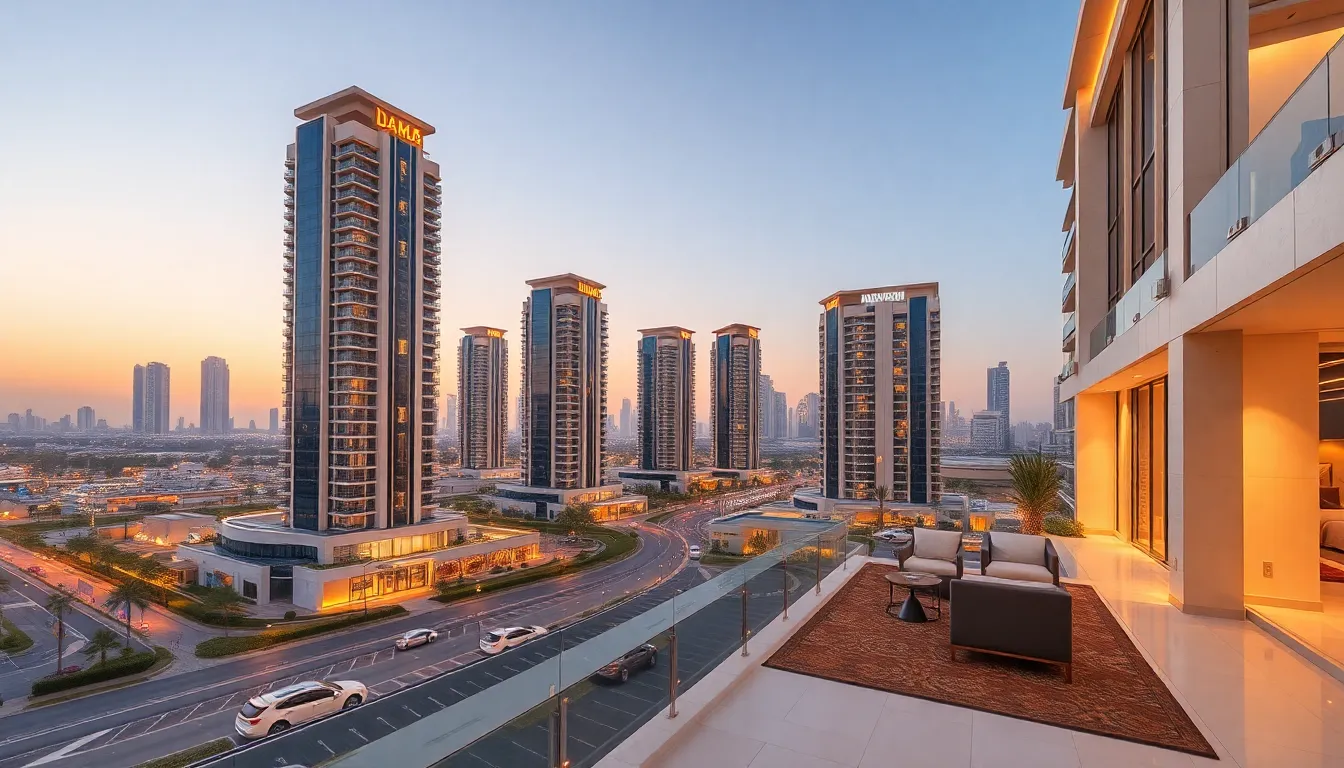
DAMAC Properties Dubai 2026: NRI Investment & Tax Guide
DAMAC Properties is a leading Dubai-based real estate developer known for luxury residential and commercial projects, offering Non-Resident Indian (NRI) investors unique opportunities through tax-efficient structures and streamlined remittance processes in 2026. For NRIs seeking international diversification, DAMAC's portfolio combines high returns with favorable UAE tax policies, making it a strategic choice for wealth preservation and growth. This overview examines DAMAC's top projects through the lens of NRI financial planning, highlighting how remittance flows and tax advantages shape investment decisions in the current market.
Why Should NRIs Consider DAMAC Properties in 2026?
NRI investors face complex decisions when allocating capital abroad. Dubai's property market, with developers like DAMAC, presents compelling advantages. The UAE's zero income tax and capital gains tax environment contrasts sharply with India's tax regime, allowing NRIs to maximize returns. In 2026, remittance from India to Dubai for property purchases has become more efficient, with digital platforms reducing transfer times to under 48 hours. DAMAC's established reputation ensures compliance with RERA regulations, providing security for overseas buyers.
Market data shows Dubai property prices increased by 8.2% in early 2026, outperforming many global cities. DAMAC projects in prime locations like Downtown Dubai and Palm Jumeirah have seen average annual ROI of 7.5-9% over the past three years. For NRIs, this growth is tax-free upon sale if held for over three years, unlike Indian properties subject to capital gains tax. The developer's focus on luxury amenities aligns with NRI preferences for high-end investments that offer lifestyle benefits alongside financial gains.
How Do UAE Tax Policies Benefit NRI Investors?
UAE tax policies create a favorable environment for NRI property investment. Unlike India, where rental income and capital gains are taxed, Dubai imposes no property income tax. In 2026, DAMAC buyers can earn rental yields of 5-7% tax-free. The absence of inheritance tax in the UAE simplifies wealth transfer for NRIs, with properties passing to heirs without hefty levies. This contrasts with India's inheritance tax proposals under discussion, making Dubai assets more attractive for long-term planning.
NRIs must still consider Indian tax implications on foreign assets. Rental income from DAMAC properties is taxable in India if remitted back, but strategic reinvestment in Dubai can defer this liability. The UAE's double taxation avoidance agreement with India prevents dual taxation on certain incomes. For example, capital gains from DAMAC property sales are only taxed in the UAE—effectively zero—if the seller is a UAE tax resident, which many NRIs achieve through property visa UAE programs.
What Are the Remittance Procedures for DAMAC Purchases?
Remitting funds for DAMAC purchases involves specific steps for NRIs. In 2026, the Liberalised Remittance Scheme (LRS) allows NRIs to send up to $250,000 annually from India to Dubai without RBI approval. DAMAC facilitates this through tie-ups with UAE banks, offering preferential exchange rates for bulk transfers. Investors should use authorized dealer banks in India to ensure compliance with FEMA regulations, avoiding penalties that can reach 300% of the unauthorized amount.
Post-remittance, funds must be parked in a UAE NRI account before property payment. DAMAC's sales teams guide buyers through DLD registration, which requires proof of legitimate fund sources. The process typically takes 4-6 weeks from remittance initiation to property registration. With digital advancements, DAMAC now offers blockchain-based transaction tracking, giving NRIs real-time visibility on fund utilization. This transparency is crucial for investors managing cross-border portfolios.
Which DAMAC Projects Offer the Best NRI Value in 2026?
DAMAC's 2026 portfolio features projects tailored to NRI investment criteria. Key factors include location in freehold zones, high rental demand, and capital appreciation potential. Projects like DAMAC Hills 2 and Aykon City dominate mid-range segments, while DAMAC Towers by Paramount caters to luxury buyers. Data from Q1 2026 shows these areas delivered average price growth of 6.8% year-on-year, with occupancy rates exceeding 92% in prime developments.
For NRIs, value extends beyond financial metrics. DAMAC's integrated communities offer amenities like schools and hospitals, reducing management hassles for absentee owners. The developer's property management services handle tenant sourcing and maintenance, ideal for investors residing abroad. In 2026, DAMAC also introduced NRI-specific packages with waived service charges for the first year, enhancing net yields. These offerings make DAMAC properties in Dubai particularly attractive for remote investors.
How Does DAMAC Hills 2 Perform for Rental Income?
DAMAC Hills 2, located in Dubailand, is a top choice for NRI rental investors. In 2026, studio apartments here start at AED 450,000, with two-bedroom units reaching AED 1.2 million. Rental yields average 6.5%, generating AED 24,375-65,000 annually tax-free. The community's family-friendly design ensures consistent demand, with vacancy rates below 5% in early 2026. DAMAC's onsite management handles everything from tenant screening to repair services, minimizing NRI landlord burdens.
ROI calculation for DAMAC Hills 2 factors in 2026 market trends. Capital appreciation projections suggest 5-7% annual growth, potentially doubling investment value in 10-12 years. Compared to Indian real estate, where rental yields rarely exceed 3% and are taxed, this represents a significant advantage. NRIs can use rental income to service mortgages or reinvest in additional Dubai properties, compounding wealth without immediate tax liabilities. The development's RERA-approved status guarantees transparency in all transactions.
What Makes Aykon City a Luxury NRI Investment?
Aykon City in Business Bay epitomizes luxury NRI investment. In 2026, penthouses here command AED 8-15 million, offering exclusivity and high appreciation potential. The project's association with fashion brand Versace attracts affluent tenants, ensuring premium rental rates of AED 350-500 per square foot annually. For NRIs, this translates to gross yields of 5.2-5.8%, with net yields around 4.8% after service charges—still superior to luxury Indian properties taxed at up to 30% on income.
Tax benefits at Aykon City are magnified by Dubai's zero capital gains policy. If an NRI purchases at AED 10 million and sells at AED 12 million after five years, the AED 2 million profit is entirely tax-free. In India, a similar gain could incur 20% tax plus surcharges. The development's freehold status grants NRIs full ownership rights, transferable without restrictions. Aykon City also qualifies for property visa UAE, allowing investors and families to obtain residency—a key perk for NRIs seeking alternative citizenship options.
How Do DAMAC Properties Compare to Other Developers?
NRIs evaluating DAMAC against competitors like Emaar or Nakheel must consider multiple factors. DAMAC often targets the luxury segment with aggressive pricing, while offering more flexible payment plans for overseas buyers. In 2026, DAMAC's average price per square foot in prime areas is AED 1,800, compared to Emaar's AED 2,200. However, DAMAC's rental yields are 0.5-1% higher due to lower entry costs, enhancing cash flow for NRI investors.
Developer reliability is crucial for NRIs managing investments remotely. DAMAC's project completion rate stands at 94% in 2026, slightly below Emaar's 98% but above industry averages. The company's transparency in project delays—now averaging 4 months in 2026—helps NRIs plan finances. Unlike some developers, DAMAC provides escrow accounts for all transactions, protecting buyer funds as per RERA regulations. This security is vital for cross-border investments where legal recourse can be complex.
| Project | Starting Price (AED 2026) | Rental Yield | NRI Tax Benefit | Remittance Ease |
|---|---|---|---|---|
| DAMAC Hills 2 | 450,000 | 6.5% | Zero rental tax | High (digital tracking) |
| Aykon City | 3,500,000 | 5.5% | Zero capital gains | Medium (bulk transfers) |
| DAMAC Towers | 2,200,000 | 6.0% | Inheritance tax-free | High (bank partnerships) |
| Cavalli Tower | 1,800,000 | 5.8% | Double taxation avoidance | Medium |
What Payment Plans Suit NRI Cash Flows?
DAMAC's 2026 payment plans cater to NRI remittance patterns. The popular 70/30 plan requires 70% payment during construction and 30% on completion, aligning with annual LRS limits. For a AED 2 million property, NRIs can spread payments over 3-4 years, remitting AED 500,000 yearly without exceeding LRS caps. Post-completion, DAMAC offers mortgage facilitation through UAE banks at rates of 4.2-4.8% in 2026, competitive versus India's 8.5-9% home loan rates.
NRIs using Indian income for payments benefit from rupee depreciation trends. In 2026, the INR/AED exchange rate is projected at 22.5, making Dubai properties relatively cheaper for rupee earners. DAMAC's currency-hedged plans lock in rates at booking, protecting against volatility. For those with NRO accounts, DAMAC allows direct payments, avoiding double conversion fees. These features optimize remittance efficiency, a key concern for investors navigating cross-border regulations.
How Does DLD Registration Work for NRIs?
DLD registration formalizes NRI ownership of DAMAC properties. The process requires a passport copy, UAE entry stamp, and proof of funds from remittance. In 2026, DAMAC assigns dedicated agents to handle registration, reducing typical processing time to 10-15 days. Registration fees are 4% of property value plus AED 580 administrative charges, deductible from taxable income if the property generates UAE-sourced income—though for NRIs, this often remains zero.
Post-registration, NRIs receive a title deed electronically, recognized under UAE law. This deed enables property visa UAE applications, requiring a minimum investment of AED 750,000 in 2026. DAMAC's visa assistance services streamline this, with approval rates above 95% for eligible buyers. The DLD portal also allows remote management, letting NRIs check ownership status or initiate sales without visiting Dubai. This digital integration supports efficient portfolio management across borders.
What Are the Risks and Mitigations for NRI Investors?
NRI investments in DAMAC properties carry specific risks. Market volatility could affect 2026 prices, though Dubai's forecasted 4-6% annual growth mitigates this. Currency risk arises from INR/AED fluctuations; DAMAC's fixed-rate plans offer partial protection. Legal risks include contract misunderstandings—using RERA-approved templates minimizes this. NRIs should also consider geopolitical factors, though UAE's stable environment reduces such concerns compared to other regions.
Mitigation strategies involve due diligence and professional support. NRIs should verify DAMAC's project approvals via the RERA website, checking completion timelines. Engaging a UAE-based tax advisor clarifies Indian reporting requirements for foreign assets. In 2026, DAMAC provides free legal consultations for NRI buyers, covering contract reviews and dispute resolution. Insurance products like rental guarantee schemes protect against tenant defaults, ensuring consistent cash flow. These measures transform risks into manageable factors within a diversified portfolio.
How to Calculate ROI on DAMAC Investments?
ROI calculation for DAMAC properties includes rental income, appreciation, and tax savings. For a AED 1 million apartment with 6% rental yield, annual income is AED 60,000 tax-free. Appreciation at 5% yearly adds AED 50,000 in unrealized gains. Over five years, total ROI could reach 55-60%, compared to 35-40% for a similar Indian property after taxes. NRIs must factor in costs like service charges (AED 10-15 per square foot annually) and maintenance, typically 1-2% of property value.
Advanced ROI models incorporate remittance costs and financing. In 2026, bank transfer fees for NRI remittances average 0.5-1%, reducing net yields slightly. Mortgage interest at 4.5% affects leveraged purchases, though it remains deductible in some Indian tax scenarios. DAMAC's online calculators provide personalized projections, including break-even periods—often 4-5 years for cash purchases. These tools help NRIs compare Dubai investments with Indian alternatives, where post-tax returns are often 2-3% lower annually.
What Legal Structures Optimize Tax Efficiency?
Legal structures enhance NRI tax efficiency for DAMAC investments. Holding properties through a UAE free zone company allows profits to be taxed at 0% corporate rate, with easier inheritance planning. In 2026, setup costs for such companies start at AED 15,000, worthwhile for portfolios exceeding AED 5 million. Alternatively, direct ownership simplifies compliance but may expose heirs to Indian inheritance complexities if the NRI passes away resident in India.
Trust arrangements are gaining popularity among NRIs. A UAE trust holding DAMAC assets can distribute income to family members in lower tax brackets, though Indian clubbing rules may apply. DAMAC's legal partners offer structure advisory, ensuring alignment with both UAE and Indian laws. For example, using a UAE will registered with DLD avoids probate delays, transferring properties to heirs within weeks. These structures turn tax advantages into long-term wealth preservation tools, a core NRI objective.
Frequently Asked Questions
Can NRIs get a mortgage for DAMAC properties in 2026?
Yes, NRIs can secure mortgages from UAE banks for DAMAC properties, with loan-to-value ratios up to 75% for purchases below AED 5 million. In 2026, interest rates range from 4.2% to 4.8%, lower than Indian home loans. Approval requires proof of income, typically minimum AED 25,000 monthly, and a down payment from remitted funds. DAMAC's finance team assists with applications, improving approval chances for overseas buyers.
How does rental income from DAMAC affect Indian taxes?
Rental income from DAMAC properties is taxable in India if remitted back or if the NRI is resident in India for tax purposes. However, under the India-UAE tax treaty, double taxation is avoided. In 2026, many NRIs retain income in UAE accounts, reinvesting in local assets to defer Indian tax liabilities. Professional advice is recommended to optimize this based on individual circumstances.
What are the top freehold zones for DAMAC projects?
DAMAC's key freehold zones include Dubai Marina, Business Bay, Palm Jumeirah, and Dubailand. These areas offer full ownership rights to NRIs, with 2026 price growth leading the market at 7-9% annually. Freehold status ensures hassle-free resale and inheritance, crucial for long-term NRI planning. Browse our properties in these zones for current listings.
Is property visa UAE available with DAMAC investments?
Yes, DAMAC properties valued at AED 750,000 or more qualify for a UAE property visa in 2026. This residency permit is renewable every two years, requiring minimal physical presence. DAMAC's visa services handle applications, with processing times of 4-6 weeks. The visa covers spouses and children, offering NRIs an alternative residency option with travel benefits.
How do I verify DAMAC's RERA compliance?
Verify DAMAC's RERA compliance through the Dubai Land Department website, using the project's unique registration number. In 2026, all DAMAC projects display RERA approval certificates in sales offices. Compliance ensures escrow protection of funds and adherence to completion timelines. For assistance, contact our team for a compliance check on specific projects.
Conclusion: Strategic NRI Investment with DAMAC
DAMAC Properties represents a strategic avenue for NRI wealth allocation in 2026. The combination of tax efficiency, high yields, and streamlined remittance processes addresses core NRI financial concerns. With Dubai's market poised for steady growth, DAMAC's diverse portfolio offers options from affordable communities to ultra-luxury towers. The developer's focus on NRI needs—through tailored payment plans, visa support, and legal structures—positions it uniquely in the cross-border investment landscape.
NRIs should act decisively to capitalize on current opportunities. Market indicators suggest price increases may accelerate in late 2026, making early entry advantageous. DAMAC's upcoming projects in Dubai South and Mohammed Bin Rashid City promise further growth potential. By leveraging UAE's tax benefits and DAMAC's market expertise, NRIs can build resilient international portfolios that outperform domestic alternatives.
Siddhi Enterprises (Real Estate) specializes in guiding NRIs through DAMAC investments. Our team provides end-to-end support, from remittance planning to post-purchase management. We offer exclusive access to pre-launch projects and negotiated payment terms. Contact us today for a personalized investment strategy that aligns with your financial goals and tax optimization needs. Let us help you transform cross-border challenges into profitable opportunities in Dubai's dynamic market.
By the Siddhi Enterprises (Real Estate) Research Team | 2026
Siddhi Team
Dubai Real Estate Experts helping Indian investors find their perfect property in UAE.