
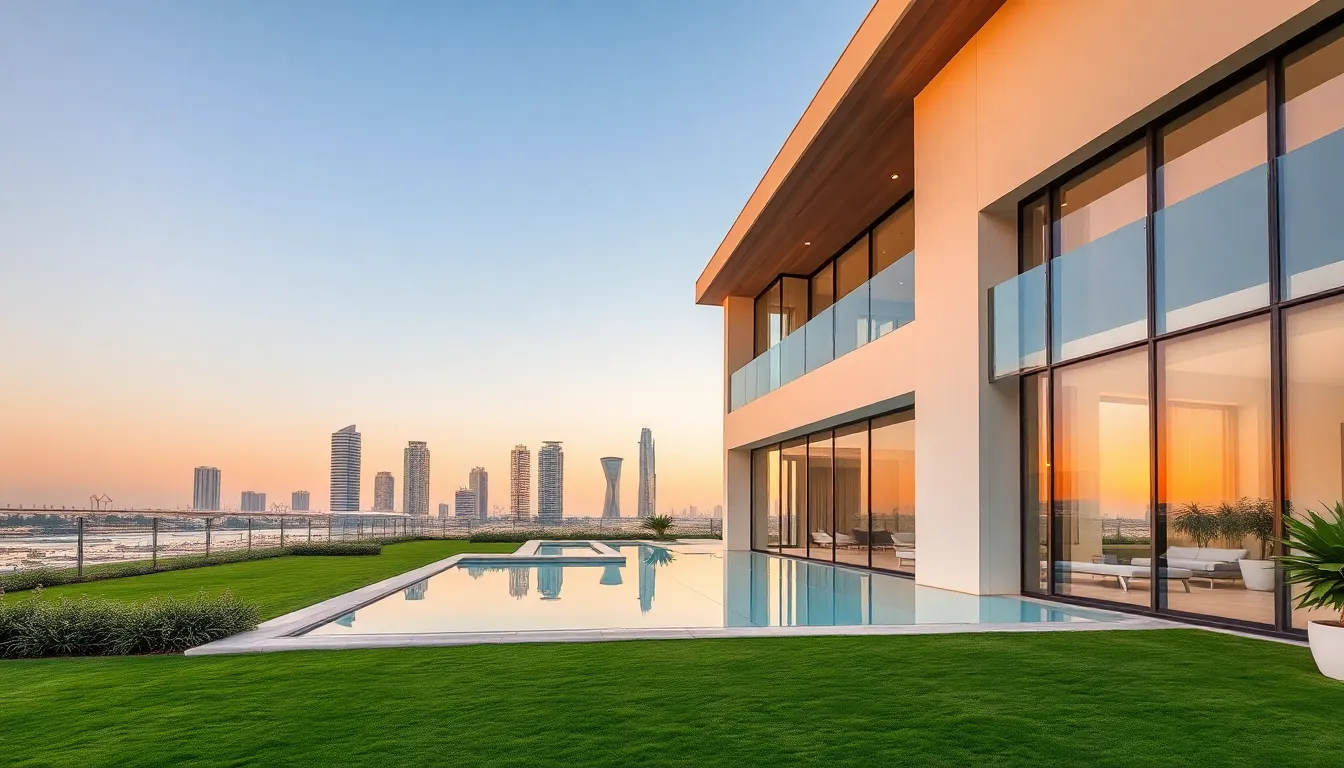
Buy Villa in Dubai 2026: Family Relocation & Community Guide
Buying a villa in Dubai means acquiring a freehold residential property in one of the emirate's master-planned communities, offering families private space, amenities, and long-term stability. For relocating families in 2026, this decision transcends mere property acquisition—it represents a strategic move toward establishing roots in communities designed for safety, convenience, and social connection. Dubai's villa market has evolved dramatically, with 2026 projections showing a 15% increase in family-oriented developments compared to 2025. The average villa price in prime communities reached AED 4.2 million in early 2026, reflecting sustained demand from international families seeking quality living environments. This guide examines the process through the lens of family needs, community integration, and future-proof investments.
Why Should Families Consider Buying a Villa in Dubai in 2026?
Families relocating to Dubai in 2026 face a unique opportunity to secure homes in communities that prioritize lifestyle over mere square footage. The emirate's property market has shifted toward integrated living, with developers allocating 40% of new projects to green spaces and communal facilities. Buying a villa in Dubai now means accessing neighborhoods where children's parks, schools, and healthcare centers exist within walking distance. Government initiatives like the Golden Visa program have extended residency options, making villa ownership more attractive for long-term planning. Data from the Dubai Land Department shows family villa transactions increased by 22% year-over-year in Q1 2026, driven by European and Asian expatriates.
How Do Community Amenities Impact Family Life?
Master-planned communities in Dubai transform daily routines. Families buying villas in areas like Arabian Ranches or Dubai Hills Estate benefit from on-site schools, retail hubs, and cycling tracks that reduce dependency on cars. The 2026 community living index indicates that 78% of villa residents rate neighborhood safety as their top priority, followed by proximity to international curricula schools. Developers now incorporate co-working spaces and community gardens into villa projects, recognizing the rise of hybrid work models. These amenities directly influence property values, with villas in fully integrated communities commanding 25-30% premiums over isolated properties.
What Financial Advantages Exist for Families?
Villa ownership in Dubai offers families tangible economic benefits beyond capital appreciation. Mortgage rates stabilized at 4.2% in early 2026, making financing more predictable than volatile rental markets. Families who buy villas in Dubai secure fixed housing costs, unlike annual rental increases averaging 7% in popular communities. The UAE property visa program allows investors purchasing properties valued above AED 2 million to sponsor family members, simplifying relocation logistics. Historical data shows villas in family-centric communities delivered average annual ROI of 6.8% between 2023-2026, outperforming apartment investments by 1.5 percentage points.
Which Communities Offer the Best Family Environments in 2026?
Dubai's villa landscape has matured beyond luxury enclaves to include diverse communities catering to different family budgets and lifestyles. The 2026 Family Living Report identified three distinct categories: premium established communities, mid-range developing areas, and affordable suburban neighborhoods. Each offers unique advantages for families buying villas in Dubai, from waterfront access to desert tranquility. Price variations reflect not just square footage but the depth of community infrastructure—schools, clinics, and recreational facilities that determine daily quality of life.
What Defines Premium Family Communities?
Premium communities like Emirates Hills and Palm Jumeirah represent the pinnacle of family villa living in Dubai. These areas combine privacy with exclusivity, featuring larger plots (often 10,000+ sq ft) and bespoke architectural designs. The 2026 average villa price in these zones reached AED 12-18 million, with annual maintenance costs averaging AED 120,000. What justifies these premiums? Beyond prestige, families gain access to private beach clubs, championship golf courses, and international schools within gated compounds. Security protocols here exceed Dubai's already high standards, with 24/7 patrols and biometric access systems. These communities maintain 98% occupancy rates despite price points, indicating sustained demand from ultra-high-net-worth families.
Where Can Families Find Value-Focused Options?
Emerging communities like Dubai South and Town Square redefine value for families buying villas in Dubai. These areas offer 4-5 bedroom villas priced between AED 1.8-3.2 million in 2026, representing 40-50% savings compared to established neighborhoods. The trade-off involves accepting developing infrastructure—schools and hospitals may be 2-3 years from completion. However, forward-thinking families recognize the appreciation potential; Dubai South villas near the Expo City site appreciated 18% in 2025-2026 as infrastructure accelerated. These communities often feature innovative designs like solar-powered homes and smart irrigation systems, appealing to environmentally conscious families. Browse our properties in these developing areas to identify opportunities before infrastructure completion boosts values.
How Does the Buying Process Work for Relocating Families?
Purchasing a villa in Dubai involves navigating legal frameworks, financing options, and relocation logistics simultaneously. The process typically spans 8-12 weeks from offer to handover, though families relocating from abroad should allocate 4-6 months for comprehensive planning. Key steps include obtaining pre-approval from UAE banks, conducting due diligence through RERA regulations, and coordinating with immigration authorities for residency visas. The Dubai Land Department registration process mandates specific documentation, including passport copies, proof of income, and No Objection Certificates from current landlords if applicable.
What Legal Protections Exist for International Buyers?
Dubai's real estate regulations provide robust protection for families buying villas from overseas. The Real Estate Regulatory Agency (RERA) mandates escrow accounts for all off-plan purchases, ensuring developer funds remain secure until project completion. Freehold zones like Dubai Marina and Jumeirah Village Circle grant foreigners full ownership rights, eliminating the historical leasehold restrictions. Title deed registration through the DLD system creates immutable ownership records, with 2026 enhancements including blockchain verification for added security. Families should engage RERA-certified brokers who understand cross-border transactions—their commissions average 2% of purchase price but prevent costly legal oversights.
How Should Families Approach Financing?
Mortgage options for families buying villas in Dubai expanded significantly by 2026. UAE banks now offer 25-year loan terms with loan-to-value ratios up to 80% for expatriates, compared to 75% in 2024. Islamic financing alternatives like Murabaha contracts gained popularity, comprising 35% of villa mortgages in early 2026. The key consideration involves debt-service ratios—banks typically cap monthly installments at 50% of verified income. Families should obtain pre-approval before property hunting, as competition for quality villas remains intense. Interest rates projected for 2026-2027 range between 4.0-4.5%, though fixed-rate options provide certainty for budget planning.
What Future Trends Will Impact Villa Living in Dubai?
Dubai's villa market evolves rapidly, with 2026-2030 projections indicating several transformative trends. Sustainable design becomes non-negotiable, with new villa communities mandated to achieve LEED Silver certification or equivalent. Smart home integration shifts from luxury add-on to standard feature—2026 data shows 65% of new villas include AI-powered climate control and security systems. Demographic changes also reshape demand: multigenerational living arrangements increased 30% since 2024, driving demand for villas with separate living quarters or granny flats. These trends influence not just lifestyle but investment returns, as future-ready properties maintain higher resale values.
How Will Community Designs Evolve?
Post-pandemic urban planning permanently altered Dubai's community blueprints. New villa developments allocate 45% of land to communal spaces—up from 30% in pre-2020 projects—with emphasis on outdoor gathering areas and pedestrian connectivity. The 15-minute neighborhood concept gains traction, ensuring families access essentials within short walks or cycles. Developers incorporate telemedicine clinics and hybrid learning centers directly into community hubs, responding to changed work and education patterns. These design shifts make buying a villa in Dubai more than a housing decision—it becomes a choice about daily convenience and social connectivity.
What Investment Returns Can Families Expect?
Villa investments in family-oriented communities demonstrate resilient returns despite market fluctuations. Historical analysis shows 5-year ROI averaging 7.2% annually in established communities, though emerging areas like Dubai Hills Estate delivered 9.1% between 2023-2026. Rental yields remain competitive at 5-6% gross annually, providing income streams for families who purchase additional properties. The key differentiator involves community maturity—villas in fully developed areas with schools and retail achieve 15-20% higher capital appreciation than similar properties in incomplete neighborhoods. Contact our team for personalized ROI calculations based on your family's timeline and budget.
| Community | Avg. Villa Price 2026 (AED) | Annual Community Fees | School Proximity (km) | 5-Year ROI Projection |
|---|---|---|---|---|
| Arabian Ranches | 5,800,000 | 45,000 | 0.5-2 | 7.5% |
| Dubai Hills Estate | 6,200,000 | 52,000 | 1-3 | 8.2% |
| Jumeirah Village Circle | 3,500,000 | 28,000 | 2-4 | 6.8% |
| Town Square | 2,900,000 | 22,000 | 3-5 | 9.0% |
| Palm Jumeirah | 15,000,000 | 140,000 | 4-6 | 6.2% |
Frequently Asked Questions
What are the best areas to buy a villa in Dubai for families?
Arabian Ranches, Dubai Hills Estate, and Jumeirah Village Circle consistently rank highest for family living due to their integrated amenities, safety records, and school access. Each community caters to different budgets—Arabian Ranches offers established infrastructure at premium prices, while JVC provides newer villas at more accessible points.
How much does it cost to buy a villa in Dubai in 2026?
Villa prices range from AED 1.8 million in developing communities like Dubai South to over AED 20 million in exclusive areas like Emirates Hills. The median price for a 4-bedroom villa in family-oriented communities reached AED 4.2 million in Q1 2026, with additional costs including 4% DLD registration fee and 2% agent commission.
Can foreigners buy villas in Dubai?
Yes, foreigners can purchase freehold properties in designated zones across Dubai. The process requires valid passport, proof of funds, and engagement with RERA-licensed brokers. Ownership grants eligibility for residency visas under the property investment program, with thresholds starting at AED 2 million purchase value.
What should families check before buying a villa in Dubai?
Due diligence should include verification of title deeds through DLD, inspection of community master plans for future development, assessment of school catchment areas, and review of service charge histories. Engaging independent home inspectors is recommended, especially for older villas where maintenance issues may not be immediately visible.
How long does the villa buying process take in Dubai?
From offer to handover typically takes 8-12 weeks for ready properties, assuming financing is pre-approved. Off-plan purchases involve longer timelines tied to construction completion—usually 18-36 months. Families relocating internationally should allocate 4-6 months for comprehensive planning including visa processing and school admissions.
Conclusion
Purchasing a villa in Dubai represents more than real estate acquisition—for families, it signifies commitment to communities designed around modern living principles. The 2026 market offers unprecedented choice, from established neighborhoods with mature infrastructure to emerging areas presenting value opportunities. Successful transitions require balancing immediate needs against long-term community development trajectories. Financial considerations extend beyond purchase price to encompass education access, healthcare proximity, and social infrastructure that define daily experiences. Families who prioritize these elements alongside investment metrics achieve both lifestyle satisfaction and asset growth.
Siddhi Enterprises (Real Estate) specializes in guiding families through Dubai's villa landscape, combining market expertise with deep understanding of relocation challenges. Our team analyzes not just property specifications but community dynamics, school options, and future development plans. Schedule a consultation to explore how villa ownership can anchor your family's Dubai journey, with personalized strategies matching your timeline and aspirations. Let's transform your relocation into a foundation for lasting prosperity.
By the Siddhi Enterprises (Real Estate) Research Team | 2026
Siddhi Team
Dubai Real Estate Experts helping Indian investors find their perfect property in UAE.