
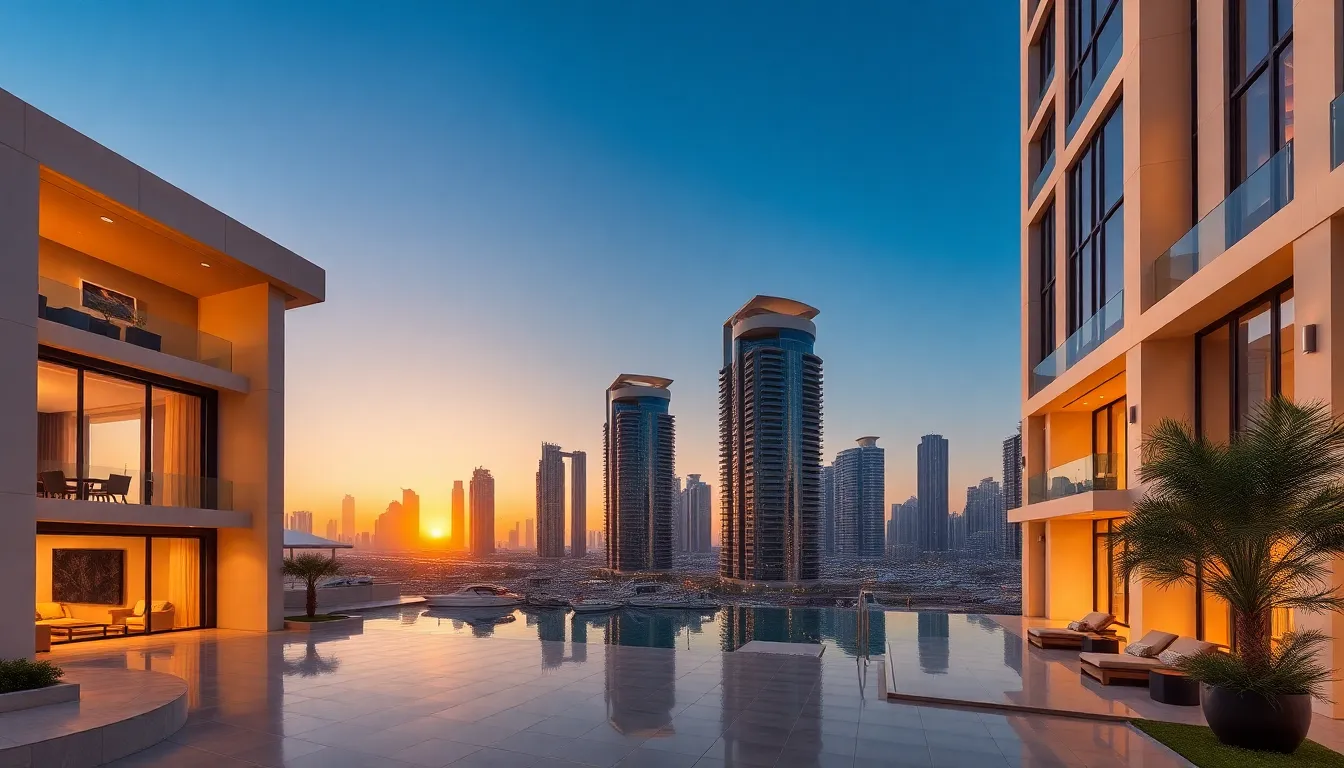
Best Time to Buy Property in Dubai 2026 vs Global Hubs
The best time to buy property in Dubai refers to strategic entry points in 2026 when market conditions offer superior value compared to other global investment hubs, factoring in price cycles, regulatory advantages, and projected returns. Savvy investors must analyze Dubai's position relative to London, Singapore, and Miami to capitalize on emerging opportunities.
Why Does Dubai's 2026 Property Cycle Matter More Than Other Hubs?
Global real estate markets move in distinct rhythms. While London faces political uncertainty and Singapore contends with cooling measures, Dubai enters 2026 with unique momentum. The emirate's property cycle has decoupled from traditional Western markets, creating windows where timing delivers exceptional advantage.
Historical data shows Dubai's recovery phases typically last 24-36 months. Current projections suggest 2026 falls within a consolidation period following the 2023-2025 growth surge. This creates what analysts call a "plateau opportunity"—prices stabilize while fundamentals strengthen.
How Do Global Economic Factors Influence Timing?
Interest rate differentials between the UAE and Western economies create arbitrage opportunities in 2026. With US rates potentially declining while UAE rates remain stable, dollar-pegged Dubai property becomes relatively more affordable for international buyers. This contrasts with Eurozone markets where financing costs may remain elevated.
Currency fluctuations also play a crucial role. The dirham's peg to the dollar provides stability absent in London (sterling volatility) or Singapore (managed float). For Asian investors, this predictability makes timing decisions less complex than in other hubs.
What Makes Dubai's Regulatory Environment Unique?
RERA regulations provide transparency unmatched by many global competitors. The Dubai Land Department's registration process offers protection that London's fragmented system or Miami's state-by-state variations cannot match. This regulatory certainty reduces timing risk.
Freehold zones continue expanding in 2026, with new areas offering 100% foreign ownership. Compare this to Singapore's Additional Buyer's Stamp Duty or London's non-dom tax changes—Dubai's approach remains consistently investor-friendly throughout market cycles.
Which Seasonal Patterns Offer the Best Entry Points in 2026?
Dubai's property market exhibits distinct seasonal behaviors that differ substantially from other hubs. While New York sees spring surges and London has autumn renewals, Dubai's rhythm follows expatriate movements and climate patterns.
Q1 2026 presents particular promise. January listings often include motivated sellers from year-end portfolio adjustments. February sees pre-summer activity increases. March brings Dubai World Cup and associated high-net-worth arrivals. This three-month window typically offers 3-5% price advantages over peak periods.
How Does Summer vs Winter Timing Compare?
Summer months (June-August) traditionally see reduced physical viewings but increased digital engagement. For off-plan purchases or secondary market transactions where virtual tours suffice, this period offers negotiation leverage. Sellers during Dubai's hot months often demonstrate greater flexibility.
Winter (November-February) brings peak tourism and exhibition activity. While competition increases, so does rental demand—making timing decisions dependent on investment horizon. Buyers seeking immediate rental income might prioritize winter purchases despite marginally higher prices.
What Role Do Major Events Play in Timing Decisions?
EXPO 2020 legacy continues influencing 2026 timing. Areas like Dubai South and Dubai Hills Estate see sustained demand from commercial spillover. Contrast this with Milan or Osaka where post-expo declines occurred—Dubai's infrastructure integration creates longer-term value.
Dubai Shopping Festival (December-January) and Dubai Summer Surprises (June-August) create retail-driven property interest. Investors targeting hospitality or short-term rentals should align purchases with these cycles, unlike in Geneva or Zurich where seasonal patterns are less pronounced.
How Do Price Corrections Compare Across Global Markets?
Dubai's 2026 price landscape shows segmentation rather than uniform movement. While prime districts like Palm Jumeirah maintain stability, emerging areas offer correction opportunities. This differs from Hong Kong or Sydney where corrections tend to be market-wide.
Specific 2026 data points reveal opportunities: Downtown Dubai apartments range AED 1,800-2,400 per sqft (5-8% below 2025 peaks). Dubai Marina shows AED 1,500-1,900 per sqft (stable). Jumeirah Village Circle offers AED 900-1,200 per sqft (entry-level advantage). Compare these to London's Kensington (£1,800-2,200 per sqft) or Singapore's Orchard Road (SGD 3,000-3,800 per sqft).
Which Property Types Show Optimal Timing in 2026?
Off-plan versus completed properties require different timing strategies. 2026 sees particular strength in near-completion projects with 6-12 month delivery windows. Developers offer payment plans with 70-80% post-handover balances, creating cash flow advantages over Singapore's typical 20-40% during construction.
Villa communities demonstrate different timing dynamics. Arabian Ranches and Dubai Hills show 4-6% annual appreciation projections for 2026, outperforming Miami's suburban markets (2-3%) but trailing prime London (7-9%). The key difference: Dubai's villa yields (5-6%) exceed both competitors.
How Should Investors Calculate ROI Across Different Hubs?
ROI calculation in Dubai must account for zero income tax—a 15-25% advantage over European hubs. When comparing gross yields of 6-8% in Dubai to 3-4% in London or 2-3% in Singapore, the net difference expands substantially. This tax efficiency makes timing less critical for long-term holders.
Capital appreciation projections for 2026 vary by district: Business Bay (4-6%), Jumeirah Beach Residence (3-5%), Al Furjan (5-7%). These compare favorably to Frankfurt (1-3%) or Toronto (0-2%) but trail Lisbon's golden visa-driven markets (8-10%). The property visa UAE program adds another layer to timing considerations.
What Are the Risks of Poor Timing Compared to Other Hubs?
Market entry mistakes carry different consequences across global hubs. Dubai's transaction costs (4% DLD fee + agent commission) are competitive but timing errors can mean missing cyclical opportunities. Unlike New York where corrections are gradual, Dubai can move rapidly between phases.
Liquidity risk varies significantly. Dubai's secondary market depth has improved but still trails London's. This means poorly timed purchases might require longer holding periods. However, DLD registration transparency reduces legal risks present in markets like Bangkok or Istanbul.
How Does Financing Availability Affect Timing?
Mortgage rate differentials create timing advantages. UAE banks offer 4.5-5.5% fixed rates for 3-5 years in 2026, while UK rates hover at 5-6% and US rates at 6-7%. This 1-2% financing advantage makes Dubai purchases relatively cheaper during specific windows.
Loan-to-value ratios also influence timing. First-time buyers in Dubai can access 80% LTV for properties under AED 5 million, compared to 75% in Singapore or 70% in Hong Kong. This additional leverage creates opportunities when combined with strategic timing.
What Tax Considerations Impact Investment Timing?
Dubai's lack of property taxes creates permanent timing advantages. Unlike Paris's annual taxe foncière (1-2% of assessed value) or Tokyo's fixed asset tax (1.4%), Dubai investors face only service charges. This makes entry timing less critical for cash flow management.
Capital gains treatment differs substantially. Dubai has no capital gains tax, while London charges 28% for higher-rate taxpayers and Singapore imposes seller's stamp duty for properties held under 3 years. This tax asymmetry makes Dubai more forgiving of suboptimal timing.
| Investment Hub | 2026 Price Trend | Gross Yield | Transaction Costs | Tax Efficiency | Timing Criticality |
|---|---|---|---|---|---|
| Dubai | +3-5% | 6-8% | 4% + 2% | High | Medium |
| London | +1-3% | 3-4% | 3-13% | Low | High |
| Singapore | +0-2% | 2-3% | 18-25% | Medium | Very High |
| Miami | +2-4% | 4-5% | 2-3% | Medium | Medium |
| Hong Kong | -2-0% | 2-3% | 8-15% | Low | Very High |
How Should Investors Approach Off-Plan vs Secondary Market Timing?
Off-plan purchases in 2026 require different timing considerations than secondary market acquisitions. With numerous mega-projects launching, investors must distinguish between marketing hype and genuine value. Payment plan structures often provide timing flexibility not available in completed properties.
Secondary market timing revolves around seller motivation and inventory levels. Areas with high off-plan delivery in 2025-2026 may see secondary market softening as investors exit upon completion. This creates windows where the best time to buy property in Dubai involves targeting recently completed communities.
What Are the Risks of Off-Plan Timing Mistakes?
Project delays represent the primary off-plan timing risk. While RERA regulations provide protections, investors must factor potential 6-12 month extensions into their calculations. This contrasts with markets like Bangkok where delays can exceed 24 months with fewer protections.
Price escalation clauses require careful analysis. Some 2026 off-plan projects include construction-linked increases, while others offer fixed prices. The latter provides certainty absent in markets like Istanbul where currency depreciation can dramatically increase local currency costs.
How Does Secondary Market Timing Differ by District?
Established communities versus emerging areas demonstrate divergent timing patterns. In Palm Jumeirah or Emirates Hills, timing revolves around rare availabilities rather than price cycles. In Dubai Creek Harbour or Mohammed Bin Rashid City, timing connects to infrastructure completion milestones.
Transaction volume data reveals timing insights. Areas with 100+ monthly transactions (Dubai Marina, Downtown) offer more frequent opportunities than low-volume luxury segments. This liquidity advantage exceeds what's available in Monaco or Geneva where properties trade infrequently.
Frequently Asked Questions
When is the absolute worst time to buy property in Dubai?
Periods following rapid price surges without fundamental support represent poor timing. Specifically, late-cycle phases when speculative activity peaks ahead of interest rate changes or regulatory adjustments. Compared to other hubs, Dubai's corrections can be sharper but recoveries faster.
How does Dubai's best time to buy compare to Singapore's?
Singapore's timing revolves around government cooling measure cycles, while Dubai's connects to global capital flows and local supply dynamics. Singapore's Additional Buyer Stamp Duty changes create artificial timing pressures absent in Dubai's more market-driven environment.
Should I wait for Dubai property prices to drop further in 2026?
Market segmentation means some areas may see further adjustments while others stabilize. Waiting for uniform declines risks missing district-specific opportunities. Historical data shows Dubai's best time to buy property often precedes broad market recognition of value.
How important is currency exchange timing for Dubai purchases?
For non-dollar investors, currency movements can impact effective prices by 10-15%. However, the dirham's dollar peg provides stability compared to euro or sterling volatility. Strategic investors often hedge currency exposure separately from property timing decisions.
Does the property visa UAE program affect timing decisions?
Absolutely. Investors qualifying for residency through property purchase should time acquisitions with visa rule stability periods. Program enhancements typically announce in Q1, making subsequent months optimal for combining investment timing with residency planning.
What Is the Final Verdict on 2026 Timing Strategy?
Dubai's 2026 property landscape offers timing advantages unavailable in other global hubs. The combination of tax efficiency, regulatory transparency, and cyclical positioning creates windows where strategic entry delivers superior risk-adjusted returns. Investors must move beyond generic market timing to district-specific analysis.
The best time to buy property in Dubai depends on investment horizon and property type. For core holdings with 5+ year horizons, 2026 presents multiple entry points. For tactical positions, Q1 and Q3 offer seasonal advantages. Compared to London's political uncertainty or Singapore's cooling measures, Dubai's fundamentals support confident timing decisions.
Global capital continues recognizing Dubai's unique value proposition. As other hubs grapple with taxation and regulation, the emirate's investor-friendly environment attracts sophisticated capital. Timing now involves not just price cycles but strategic positioning within this global reallocation. browse our properties to identify specific opportunities matching your timing strategy.
Strategic timing separates exceptional investments from mediocre ones. While other global hubs present complex timing challenges, Dubai's 2026 landscape offers clarity for informed decisions. Siddhi Enterprises (Real Estate) provides the market intelligence and execution capability to capitalize on these opportunities. Our team analyzes district-level cycles, payment plan structures, and global comparative advantages to identify your optimal entry point. contact our team for a personalized timing assessment that positions your portfolio for 2026 success and beyond.
By the Siddhi Enterprises (Real Estate) Research Team | 2026
Siddhi Team
Dubai Real Estate Experts helping Indian investors find their perfect property in UAE.