
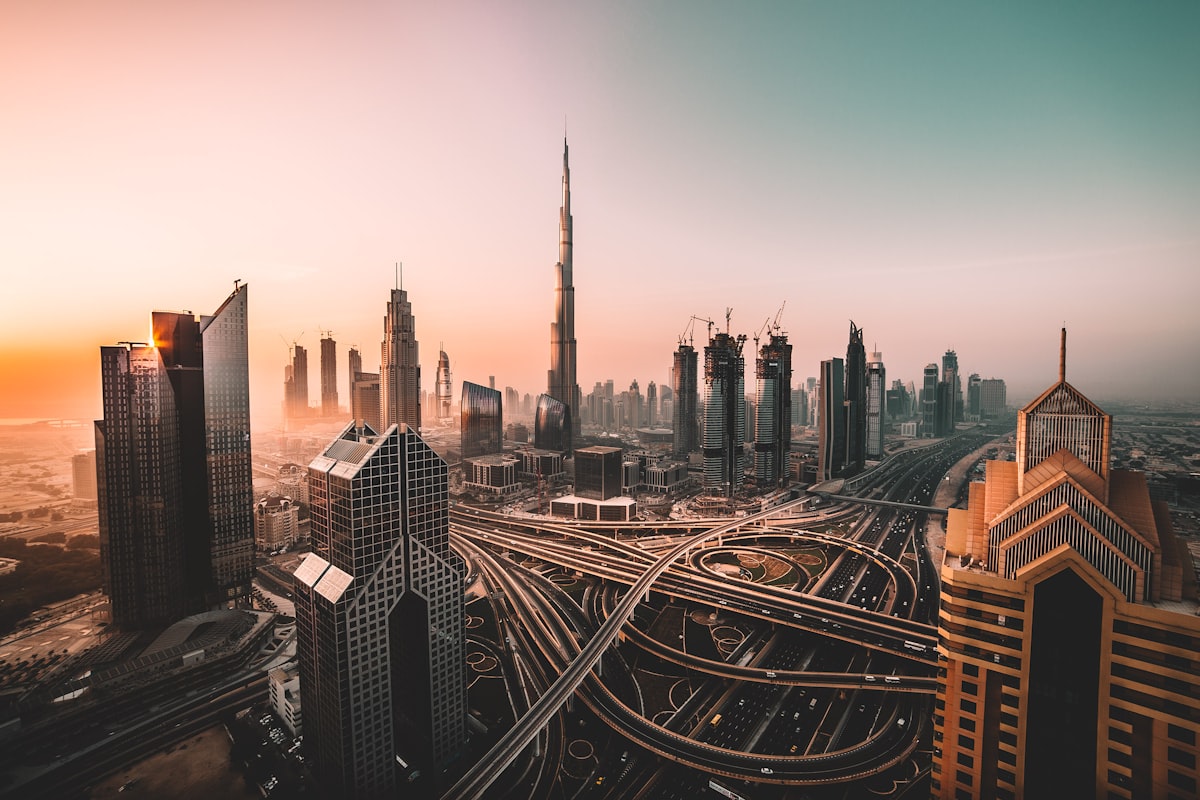
Best Off Plan Projects Dubai 2026: Global Hub Comparison
The best off plan projects in Dubai represent pre-construction property developments offering investors entry points with flexible payment plans, high potential returns, and strategic positioning within a global investment landscape. In 2026, these opportunities stand out when benchmarked against other major hubs like London, Singapore, and Hong Kong.
Why Does Dubai's Off Plan Market Outperform Global Competitors in 2026?
Global investors face increasingly complex decisions when allocating capital across international real estate markets. Dubai's off plan sector demonstrates unique advantages that become apparent through direct comparison. While traditional hubs grapple with regulatory constraints and market saturation, Dubai maintains dynamic growth trajectories.
The emirate's property market operates within a framework specifically designed to attract foreign investment. This contrasts sharply with markets like London, where Brexit-related uncertainties continue to influence pricing and liquidity. Singapore's cooling measures have similarly constrained speculative activity, creating opportunities elsewhere.
Dubai's 2026 market fundamentals reflect sustained infrastructure development and population growth. Major projects like Dubai Creek Harbour and Mohammed Bin Rashid City continue to drive demand. These developments offer investors entry points before completion, often at prices 15-20% below projected market values.
How Do Regulatory Frameworks Compare Across Investment Hubs?
Dubai's RERA regulations provide transparent oversight that many global investors find reassuring. The Dubai Land Department registration process offers clear title protection, contrasting with less structured markets in emerging economies. Freehold zones specifically designated for foreign ownership create certainty.
Compare this to Hong Kong, where property rights exist within China's broader legal framework. Or consider Miami, where zoning variations create complexity. Dubai's system delivers consistency that supports confident investment decisions. The property visa UAE program adds residency benefits rarely matched elsewhere.
What Makes Dubai's Payment Structures More Investor-Friendly?
Payment plans for Dubai off plan projects typically span construction periods with installments tied to completion milestones. This contrasts with markets like Toronto, where larger upfront deposits are common. Dubai developers frequently offer post-handover payment options extending 1-3 years after delivery.
These flexible structures improve cash flow management for investors. They enable portfolio diversification across multiple projects simultaneously. When evaluating ROI calculation methodologies, Dubai's transparent pricing and predictable timelines provide clearer projections than many alternatives.
Which Dubai Areas Offer the Best Off Plan Opportunities in 2026?
Location selection remains critical for maximizing returns across any global market. Dubai's master-planned communities each present distinct value propositions. Their development trajectories compare favorably with established neighborhoods in competing hubs.
Downtown Dubai continues to command premium positioning, with off plan prices ranging AED 2,500-3,800 per square foot in 2026. This compares to London's Canary Wharf at approximately £1,800-2,200 per square foot. The differential reflects Dubai's continued growth potential versus mature markets.
Dubai Marina offers waterfront living at AED 2,200-3,000 per square foot. Contrast this with Singapore's Marina Bay, where prices exceed SGD 3,500 per square foot. The relative affordability combined with similar lifestyle amenities creates compelling value propositions.
How Do Emerging Districts Compare to Established Global Neighborhoods?
Dubai South represents the emirate's airport-centric development, with off plan prices at AED 1,100-1,700 per square foot. This positions it competitively against Berlin's emerging districts or Manchester's regeneration zones. The connectivity to Al Maktoum International Airport creates unique logistics advantages.
Jumeirah Village Circle offers family-oriented communities at AED 1,300-1,900 per square foot. Compare this to suburban developments in Sydney or Vancouver, where similar amenities command 30-50% premiums. Dubai's tax-free environment further enhances net returns.
What Niche Markets Present Specialized Opportunities?
Healthcare-focused developments near Dubai Healthcare City provide specialized investment angles. Educational districts near academic institutions cater to specific demographic segments. These niche markets often deliver above-average rental yields when compared to general residential areas.
Waterfront properties along Dubai Canal and Palm Jumeirah maintain premium positioning. Their scarcity value compares favorably with limited waterfront availability in cities like Monaco or Miami. The best off plan projects in Dubai leverage these unique geographical advantages.
How Do Financial Returns Compare Across Global Markets?
Investment performance metrics reveal Dubai's competitive positioning. Capital appreciation projections for 2026 range 8-12% annually for prime off plan developments. Rental yields typically reach 6-9% net of expenses, outperforming most global hubs.
London's prime central districts currently deliver 3-4% gross yields. Singapore's residential properties average 2.5-3.5%. Hong Kong's market shows volatility with yields around 2-3%. Dubai's combination of appreciation potential and rental income creates superior total returns.
Currency considerations further influence cross-border comparisons. The UAE dirham's peg to the US dollar provides stability against fluctuating pound or euro valuations. This reduces exchange rate risks for dollar-denominated investors compared to European markets.
What Tax Advantages Differentiate Dubai from Other Hubs?
Dubai's zero property tax, capital gains tax, and rental income tax create significant advantages. Compare this to New York's combined property taxes exceeding 2% annually. Or London's stamp duty reaching 12% on premium properties. Singapore's buyer's stamp duty starts at 4%.
These tax differentials directly impact net returns. A property generating AED 100,000 annual rental income in Dubai delivers the full amount to investors. Equivalent income in Tokyo might face 20-30% effective tax rates. The cumulative effect over investment horizons substantially favors Dubai.
How Do Financing Options Affect Comparative Returns?
Mortgage availability for off plan purchases varies significantly across markets. Dubai offers 50-75% loan-to-value ratios for foreign investors, with interest rates projected at 4-5% in 2026. This compares favorably to Sydney's tighter lending criteria or Vancouver's foreign buyer restrictions.
Developer financing often supplements traditional bank loans. Payment plans extending beyond completion enable leveraged positions without immediate full equity deployment. These structures enhance internal rates of return when compared to markets requiring larger upfront capital.
What Risks Should Investors Consider in Global Comparisons?
Every investment market presents unique risk profiles. Dubai's off plan sector involves construction timelines and delivery risks. However, escrow account protections mandated by RERA mitigate developer default concerns more effectively than many jurisdictions.
Compare this to markets like Bangkok, where buyer protections remain less comprehensive. Or Istanbul, where currency volatility adds layers of complexity. Dubai's regulatory maturity provides frameworks that balance opportunity with investor security.
Market cycle positioning requires careful analysis. Dubai's 2026 market follows measured growth rather than speculative bubbles seen in previous cycles. Inventory levels remain manageable compared to oversupply concerns in some Chinese cities or Australian markets.
How Do Economic Diversification Efforts Impact Long-Term Stability?
Dubai's transition toward knowledge-based economies reduces oil dependency below 5% of GDP. This contrasts with Middle Eastern peers where hydrocarbon revenues dominate. The diversification creates more resilient economic foundations supporting property values.
Compare this to Monaco's reliance on financial services or Macau's gaming focus. Dubai's multiple growth pillars—tourism, trade, logistics, technology—provide broader-based support. The best off plan projects in Dubai benefit from this diversified economic ecosystem.
What Geopolitical Factors Influence Regional Comparisons?
Middle Eastern stability remains a consideration for international investors. Dubai's position as a neutral business hub within the region provides relative insulation. Compare this to Istanbul's position amid regional tensions or Hong Kong's evolving relationship with mainland China.
The UAE's diplomatic normalization with Israel and strengthening ties with Asian economies create positive momentum. These developments enhance Dubai's connectivity compared to more isolated markets. They support the sustained demand driving property values.
How Can Investors Navigate the Best Off Plan Selection Process?
Due diligence processes must account for both local market dynamics and global positioning. Developer track records require verification through DLD registration histories. Project specifications should align with evolving tenant preferences and sustainability standards.
Comparative analysis against similar developments in competing hubs reveals value propositions. A luxury apartment in Dubai at AED 3 million might compare to similar specifications at £1.2 million in London or SGD 2.8 million in Singapore. The relative pricing informs investment decisions.
Investors should browse our properties to examine specific opportunities. Portfolio construction across multiple developments can mitigate individual project risks. Geographic diversification within Dubai often proves more manageable than cross-border allocations.
What Due Diligence Steps Differ from Other Markets?
RERA project registration verification provides foundational security. Escrow account confirmations ensure payment protection. Title deed processes follow standardized procedures that contrast with more variable systems in markets like India or Brazil.
Infrastructure connectivity assessments prove particularly important in Dubai's expanding urban landscape. Proximity to metro stations, highway access, and community amenities significantly influence values. These factors often carry greater weight than in established cities with mature transit networks.
How Do Exit Strategies Compare Across Investment Horizons?
Secondary market liquidity for off plan positions varies by development stage and location. Prime Dubai districts typically show active resale markets during construction phases. This contrasts with markets where off plan trading faces restrictions or illiquidity.
Completion timelines influence holding period decisions. Dubai's efficient construction processes often deliver ahead of comparable markets. The ability to exit pre-completion or at handover provides flexibility not always available elsewhere. Rental management options further support various investment approaches.
| Investment Hub | Average Off Plan Price PSF (2026) | Projected Annual Appreciation | Gross Rental Yield | Tax on Rental Income |
|---|---|---|---|---|
| Dubai | AED 1,800-3,500 | 8-12% | 6-9% | 0% |
| London | £1,200-2,500 | 3-5% | 3-4% | 20-45% |
| Singapore | SGD 2,200-3,800 | 2-4% | 2.5-3.5% | 0-22% |
| Hong Kong | HKD 18,000-35,000 | 1-3% | 2-3% | 15% |
| Miami | USD 600-1,200 | 4-7% | 4-6% | 0-37% |
Frequently Asked Questions
Are off plan properties in Dubai safe for foreign investors?
Yes, RERA regulations and escrow account requirements provide strong protections. Dubai's legal framework for property investment compares favorably with global standards.
How do Dubai off plan returns compare to other global cities?
Dubai typically offers higher rental yields and appreciation potential than mature markets like London or Singapore, with superior tax advantages.
What is the minimum investment for Dubai off plan projects?
Entry points begin around AED 500,000 for studio apartments in emerging areas, with payment plans spreading costs over construction periods.
Can I get residency through Dubai property investment?
Yes, the property visa UAE program offers renewable residency for investments above AED 750,000, a unique advantage versus many competing hubs.
How do I verify developer credibility for off plan purchases?
Check RERA registration, review completion histories, and confirm escrow arrangements. Our team can provide detailed due diligence support.
What Strategic Advantages Define Dubai's 2026 Positioning?
Dubai's convergence of factors creates compelling propositions for global capital allocation. The combination of tax efficiency, regulatory transparency, and growth momentum distinguishes the emirate from alternatives. Infrastructure development continues at paces unmatched by most competitors.
Demographic trends support sustained demand, with population growth projections exceeding 3% annually through 2026. Employment creation across diversified sectors drives housing needs. These fundamentals contrast with stagnant or declining populations in some European and East Asian markets.
The best off plan projects in Dubai leverage these macro advantages. They offer entry points into a market demonstrating both stability and dynamism. When global investors rebalance portfolios amid changing economic conditions, Dubai's relative strengths become increasingly apparent.
Siddhi Enterprises (Real Estate) provides expert guidance navigating Dubai's off plan landscape within global context. Our analysis identifies developments offering optimal risk-adjusted returns compared to international alternatives. Contact our team today to explore how Dubai's 2026 opportunities align with your investment objectives and outperform competing hubs.
By the Siddhi Enterprises (Real Estate) Research Team | 2026
Siddhi Team
Dubai Real Estate Experts helping Indian investors find their perfect property in UAE.