
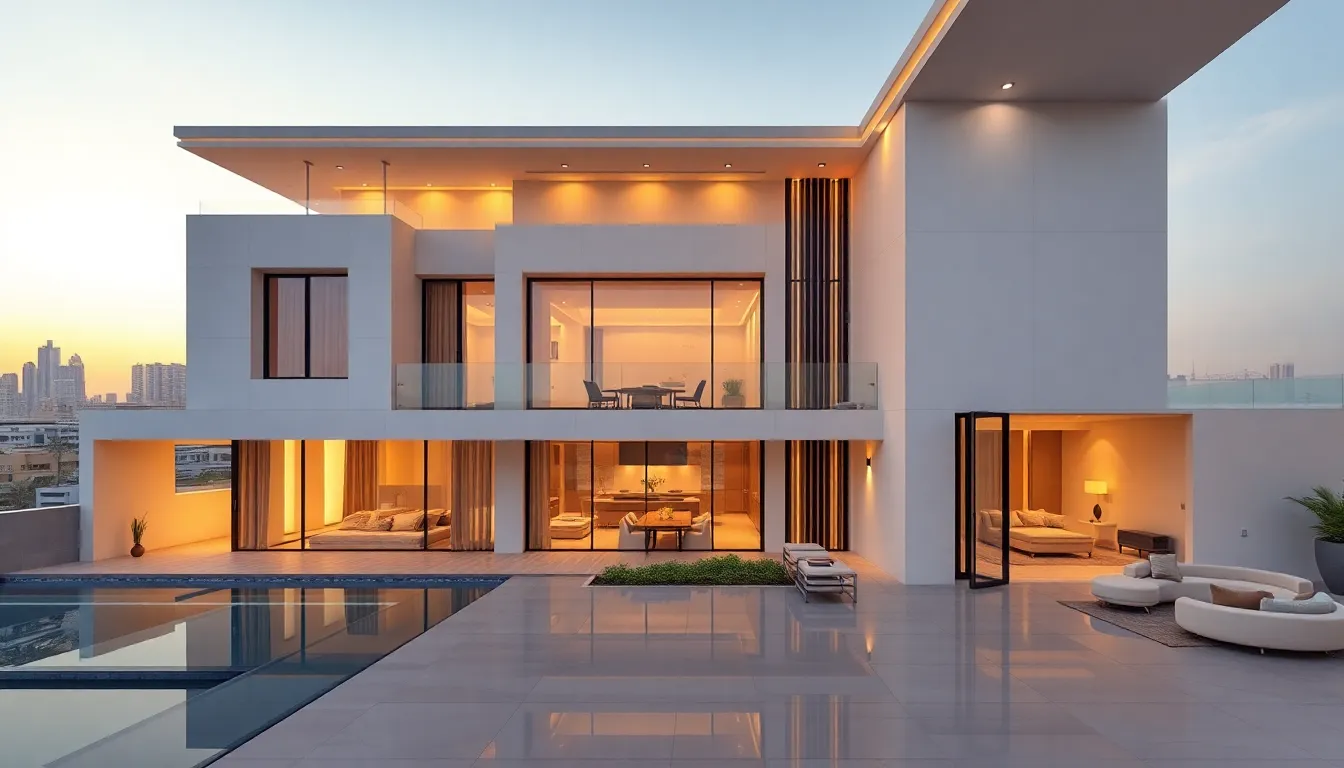
Are You Making This Mistake with Dubai Hills Villas?
Never buy a villa without knowing exactly who will rent it and when you can sell it. That sentence will sound stubborn, and it is. It was forged out of a sweltering August afternoon back in 2014, when an AC unit in Arabian Ranches sighed its last breath and a tenant handed in a midnight notice. I was on the phone with the owner—a client who had trusted my advice—and his voice cracked because he suddenly needed to sell, but the market had drawn the curtains shut. Even now, when I walk a family through a Dubai Hills Estate show home, that moment sits on my shoulder. It’s not enough to fall in love with the backyard or the marble island. You have to think about the person living there when you’re not, and how quickly that can change.
I’ve been in Dubai real estate for 15 years now. I’ve watched entire communities grow from sand and scaffolding into the kind of places people build memories. And if there’s one community that makes my old mistake especially dangerous, it’s Dubai Hills Estate. The villas here are beautiful. The location is a strategic gem. But the things that make it so attractive—the parks, the golf course, the posh address—also magnetise a very specific tenant profile. One that moves on a schedule you need to respect.
What Makes Dubai Hills Estate Stand Out for Villa Buyers?
You won’t find an objective list of features here. I’m going to tell you what I feel when I drive through the main entrance off Al Khail Road. It’s green, but a manicured kind of green. Neat. The kind of place where you half-expect to see a golden retriever with a family on a Sunday morning. The villas themselves—especially the Sidra, Maple, and Golf Place collections—are built for space. Real space. I’ve measured up more dining rooms than I can count, and in Dubai Hills Estate villas, you can fit a ten-seater without bumping elbows.
What about the rest? The community stretches over 11 million square meters, but it doesn’t suffocate you. Half of it is dedicated to open spaces and a championship golf course. There’s a mall that actually works for the residents, not just the tourists. A school that pulls in families from across the city. And when you stand in one of those back gardens at dusk, you can just about hear the city’s hum, but it feels far away. That’s what sells people. The feeling of being tucked in.
But here’s the thing: that feeling also sells tenants. And the kind of tenant who falls for Dubai Hills usually moves in August or January. They’re tied to school calendars, corporate rotations, that rhythm. Forget that rhythm, and you’ll learn what I learned on that furnace of a day in 2014.
How Do Tenant Turnovers Affect Villa Ownership?
That’s the cost of tenant turnover at the wrong moment. In Dubai Hills Estate, you’re looking at a tenant pool heavy on families. Their timelines are rigid. If you have to sell in the wrong quarter, you’re competing with every other landlord who got the same notice. Liquidity evaporates. I’ve since made it my personal rule: I won’t let a buyer ignore the calendar. Not anymore.
What Should You Consider Before Timing Your Purchase?
Walk into any showing with me, and I’ll draw your attention to the tenancy contract. I’ll ask what the current notice period is. I’ll find out if the kids are in year 11 or year 12—because if they’re about to finish school, that family’s leaving, and it won’t be in June. It’ll be right after exams. I map out the next 24 months mentally before I even talk about the finishing. That’s the difference between buying a home and buying an asset that can bite you.
For villas for sale in Dubai Hills Estate, the ideal window to take possession—if you’re not moving in yourself—is around April or May. Why? Because the relocation market wakes up then. Families secure homes for the upcoming school year. By the time August hits, they want to be unpacked, not shopping. If you list in August, you’re late. If you list in December, you’re early but in a low season. I’ve seen villas in Golf Place sit for six months simply because the seller handed over an empty shell during summer. They weren’t bad properties. They were just out of sync.
Think about this before signing a cheque. Not after. And if you’re buying off-plan, the handover date becomes your new obsession. Is the developer promising Q3? That’s a red flag unless you plan to hold through the quiet months. Q2 is your friend.
Why Is Tenant Profile Such a Big Deal in Dubai Hills?
I get pushback on this sometimes. “Himanshu, it’s a freehold community. Anyone can rent.” True. But discover Dubai freehold communities like Dubai Hills and you’ll see each has a gravitational pull. The Springs attracts young couples starting out. The Lakes pulls mid-career professionals. Dubai Hills? It pulls the settled family with a budget for space and a low tolerance for noise. These are tenants who plant themselves for two, three years. That sounds stable, and it is—until it isn’t. A sudden job move and they’re gone, but the next family won’t come until the season turns.
You have to understand the psychology. A family moving into a four-bedroom Sidra villa isn’t doing it on a whim. They’ve chosen the location for the school run. They’ve memorized the floor plan so the youngest can have a room next to the study. When they leave, the replacement family is probably living in a hotel for the first three weeks of August, panicking. But they won’t sign a lease sight-unseen. They want to smell the grass and check the wardrobes. And they’ll do that in September. Not before.
How Does Dubai Hills Compare to Other Communities on Liquidity?
| Community | Family-Friendliness | Commute to DIFC/Downtown | Tenant Stability Cycle | Exit Speed (Peak vs. Off-Peak) |
|---|---|---|---|---|
| Dubai Hills Estate | Very high; sidewalks, parks, school on site | 15-20 mins via Al Khail | School calendar driven; gaps in summer | Fast in March-May; slow July-August |
| Arabian Ranches | High; established community, equestrian | 25-30 mins via Hessa Street | Similar school cycle, but deeper rental pool | Moderate all year; less summer freeze |
| The Springs | Medium; younger couples, fewer kids' amenities | 20-25 mins via Sheikh Zayed Road | Year-round demand due to lower entry point | Quick most months; smaller villas attract single professionals too |
| Jumeirah Golf Estates | High; greener, secluded | 30-35 mins; limited routes | Predominantly owner-occupied, fewer rental fluctuations | Slower off-peak but steady due to owner focus |
Notice how Dubai Hills sits in a sweet spot for connectivity but also suffers from that summer drought more acutely. It’s not a flaw—it’s just the nature of a premium family enclave. I love the community for the same reason I warn about it: the target buyer is specific, which creates excellence and vulnerability in equal measure.
What’s the Handover Reality for Villas Here?
I’ve done more snagging inspections in Dubai Hills than I can count—and I mean actual inspections, standing next to the buyer with a roll of blue tape and a coffee that’s gone cold. The general build quality is solid, especially in phases delivered after 2020. But don’t walk in expecting perfection. There will be paint touch-ups, a misaligned cabinet door, maybe a pool pump that hums a bit too loud. The key is to have a snagging list ready before the developer’s team leaves for the day.
This matters because if you’re buying a resale villa, the snagging was someone else’s headache. You just inherit the fixes. I always tell buyers to check the AC air handlers—they’re lifeblood in this country—and the outdoor drainage. In some early Maple townhouses, we saw patio drains that pooled water toward the house. Not a dealbreaker, but you want to know before the rains come.
When you’re ready to explore Dubai property investment opportunities, don’t skip the physical check because the photos look flawless. Get your hands on the property, ideally in the heat. That will tell you more than any glossy brochure.
How Do I Pick the Right Villa Layout for End-Use vs. Investment?
This is where I get pushy. If you’re buying to live in it, your opinion counts most. If you’re buying to rent out, your opinion barely matters—the tenant’s reality does. I’ve seen investors fall for a villa because of a stunning master suite with a terrace, only to discover that the second bedroom is the size of a jail cell. Tenants notice that. They’ll reject the house because the kids’ rooms don’t fit their furniture.
In Dubai Hills, the three-bedroom Sidra villas have a layout that works. The living space flows into the garden without dead corners. The Maple four-beds have a more segmented floor plan—some families love the separation, others find it too compartmentalized. I never let an investor buy a layout I wouldn’t happily live in myself, because eventually, I’ll be the one fielding calls from a frustrated landlord whose tenant is breaking a contract because the kitchen island—beautiful as it is—blocks the flow for a stroller.
When Should You Buy vs. When Should You Wait?
I remember a Golf Place villa—a rare four-bedroom with a view of the 12th fairway—that hit the market in early December a few years back. The owner was relocating and had to sell. Few buyers were looking. The family who bought it had been searching casually for months and jumped when I called. They got exactly what they wanted because they weren’t racing the school-run crowd. That’s the kind of opportunity timing creates.
Before you commit, get personalised guidance from our team. I can’t promise a December gem every time, but I can tell you what’s realistically coming to market and whether you’re stepping into a tug-of-war.
What Are the Often-Overlooked Running Costs?
What About the Developer’s Pace of Delivery?
I’ve lived through multiple phase releases in Dubai Hills. The master plan is huge, and they’re still delivering. That means construction traffic in some corners for a while. If you’re buying in a completed phase like Sidra 1, you’re golden. If you’re eyeing an off-plan launch in a new sector, accept that you’ll hear trucks for a year or two. That’s not a bad thing—it shows growth, it means infrastructure is expanding, schools are opening, retail follows. But if you’re a noise-sensitive buyer, it matters.
I once showed a villa in an early Maple phase where the backyard fence backed onto a future townhouse site. The buyer loved the house but would’ve faced two years of hammering. I told him straight: buy it if you’ve got headphones and patience. He passed. I respected that. Not every deal is the right deal.
How Does Dubai Hills Stack Up Against Newer Communities?
Communities like Tilal Al Ghaf or Dubai South keep popping up, and they have their own charm. But Dubai Hills has something they don’t yet: maturity. The trees have grown in. The café knows your order. The security guards recognize residents. That kind of lived-in feel can’t be built overnight. When I walk through Dubai Hills, I don’t feel like I’m in a construction site—I feel like I’m in a neighborhood. That matters when tenants come to view. They’re not just renting square footage; they’re renting a lifestyle, and a half-built community can scare them off faster than a bad floor plan.
But maturity also means you’re not the pioneer. Pioneers often get the best entry points, but they also sweat through the uncertain years. With Dubai Hills, you’re buying into a known quantity. The school is there. The hospital is operational. There’s no guesswork, and that’s comforting for the kind of buyer who doesn’t want drama.
A Seasonal Demand Snapshot
I mentioned the rhythm. Here’s a rough table I keep in my head about when different types of freehold community villas see the most action. This isn’t data you’ll find in a brochure; it’s from fifteen years of phones ringing—or not.
| Period | Typical Renter Activity | Typical Buyer Activity | Impact on Dubai Hills Villas |
|---|---|---|---|
| January-March | Relocations start trickling in; families begin scouting for September move-in | Early birds; low competition can snag good deals | Moderate; serious owners list; buyers can negotiate |
| April-June | Peak rental transaction volume; families finalize | Peak season; inventory high, multiple offers common | Excellent for selling if tenant is vacating in sync |
| July-August | Dead zone; most families already settled | Quiet; only urgent or uninformed sellers | Avoid listing unless forced; long days on market |
| September-December | Some corporate moves; singles and couples without kids | Moderate; less competition from other listings until November | Okay for smaller villas; larger ones wait for next spring |
See why I obsess over the calendar? It’s not some abstract theory. I’ve missed weekend plans because a landlord called in tears in August, unable to cover a mortgage payment with no rent coming in. Avoid that.
If you want to read more Dubai market insights, I’ve written about these cycles before—and how they play out differently in areas like Downtown or the Palm.
Frequently Asked Questions
Is Dubai Hills Estate a freehold area?
Yes, it’s a designated freehold community, meaning expatriates can own property with full rights. I’ve handled many NRI purchases here; the title deed process is straightforward with the Dubai Land Department.
What kind of tenant typically rents a villa in Dubai Hills?
Predominantly families with school-aged children, often European or Asian expats in managerial roles. They value space, greenery, and proximity to good schools—especially the ones inside the community.
How long do vacancies usually last between tenants?
Are there any hidden fees beyond service charges?
Not hidden, but often forgotten: you’ll pay a one-time registration fee at transfer, and if you’re renting out, there’s a tenancy registration fee via Ejari. Always check the service charge structure for your sub-community.
Can I extend or modify my villa’s structure?
You’ll need approval from the developer and the relevant authority. Some communities have strict design codes. In Dubai Hills, minor modifications are possible but must follow the master community guidelines. I’ve seen approved pergolas; I’ve also seen unapproved extensions flagged.
Is it better to buy off-plan or ready in Dubai Hills?
Off-plan gets you a newer unit and a flexible payment plan, but you’re waiting years with no rental income. Ready lets you see exactly what you’re getting and possibly secure a tenant immediately—if you time it right. I lean towards ready for families who need housing now, and off-plan for investors with patience.
How does the resale process work for Dubai Hills villas?
Smooth, if your paperwork is clean. You need a NOC from the developer, a valuation certificate for mortgage buyers, and a clear title. I’ve handled handovers that closed in under two weeks and others that dragged for months because of a missing clearance. A sharp agent makes the difference.
I’ve made my share of mistakes in this city. That August afternoon changed how I advise every single client. A villa isn’t just bricks and views—it’s a living, breathing asset that demands you respect its seasons. Dubai Hills Estate is one of the finest places to own in Dubai, but don’t let the polished marble distract you from the calendar. Sync your move, and you’ll wonder why anyone ever gets it wrong. Miss the beat, and you’ll remember my story.
By Himanshu Gupta, Senior Property Advisor at Siddhi Estates — 15 years in Dubai real estate, from off-plan launches to handover and resale.
Siddhi Team
Dubai Real Estate Experts helping Indian investors find their perfect property in UAE.