
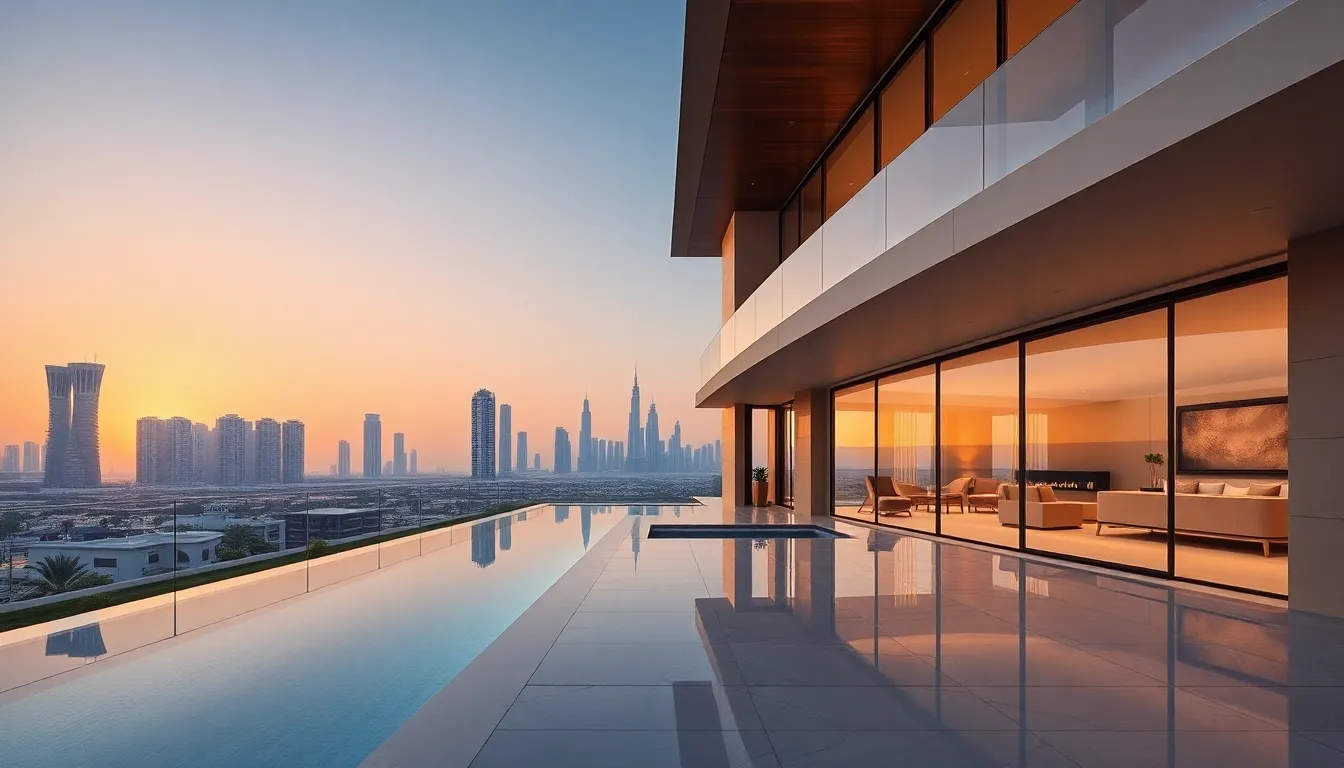
Dubai Property
May 28, 202623 min readAre You Asking These Before Buying Luxury in Dubai?
Quick Answer: The questions I wish more buyers asked before signing for luxury property for sale in Dubai revolve around service charge structures, developer legacy for post-handover support, actual build quality versus promises, and how the community will look in five years — not the height of the ceiling or the brand of the marble.
Most people think buying a luxury home is about falling in love with a view or being dazzled by a lobby. I've spent fifteen years watching that love affair turn sour because nobody asked the boring questions. I remember a client who bought a magnificent penthouse off-plan in August, the summer market so still you could hear the air conditioning units humming across the empty marina. That silence was a warning — no neighbors, no traffic, no noise to mask the rattle of a poorly sealed window frame. By the time the first tenant moved in, they were dealing with leaks that the glossy brochure never mentioned. That experience shaped me. Now I push every buyer to ask the uncomfortable questions before they even think about a down payment.
## Why are so many luxury buyers led astray?
I see it weekly. Someone walks into a show apartment, the scent of leather and fresh flowers in the air, the lighting set to flatter every surface. They're sold. But that's not a home — it's a stage production. The real question is how that unit will perform after a year of Dubai sun and humidity. I've snagged dozens of properties where the initial wow factor faded fast when the sea-facing balcony's railing started to pit because the wrong grade of stainless steel was used. Most buyers ask about the square footage. They ignore the size of the service yard or whether the AC chiller is communal or individual. These mundane details determine your monthly outgoings and your comfort.
One summer, during a viewing in the quietest time of year, the whole tower was empty. No kids in the pool, no gym users. Just a security guard and the soft echo of our footsteps. I pointed out to the client that this was the perfect moment to test the aircon's real performance — not on a show day when it's been running full tilt for hours, but from a cold start. That's the kind of thing that matters. High-end finishes can't fix a badly designed HVAC system.
Before you even look at **luxury property for sale in Dubai**, get clear on what you're actually buying. Is it a home or an investment? The answer changes everything. An investor might tolerate a smaller kitchen if the rental yield stacks up. An owner-occupier will resent every square inch wasted on a corridor. But both need to ask about the developer's warranty period and their track record in honouring it. I've seen five-year structural warranties that aren't worth the paper they're written on because the developer has a habit of stalling repairs until the buyer gives up.
## What questions protect your money better than any contract clause?
Over the years I've built a mental checklist that no real estate academy teaches. These aren't the questions on the agent's fact sheet. They're the ones I ask when the developer takes me for a site tour and thinks I'm just admiring the view.
First: What's the service charge cap? Not the estimate — the cap. In some communities, service charges have ballooned because the master developer handed over management to a contractor who sees landscaping as a profit centre. I've watched owners in a well-known waterfront community see their annual bills jump 30% in two years because the lazy answer is "world-class amenities cost world-class maintenance." Don't buy that line. A firm cap — or at least a historical record of reasonable increases — is gold.
Second: Who sits on the owners' committee? In Dubai, communities eventually hand over management to owners, but the timeline varies wildly. If you're buying off-plan, find out when that happens. Without it, you're at the mercy of a developer who may cut corners on maintenance to save money before they exit. I once spent two years helping a building's owners wrest control from a developer who was charging for a gym that had been closed for six months. That battle could have been avoided with one question at the point of sale.
Third: What are the exact materials used on the facade and in the common areas? Not "premium finishes" — I want the spec sheet. Is it travertine or reconstituted stone? Teak or stained pine? These differences matter after five summers. I remember walking through a gorgeous lobby in JBR, the marble floors immaculate. Then I looked up and saw the chandelier had a layer of dust that was impossible to clean without scaffolding. That's a design flaw that will bleed service fees every year.
Fourth: Can I speak to an owner who has lived here for at least one year? If the developer balks, that tells you everything. Happy owners are the best salespeople. I've arranged these conversations countless times, and they reveal the texture of daily life: how the security team handles deliveries, whether the kids' play area actually has shade, if the promised concierge can really book a restaurant or just nods and forgets.
Fifth: What's the view from this window in 2030? That empty plot next door won't stay empty. In Dubai, skyline changes fast. I've knocked on doors in Downtown to warn buyers that their Burj Khalifa view might become a view of another tower's kitchen. Always check the master plan for adjacent plots, and don't trust a sales agent who says "that's zoned low-rise" without seeing the land registry yourself.
When you start to **buying luxury real estate in Dubai**, these questions shift the dynamic. You're no longer a passive buyer; you're a sceptic with a clipboard, and that's exactly what protects your capital.
## How do I spot a developer who truly delivers luxury?
Luxury isn't a price tag; it's a discipline. The best developers are obsessive about the details you can't see. I've visited back-of-house areas in some of the tallest towers in the world. In one, the service corridors were air-conditioned and tiled like a hospital. In another, they were bare concrete with exposed pipes. Guess which one had happier residents and lower churn?
Ask for a tour of a completed project by the same developer — not the show apartment, but a real home someone is living in. Look under the kitchen sink, check how the sliding doors glide, notice whether the skirting boards meet the floor flush or with gaps. I once found a bathroom in a supposedly high-end unit where the shower drain had been installed slightly higher than the tile, so water pooled and turned the grout black within months. That's the kind of flaw no rendering can hide.
Pay attention to the handover snagging list. Developers often offer a snagging period where you can report defects. Some handle it swiftly with a full-time team; others let it drag. I always advise buyers to review premium Dubai developments by visiting them unannounced and talking to security or maintenance staff. You'd be amazed what they'll tell you about the real state of things.
Another signal: how the developer treats the landscaping. Lush green hedges look great in the brochure, but Dubai has arid soil and high water costs. If a developer cuts corners, the first place it shows is the lawn turning brown and the trees thinning out because they didn't install proper irrigation. I walked through a community in Arabian Ranches last July, and the grass crunched underfoot like straw. That's a developer who has walked away.
## What does a realistic handover timeline look like?
Off-plan promises are seductive. "Q4 2026" sounds solid until it becomes "Q2 2027" with a shrug. Delays happen, but some developers are serial offenders. I keep a private database of actual handover dates versus promised ones for the big developers. It's shocking how many are consistently 6-12 months late. That matters because your life doesn't pause. You might be paying rent elsewhere, or your kids need a school nearby by a certain date.
When you hear "handover in nine months," ask to see the construction progress photos from the last three months—dated and geotagged if possible. A site visit is even better. I remember walking a site during Ramadan when work naturally slows, and the concrete shell hadn't changed in weeks. The developer still assured me everything was on track. Trust what you see, not what you hear.
Insist on a written timeline with penalties. Not just a completion date but milestones: structure complete, facade complete, MEP installed. If they miss, the penalties should be meaningful enough to hurt. Otherwise, you're just a number in their cashflow plan. I've helped buyers negotiate these clauses; it's rare but possible if you're investing in **Dubai luxury homes** at a scale that gets the developer's attention.
## Is now the right time, or should I wait for the summer lull?
A quiet summer market isn't a sign of weakness; it's an opportunity. Most European buyers disappear in August, leaving less competition. I've closed some of my sharpest deals when the thermometer hit 48°C and my shirt was stuck to my back. One August I showed a villa on the Palm where the pool's surface was so still it mirrored the sky like glass. The seller was motivated, the price had softened, and we had time for three inspections without any pressure. That slow, sticky afternoon gave my client the confidence to proceed with a full structural survey — something most winter buyers skip in their hurry to beat the crowd.
So don't fear the off-peak season. Use it. But adapt your questions: How does the AC handle 24/7 usage? Is the chiller plant maintained during low occupancy? Are there any signs of moisture ingress after the last humid spell? These are the summer-specific probes that reveal a building's soul.
## Can you really test resale appeal before you buy?
Yes, and you must. I treat every purchase as if I'll need to sell it tomorrow. Luxury property in Dubai is not about scarcity — there's always another launch, another tower, another man-made island. What sets a resale apart is micro-location within a community, the floor plan that actually works, and the intangible things like natural light direction and noise insulation.
Walk the neighborhood at different times. The same apartment that glows at sunset might be blasted by a construction site's floodlights at 3 a.m. The beachfront villa that whispers "paradise" at noon becomes a wind tunnel when the shamal blows. I've had clients who bought a corner unit in the Marina because the floor-to-ceiling glass gave a panoramic sea view, but they never tested it during rush hour. The traffic noise rose up like a tide every evening. Resale value dipped because others made the same discovery.
I often tell people to find apartments and villas in Dubai that have a rental history. A unit that rents well often sells well. If you can, request the rental performance data and tenant feedback. Did they renew? Why did they leave? A consistent stream of renewals says more than any yield projection.
And don't underestimate the power of a sensible floor plan. I've seen penthouses with 30% of the area lost to a sweeping entrance corridor that couldn't fit a piece of art without looking cluttered. Buyers later struggle to sell because someone, eventually, does the math.
## Which community questions reveal the hidden truth?
Community means everything in a city as transient as Dubai. You're not just buying walls; you're buying into a small piece of governance. Some of the most prestigious addresses have the most dysfunctional homeowner associations. Others, like a few master communities in the south, run like quiet little villages where your bin is collected precisely at 7 a.m. and the gym towels are always stocked.
Ask: How many seats on the owners' committee are held by actual residents versus developer representatives? How are disputes about common areas resolved? Is there a WhatsApp group, and can you see the last month's messages? I'm serious about that last one. In one high-end building, the residents' group was full of complaints about a faulty elevator that the developer ignored for weeks. That's the real user manual for the building.
Walk the shared facilities at the time you'd use them. If you swim at dawn, is the pool open or still locked? Is the kids' play area shaded after 10 a.m.? Does the gym have enough equipment for peak hours, or do residents queue for a treadmill? These details etch themselves into your daily life and your resale story.
For tangible comparison, here's how four prominent luxury communities stack up on dimensions that matter beyond the glossy brochure:
| Community | Lifestyle Feel | Connectivity to Business Hubs | Typical Owner Profile | Amenities Depth | Long-Term Community Stability |
|---|---|---|---|---|---|
| Palm Jumeirah | Resort-like, beachfront living; quieter on the fronds, vibrant on the trunk | Good road access to Dubai Marina and Media City; 25 mins to DIFC during peak | High-net-worth families and second-home buyers; some long-term expat residents | Private beaches, five-star hotel facilities available, limited public green spaces | Mature, stable; strong owner association in many buildings, but service charges vary by building |
| Emirates Hills | Ultra-private, suburban villa community; vast plots, golf course views | Car-dependent; 20 mins to Dubai Marina, 25 mins to Downtown | Established families, some high-level executives; low turnover | Montgomerie Golf Club, parks, private pools; no retail within walking distance | Very stable, few sales; strong community governance; but landscaping costs can be high |
| Downtown Dubai | Urban, high-energy; walking distance to Dubai Mall & Burj Khalifa | Prime location; immediate access to Sheikh Zayed Road, DIFC right next door | Mix of young professionals, investors, and short-term rental operators | Pools, gyms in each tower; shared community spaces crowded during tourist season | Established but high transient population; resale values tied to tourism trends |
| Bluewaters Island | Exclusive, self-contained island; pedestrian-friendly, family-oriented | Good for JBR and Marina; longer commute to DIFC (30+ mins) | Young families and couples; second-home buyers from Europe and Russia | Retail promenade, beach clubs, Ain Dubai; but very few school or medical facilities nearby | Newer community, still settling; service charges under scrutiny as developer exits |
| The Usual Question | The Question That Matters More |
|---|---|
| What's the total square footage? | What's the net usable area, and how much is lost to thick walls, pillars, and circulation? |
| Who is the developer? | Show me three completed projects of similar size and walk me through their snagging and post-handover satisfaction scores. |
| What is the service charge per square foot? | What's the five-year service charge history, and is there a cap? What's included and excluded — specifically, does it cover AC maintenance and structure insurance? |
| When is the handover date? | What are the milestone penalties, and can I have a rolling 30-day construction update? |
| Can I see the floor plan? | Can I walk a physical unit — not a show home — with a tape measure and test every door swing, window seal, and water pressure point? |
By Himanshu Gupta, Senior Property Advisor at Siddhi Estates — 15 years in Dubai real estate, from off-plan launches to handover and resale.
Share this article
Siddhi Team
Dubai Real Estate Experts helping Indian investors find their perfect property in UAE.