
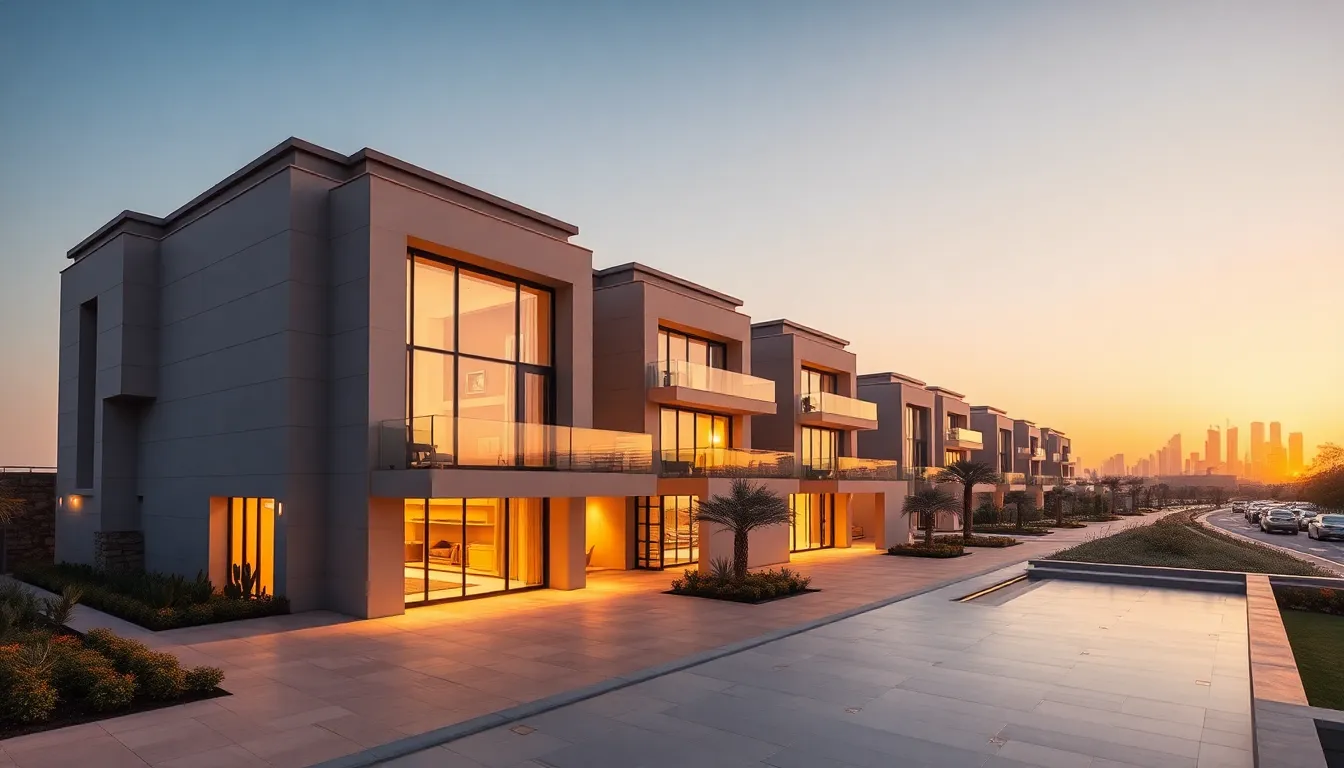
2026 Dubai Off-Plan Payment Plans for Holiday Home Investors
Payment plans for off-plan properties in Dubai are structured payment schedules that allow investors to purchase real estate during construction, with installments tied to project milestones rather than traditional mortgages. For holiday home investors targeting short-term rental income, these plans offer strategic advantages in Dubai's 2026 market by reducing upfront capital while securing properties in high-demand tourist zones.
Why Should Holiday Home Investors Care About Off-Plan Payment Plans in 2026?
Dubai's short-term rental market is projected to generate 12-18% annual returns by 2026, making off-plan purchases with flexible payment structures particularly attractive. Unlike completed properties requiring full payment or mortgages, off-plan plans spread costs over 2-4 years. This aligns perfectly with holiday home investment strategies where investors need to conserve capital for furnishing and marketing their rental properties.
Developers have responded to investor demand by creating payment plans specifically designed for the holiday home segment. These often include extended post-handover payment periods, allowing investors to generate rental income before completing payments. With Dubai expecting 25 million tourists annually by 2026, properties in freehold zones with strong short-term rental potential are seeing increased developer incentives.
How Do Payment Plans Differ for Short-Term Rental Investments?
Traditional off-plan payment plans focus on owner-occupiers, but 2026 plans increasingly consider rental income timelines. Developers now structure payments around Dubai's peak tourist seasons, with installments due during lower-occupancy periods. This helps holiday home investors manage cash flow more effectively while their properties generate income during high-demand periods.
Some developers offer "rental guarantee" payment plans where a portion of projected rental income offsets installments. While these require careful evaluation against market rates, they demonstrate how payment structures are evolving for the holiday home sector. Investors should verify these guarantees against independent 2026 rental projections for areas like Dubai Marina and Palm Jumeirah.
What Are the 2026 Market Trends Affecting Payment Plan Terms?
Three key trends are shaping payment plans for holiday home investments in 2026. First, developers are offering longer payment periods of 5-6 years for premium properties in tourist corridors. Second, more plans include furniture packages as optional add-ons, crucial for short-term rentals. Third, there's increased flexibility around payment dates to accommodate seasonal rental income fluctuations.
The Dubai Land Department (DLD) has introduced regulations requiring clearer disclosure of payment milestones. This benefits holiday home investors who need predictable cash flow planning. With average off-plan prices in prime tourist areas ranging from AED 1.2-2.8 million for one-bedroom units in 2026, payment plan terms significantly impact investment viability.
How Do Dubai Off-Plan Payment Plans Actually Work?
Payment plans for off-plan properties follow a milestone-based structure rather than monthly payments. Typically, investors pay 10-20% upon signing the sales agreement, then additional percentages at foundation completion, structural completion, and handover. The final 40-60% is often payable upon receiving the property, though holiday home investors can sometimes negotiate extended post-handover terms.
Each payment triggers specific legal protections under RERA regulations. The Dubai Real Estate Regulatory Agency mandates escrow accounts for all off-plan projects, ensuring funds are only released to developers upon verified completion of construction phases. This protects holiday home investors whose investment timeline extends beyond construction completion to include furnishing and licensing for short-term rentals.
What Payment Structures Are Most Common for Holiday Home Investments?
Three main structures dominate the 2026 market. The "standard milestone" plan follows traditional construction phases. The "extended post-handover" plan allows 1-3 years to pay the balance after receiving keys, ideal for holiday homes needing rental income to fund remaining payments. The "step-up" plan starts with lower initial payments that increase as construction progresses, matching anticipated rental income growth.
Smart holiday home investors analyze which structure best aligns with their target rental seasons. Properties in Downtown Dubai with year-round appeal might suit standard plans, while seasonal destinations like Jumeirah Beach Residence might benefit from extended plans that accommodate occupancy fluctuations. Browse our properties to compare current payment plan options across different areas.
How Do Escrow Accounts Protect Holiday Home Investors?
Escrow accounts mandated by RERA provide crucial protection for off-plan purchases. Funds are held by independent banks and released only when developers submit certified completion certificates for each construction phase. This ensures projects remain funded and on schedule, reducing completion risk that could delay rental income generation.
For holiday home investors, escrow protection extends beyond construction completion. Some developers now include post-handover services like furniture installation and holiday home licensing in their escrow-managed packages. This creates a more seamless transition from property handover to rental operations, though investors should verify what specific services are covered.
Which Areas Offer the Best Payment Plans for Short-Term Rental Investments?
Payment plan terms vary significantly by location based on developer competition and rental demand projections for 2026. Dubai Marina and Jumeirah Village Circle offer the most competitive plans for holiday home investors, with post-handover payment periods extending up to 3 years. These areas have established short-term rental markets with projected 2026 occupancy rates of 78-85%.
Emerging areas like Dubai Creek Harbour and Al Jaddaf offer longer payment periods but carry higher uncertainty about rental demand. Premium locations like Palm Jumeirah have shorter, more rigid plans reflecting stronger developer bargaining power. Holiday home investors should balance payment flexibility against location fundamentals when selecting properties.
How Do Payment Plans Compare Across Dubai's Tourist Corridors?
Payment plans in established tourist areas typically require 20-30% downpayment with the balance due at handover or within 12 months. Emerging areas might accept 10% down with 5-6 year payment terms. The trade-off involves rental yield projections: established areas offer 7-9% yields in 2026 versus 8-11% in emerging areas, but with higher certainty.
Investors targeting luxury holiday homes should note that premium developments often include payment plans with furniture and management service packages. These can simplify operations but may limit flexibility in choosing rental management companies. Always verify what's included versus what can be customized for your specific holiday home strategy.
What Are the Hidden Costs in Off-Plan Payment Plans?
Beyond the published payment schedule, holiday home investors must budget for additional costs. DLD registration fees of 4% plus AED 580 apply upon transfer. Service charges for common areas typically commence 6-12 months after handover. Holiday home licensing requires separate fees and may involve additional security deposits.
Furnishing costs for short-term rentals range from AED 80,000-150,000 for a one-bedroom unit in 2026, depending on quality standards. Some payment plans bundle these costs, but investors should compare bundled versus separate procurement. Maintenance reserves of 5-10% of annual rental income should also be factored into cash flow planning.
How Can Investors Calculate ROI with Off-Plan Payment Plans?
ROI calculation for holiday homes purchased off-plan requires different methodology than completed properties. Investors must account for the time value of staged payments versus delayed rental income. A property with AED 2 million price tag on a 4-year payment plan might require different ROI assessment than one requiring full payment upfront.
The key metric for holiday home investors is "time-to-positive-cash-flow" - when rental income exceeds all expenses including payment installments. In Dubai's 2026 market, well-selected properties in prime locations can achieve this within 18-24 months of handover, assuming proper furnishing and marketing. Extended payment plans can accelerate this timeline by reducing initial cash outlay.
What Financial Models Work Best for Holiday Home Investments?
Three models dominate successful holiday home investments using off-plan payment plans. The "conservative model" assumes 65% occupancy in year one, increasing to 75% by year three. The "optimistic model" projects 75% from handover based on premium positioning. The "developer-guarantee model" uses promised rental returns but should be stress-tested against market rates.
Smart investors create multiple scenarios varying occupancy rates, daily rates, and payment schedules. Dubai's 2026 short-term rental market shows particular strength in the AED 600-900 per night range for one-bedroom properties, translating to AED 180,000-270,000 annual revenue at 75% occupancy. Payment plans allowing gradual investment alignment with revenue growth optimize returns.
How Do Payment Plans Affect Property Visa Eligibility?
Property visa UAE requirements include minimum investment thresholds that payment plans can help achieve. The AED 750,000 minimum for a 2-year visa or AED 2 million for 5-10 year visas must be met through either paid amounts or property value. Off-plan purchases qualify once 50% of the value is paid or the property is completed.
For holiday home investors, this creates strategic opportunities. Staged payments allow qualifying for visas earlier than waiting for full payment. Some investors use this to establish residency while managing their holiday home portfolio. However, visa eligibility calculations consider the lower of paid amount or property value, so market appreciation doesn't accelerate qualification.
| Area | Typical 2026 Price (1BR) | Payment Plan Duration | Projected 2026 Rental Yield | Best For |
|---|---|---|---|---|
| Dubai Marina | AED 1.8-2.4M | 3-4 years | 7.2-8.5% | Premium holiday homes |
| Jumeirah Village Circle | AED 1.2-1.6M | 4-5 years | 8.0-9.5% | Value-focused investors |
| Downtown Dubai | AED 2.2-2.8M | 2-3 years | 6.8-7.8% | Luxury experiences |
| Dubai Creek Harbour | AED 1.5-2.0M | 5-6 years | 8.5-10.0% | Long-term growth |
| Palm Jumeirah | AED 3.0-4.0M | 2-3 years | 6.5-7.5% | Ultra-luxury segment |
What Are the Risks and Mitigations for Holiday Home Investors?
Off-plan purchases for holiday homes carry specific risks beyond general property investment. Construction delays can postpone rental income generation, disrupting cash flow plans aligned with payment schedules. Market oversupply in specific segments could depress rental rates by 2026, affecting projected returns used to justify purchase decisions.
Mitigation strategies include selecting developers with strong track records of on-time delivery. Diversifying across locations reduces concentration risk. Including contingency buffers in financial models accounts for potential rental rate softness. Most importantly, understanding RERA regulations provides legal recourse if developers fail to meet obligations.
How Can Investors Protect Against Market Changes?
Dubai's 2026 property market shows continued growth in tourist arrivals but potential volatility in specific rental segments. Holiday home investors should focus on properties with multiple demand drivers - business travelers, tourists, and local staycations. Areas with established infrastructure and limited new supply offer more predictable returns despite potentially higher entry prices.
Payment plans with longer durations provide natural hedging against market cycles. If 2026 sees temporary rental softness, extended payment periods allow riding out downturns without pressure to sell. Fixed payment schedules also protect against interest rate fluctuations affecting mortgage-based purchases.
What Legal Protections Exist for Off-Plan Holiday Home Purchases?
RERA regulations provide comprehensive protection through mandatory escrow accounts, project registration requirements, and clear cancellation policies. Developers must obtain all necessary permits before marketing, reducing regulatory risk. Sales contracts must include detailed payment schedules tied to construction milestones, preventing arbitrary changes.
For holiday home investors, additional protections come from Dubai's Department of Tourism and Commerce Marketing (DTCM) regulations governing short-term rentals. Properties must meet specific standards and obtain licenses, ensuring quality consistency across the market. Investors should verify target properties comply with both RERA and DTCM requirements before committing.
Frequently Asked Questions
Can I rent out my off-plan property before completion?
No, off-plan properties cannot be rented until after handover and obtaining necessary licenses. However, you can market your holiday home during construction to build advance bookings. Some developers offer rental management services that begin immediately upon handover, minimizing income gap.
How do payment plans affect my eligibility for Dubai's property visa?
Property visa eligibility requires either paying 50% of the property value or the property being completed. Off-plan purchases with payment plans qualify once you've paid 50% of the total price, regardless of construction progress. This allows holiday home investors to establish residency while their property is being built.
What happens if the developer delays my project beyond 2026?
RERA regulations provide compensation mechanisms for significant delays. Investors can typically cancel and receive refunds with interest if delays exceed specified thresholds. For holiday home investors, this protects against missed rental seasons, though legal recourse should be a last resort after negotiation.
Are furniture packages worth including in payment plans?
For holiday homes, furniture packages can streamline operations but limit customization. Evaluate package quality against your target rental segment's expectations. Premium holiday homes often benefit from custom furnishing, while mid-market properties might find packages cost-effective. Always compare package costs against separate procurement.
How do I calculate cash flow with staged payments and seasonal rentals?
Create monthly cash flow projections aligning payment dates with historical occupancy patterns. Dubai's peak seasons (November-April) typically generate 60-70% of annual rental income. Schedule larger payments during off-peak months where possible. Contact our team for customized cash flow modeling based on specific payment plans and target properties.
What Is the Strategic Outlook for 2026 and Beyond?
Dubai's holiday home market shows structural growth drivers extending beyond 2026. Continued tourism expansion, major event hosting, and infrastructure development support sustained demand. Off-plan payment plans will likely evolve further toward investor-friendly structures as developers compete for capital in a maturing market.
Successful holiday home investors will focus on properties with genuine differentiation in crowded segments. Payment plans providing flexibility during market transitions offer competitive advantages. The alignment between construction timelines, payment schedules, and rental income generation creates unique opportunities for strategic investors.
Payment plans for off-plan properties represent more than financing mechanisms - they're strategic tools for holiday home investors. By reducing upfront capital requirements while securing properties in high-demand locations, these plans enable portfolio building that would otherwise require significantly more resources. The 2026 market offers particularly favorable conditions with developer competition creating innovative structures tailored to short-term rental economics.
Siddhi Enterprises (Real Estate) specializes in matching holiday home investors with optimal off-plan opportunities. Our analysts track payment plan innovations across Dubai's key tourist corridors, identifying structures that align with specific investment horizons and risk profiles. Whether you're building your first holiday home or expanding an existing portfolio, we provide data-driven guidance on payment plans that maximize returns while managing cash flow. Explore how strategic off-plan purchasing can accelerate your holiday home investment goals in Dubai's dynamic 2026 market.
By the Siddhi Enterprises (Real Estate) Research Team | 2026
Siddhi Team
Dubai Real Estate Experts helping Indian investors find their perfect property in UAE.