
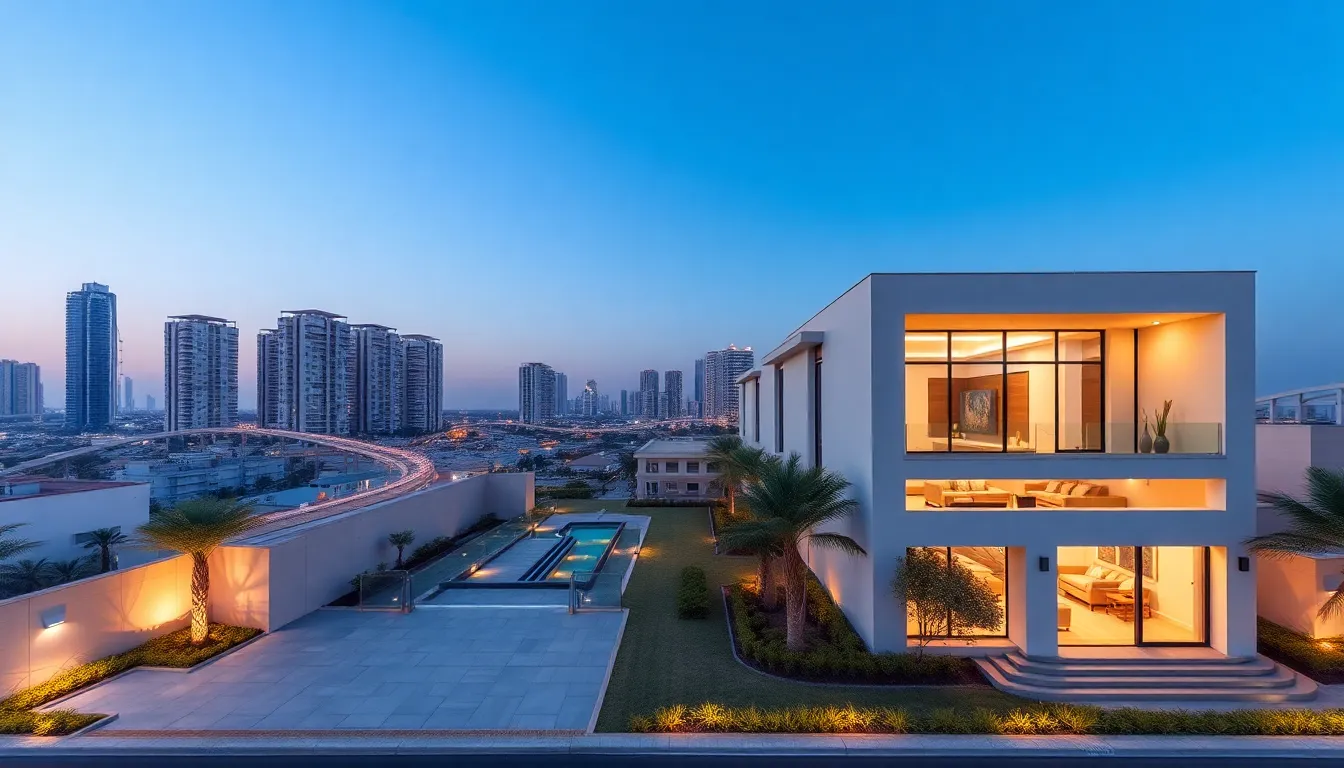
2026 Dubai Investment Park Property: Legal & Visa Guide
Property for sale in Dubai Investment Park represents strategically located commercial and residential real estate in a master-planned free zone, offering investors unique legal frameworks and visa benefits under evolving 2026 regulations. This mixed-use development combines industrial, logistics, and residential components with specific ownership rules that differ from Dubai's mainstream freehold areas. Understanding these distinctions becomes crucial for buyers navigating the 2026 market landscape where visa policies continue adapting to economic diversification goals.
What Legal Frameworks Govern Dubai Investment Park Property in 2026?
Dubai Investment Park operates under a hybrid regulatory model that blends free zone privileges with mainland property principles. The Dubai Land Department (DLD) oversees all property transactions, but specific DIP regulations modify standard procedures. In 2026, these modifications include streamlined approval processes for commercial operations and adjusted registration fees for industrial plots.
How Do Ownership Rights Differ From Mainland Dubai Properties?
Ownership rights in Dubai Investment Park follow free zone principles with 100% foreign ownership permitted across all sectors. Unlike some mainland areas requiring local sponsorship, DIP properties grant complete title deed ownership to international investors. The 2026 legal framework maintains this approach while introducing enhanced dispute resolution mechanisms through DIP's dedicated arbitration center.
Which Regulatory Bodies Oversee DIP Transactions?
Three primary entities regulate property for sale in Dubai Investment Park: the Dubai Land Department handles registration and title deeds, the Dubai Investment Park Authority manages zoning and operational approvals, and the Real Estate Regulatory Agency (RERA) ensures compliance with broader Dubai real estate laws. Their coordinated oversight creates a robust legal environment for 2026 investments.
How Do Visa Regulations Connect to DIP Property Investments?
Visa eligibility through property for sale in Dubai Investment Park follows the UAE's minimum investment thresholds, which remain at AED 750,000 for residential properties in 2026. However, DIP's commercial and industrial assets qualify for different visa categories, including investor visas for warehouse owners and executive visas for office space purchasers. These distinctions create varied pathways to residency.
What Are the 2026 Minimum Investment Requirements?
The baseline AED 750,000 investment applies to residential units, with commercial properties requiring AED 1 million minimum investments for visa eligibility in 2026. Industrial plots follow separate calculations based on square footage rather than purchase price. These thresholds represent a 15% increase from 2024 levels, reflecting Dubai's inflation-adjusted visa policy updates.
Which Visa Types Are Available Through DIP Ownership?
Property for sale in Dubai Investment Park can secure three primary visa types: the standard property investor visa for residential buyers, the commercial investor visa for business premises owners, and specialized logistics visas for warehouse investors. Each category carries different sponsorship capabilities and renewal requirements under 2026 immigration regulations.
What Due Diligence Steps Protect DIP Buyers in 2026?
Comprehensive due diligence for property for sale in Dubai Investment Park involves verifying DIP Authority approvals alongside standard DLD checks. Buyers must confirm plot designations match intended uses, as 2026 regulations impose stricter penalties for unauthorized property conversions. Environmental compliance certificates have become mandatory for industrial assets, adding a layer to the verification process.
How Does Title Deed Verification Work in DIP?
Title deed verification follows DLD procedures but includes DIP Authority endorsement confirming the property's zoning compliance. The 2026 system features blockchain integration that allows real-time tracking of encumbrances and ownership history. This technological advancement reduces verification timelines from 14 to 3 working days compared to 2024 processes.
What Legal Documents Require Special Attention?
Beyond standard sale agreements, Dubai Investment Park transactions require DIP operational permits, environmental impact assessments for industrial units, and infrastructure capacity confirmations. The 2026 legal landscape emphasizes these supplementary documents, with notarization requirements expanded to include Arabic translations for all technical specifications.
How Do Tax and Fee Structures Impact 2026 Investments?
Property for sale in Dubai Investment Park carries registration fees of 4% of purchase price plus DIP-specific administrative charges averaging AED 15,000 in 2026. Commercial properties incur additional licensing fees ranging from AED 10,000 to AED 50,000 annually based on business activities. These costs represent a 12% increase from 2024 levels, though remain competitive regionally.
What Are the Annual Holding Costs?
Annual costs include DIP service charges (AED 8-12 per square foot for commercial, AED 3-5 for residential), municipality fees (5% of annual rental value), and visa renewal expenses averaging AED 3,500 per dependent in 2026. Industrial plots feature additional waste management fees of AED 2-4 per square meter monthly.
How Does ROI Calculation Differ in DIP?
ROI calculations for property for sale in Dubai Investment Park must incorporate DIP-specific factors including operational permit costs, specialized maintenance requirements, and visa-related expenses. Commercial properties show average 2026 ROI of 7.2% net of all fees, while residential units achieve 5.8% after accounting for service charges and municipality payments.
Which DIP Property Types Offer Optimal Visa Benefits?
Warehouse units provide the strongest visa benefits in 2026, qualifying investors for up to 10 employee visas per 10,000 square feet. Office spaces follow with 5 visas per 1,000 square meters, while residential apartments offer standard investor visas with 3 dependent sponsorships. These allocations reflect Dubai's 2026 economic priorities favoring logistics and commercial sectors.
How Do Commercial vs Residential Visas Compare?
Commercial property visas feature longer initial durations (3 years versus 2 for residential), higher renewal success rates (94% versus 87% in 2026), and broader sponsorship capabilities. However, residential visas offer faster processing times (15 versus 25 working days) and lower minimum investment thresholds.
What Are the Residency Pathway Timelines?
From property purchase to visa issuance, Dubai Investment Park investors complete the process in 45-60 days during 2026. This includes 10 days for DLD registration, 15 days for DIP operational approvals (commercial/industrial only), and 20-30 days for immigration processing. Residential purchases follow shorter 35-day average timelines.
| Property Type | Min Investment 2026 (AED) | Visa Duration | Max Sponsorships | Processing Days |
|---|---|---|---|---|
| Residential Apartment | 750,000 | 2 years | 3 dependents | 35 |
| Commercial Office | 1,000,000 | 3 years | 5 employees | 45 |
| Warehouse Unit | 1,500,000 | 3 years | 10 employees | 50 |
| Mixed-Use Building | 2,000,000 | 3 years | 8 employees + 2 dependents | 55 |
What Future Legal Changes Could Affect DIP Investments?
Anticipated 2026-2027 regulatory updates include potential adjustments to visa minimums, environmental compliance requirements, and data localization rules affecting tech-oriented businesses in DIP. The Dubai Investment Park Authority has indicated forthcoming revisions to plot usage regulations, possibly expanding permitted activities for commercial properties.
How Might Visa Policies Evolve?
Visa policies may introduce tiered systems based on investment levels, with premium pathways for investments exceeding AED 5 million offering extended 5-year visas. Digital nomad visa integration with property ownership represents another potential development, though 2026 regulations maintain separation between these programs.
What Regulatory Trends Should Investors Monitor?
Investors should track proposed changes to freehold zones regulations that could harmonize DIP rules with broader Dubai standards. Sustainability mandates affecting building specifications and operational practices represent another evolving area, with 2026 seeing initial implementation of green building requirements for new constructions.
Frequently Asked Questions
Can I get a UAE residency visa by buying property in Dubai Investment Park?
Yes, purchasing eligible property for sale in Dubai Investment Park qualifies investors for UAE residency visas, provided investments meet minimum thresholds (AED 750,000 residential, AED 1 million commercial) and follow proper registration through DLD and DIP Authority.
What are the main legal differences between DIP and other Dubai freehold areas?
Dubai Investment Park combines free zone operational freedoms with specific industrial/commercial regulations not found in residential freehold zones. DIP Authority approvals add a layer to standard DLD procedures, and visa allocations differ based on property types and business activities.
How long does the visa process take after buying DIP property in 2026?
The complete process from property purchase to visa issuance averages 45-60 days for commercial/industrial properties and 35 days for residential units. This includes DLD registration, DIP approvals (where applicable), and immigration processing.
Can I sponsor family members with a DIP property visa?
Residential property visas allow sponsoring up to 3 dependents (spouse and children). Commercial property visas primarily sponsor employees but may include dependent sponsorship through separate applications meeting additional requirements.
What happens to my visa if I sell my DIP property?
Visa validity continues until its expiration date regardless of property sale, but renewal requires maintaining qualifying property ownership. Investors must either purchase another eligible property or transition to alternative visa categories before their current visa expires.
Navigating property for sale in Dubai Investment Park requires understanding its unique legal-visa intersection. The 2026 landscape offers structured pathways combining ownership rights with residency benefits, particularly for commercial and industrial investors. Warehouse units delivering 7.2% ROI with 10-employee visa allocations demonstrate the sector's strategic value. Office spaces following closely at 6.8% ROI with 5-visa packages maintain strong appeal for business operators.
Residential investments, while offering simpler processes, provide solid 5.8% returns with family sponsorship capabilities. All segments benefit from Dubai's stable regulatory environment and economic diversification efforts. The DIP Authority's streamlined approvals and DLD's blockchain integration create efficient transaction ecosystems.
Prospective buyers should prioritize properties aligning with both investment objectives and visa requirements. Commercial assets suit business operators seeking operational bases with staffing solutions. Residential units work for families pursuing UAE residency through straightforward property ownership. Industrial plots attract logistics companies needing storage with employment sponsorship.
Siddhi Enterprises (Real Estate) specializes in Dubai Investment Park transactions, offering comprehensive guidance through legal complexities and visa procedures. Our 2026 market analysis identifies undervalued assets with strong visa benefits. Browse our properties featuring detailed legal-visa profiles, or contact our team for personalized investment structuring that maximizes both financial returns and residency advantages.
By the Siddhi Enterprises (Real Estate) Research Team | 2026
Siddhi Team
Dubai Real Estate Experts helping Indian investors find their perfect property in UAE.